




Key Points
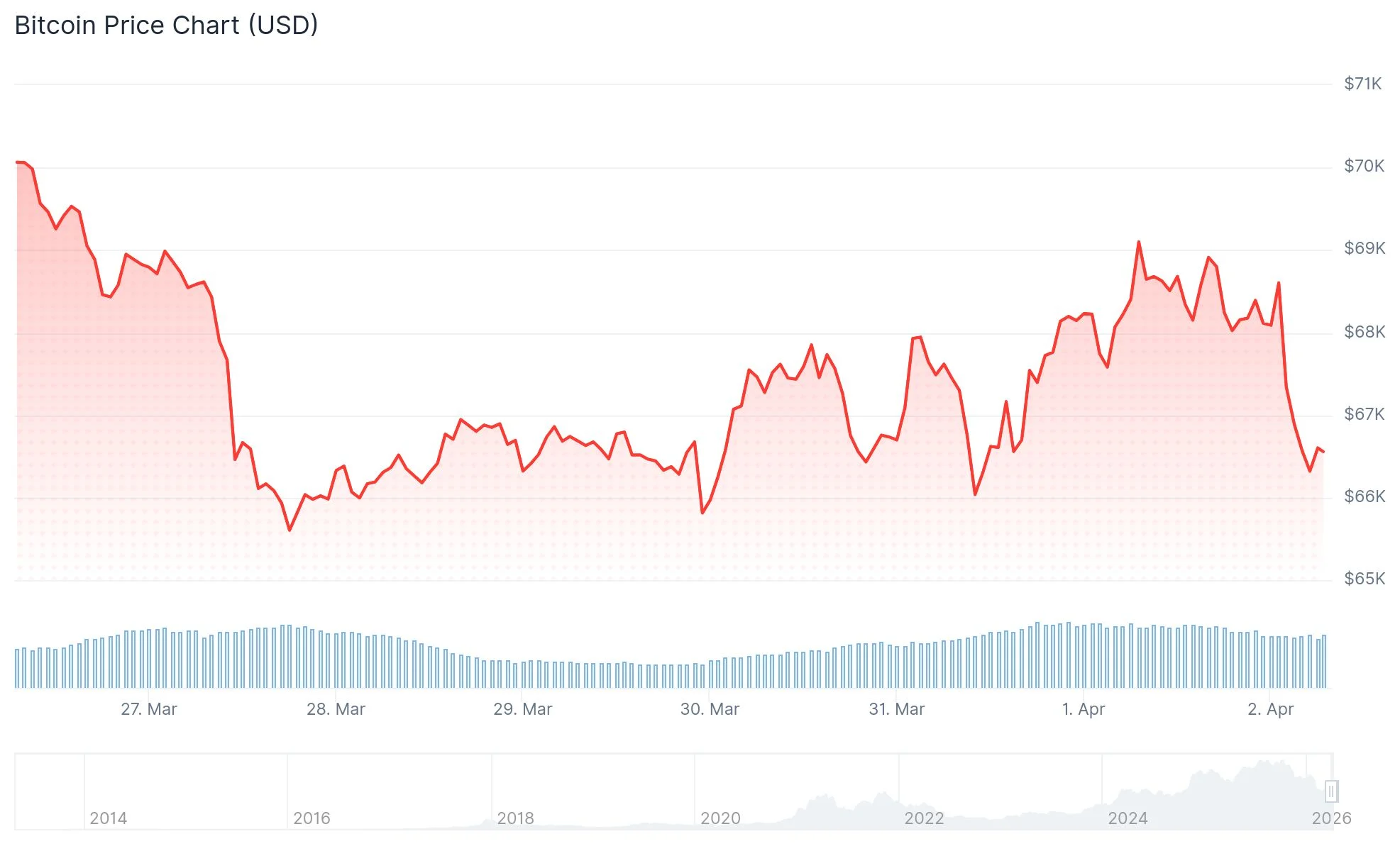
- BTC declined approximately 2.9% to roughly $66,400 following Trump’s Iran war address
- President announced US would strike Iran “extremely hard” in the coming 2–3 weeks
- Oil prices jumped past $104 per barrel; American equity futures lost more than $550 billion
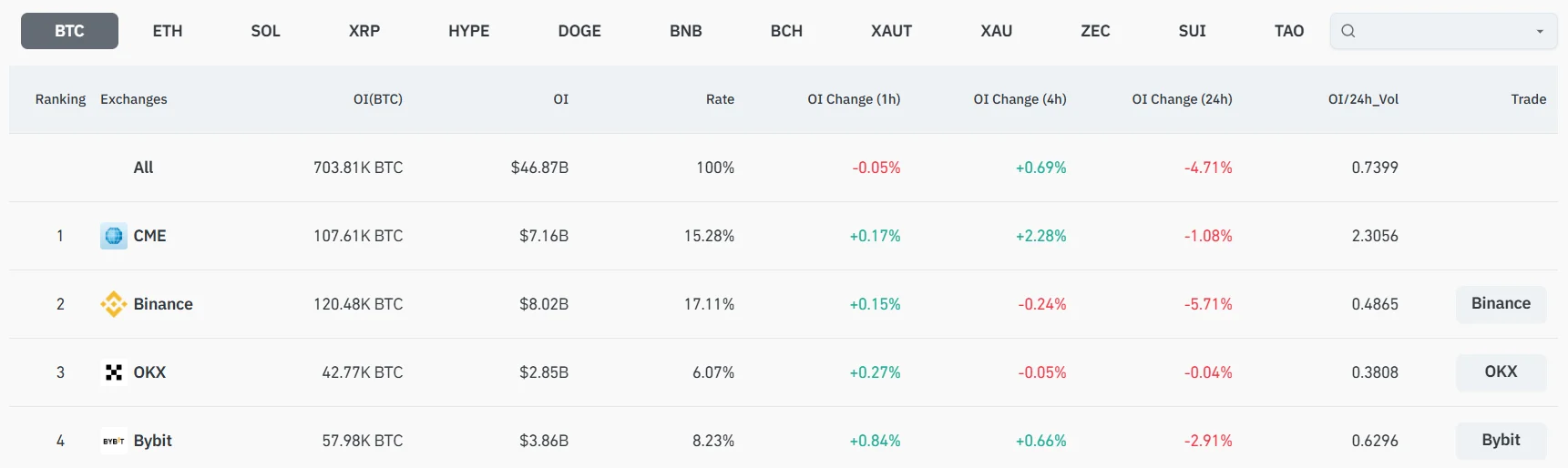
- Futures open interest for BTC decreased 2.5% within a 4-hour window, indicating bearish derivatives activity
- Spot Bitcoin ETFs recorded their first positive monthly flows since October, attracting $1.2 billion in March
Bitcoin experienced a significant decline Thursday following President Donald Trump’s national address concerning the escalating Iran conflict. Investors had anticipated signs of potential de-escalation, but the president’s remarks suggested the opposite trajectory.
During his address, Trump indicated the United States would “hit them extremely hard over the next two to three weeks,” in reference to Iran. While noting military operations were nearing their objectives, he provided no specific timeline for a potential ceasefire.
Crude oil markets reacted swiftly to the announcement. Prices surged 5% to exceed $104 per barrel. With the Strait of Hormuz continuing its blockade and Trump offering no indication of imminent reopening, energy markets remain volatile.
Earlier Thursday, Bitcoin was changing hands near $69,230 before the presidential address. By early morning hours, the digital asset had declined to $66,393, representing approximately a 2.9% decrease within 24 hours.
The wider cryptocurrency market mirrored this downward movement. Ethereum, XRP, Solana, and Dogecoin all recorded substantial losses. Bitcoin’s trading volume simultaneously contracted more than 8% during this timeframe.
Futures Data Reveals Bearish Sentiment
According to CoinGlass analytics, aggregate BTC futures open interest contracted 2.5% to $46.49 billion during a four-hour period following Trump’s speech. CME open interest decreased 2.70% while Binance registered a 2.96% decline. Such movements generally indicate traders liquidating long positions.
The Coinbase Premium indicator, which tracks demand from United States-based purchasers, shifted into negative territory. This suggests American retail participants are remaining on the sidelines rather than accumulating during the price decline.
Market commentators Lyn Alden and Rory Johnston noted that markets “didn’t really learn anything more from Trump’s Iran War address, but those things he reaffirmed are likely going to continue driving crude prices higher.”
The US Dollar Index advanced 0.33% to reach 100, while the 10-year Treasury yield climbed to 4.376%. Precious metals faced pressure, with gold declining more than 2% and silver dropping over 4%.
Spot ETFs Show Strength Despite Current Weakness
Despite the ongoing selloff, Bitcoin exchange-traded funds recorded their first positive monthly inflows since October. Spot Bitcoin ETFs attracted $1.2 billion during March following four consecutive months of capital outflows.
Bitcoin had still managed to outperform many traditional risk assets throughout March, registering modest gains while equities and precious metals declined. Nevertheless, BTC remains approximately 24% lower in 2026 and has predominantly traded within the $60,000 vicinity throughout the year.
Iran has reportedly demanded payment in Chinese yuan or cryptocurrency for vessels seeking passage through the Strait of Hormuz. No formal diplomatic negotiations between Washington and Tehran have occurred since hostilities commenced over a month ago.
At publication time, Bitcoin was trading at $66,393.
