



Key Takeaways
- Bitcoin encountered resistance once more at the $75,000–$76,000 level, retreating to approximately $73,500
- Cryptocurrency-related equities such as Coinbase, Strategy, Robinhood, and Circle declined 2–3%
- Both the S&P 500 and Nasdaq reached new all-time highs on Thursday, with futures showing modest gains Friday
- A temporary 10-day truce between Israel and Lebanon, connected to Iran’s Strait of Hormuz demands, improved market mood
- Netflix shares plummeted more than 9% after market close despite surpassing Q1 profit forecasts
The world’s leading cryptocurrency experienced another rejection on Thursday when it attempted to breach the $75,000–$76,000 resistance band—marking at least the second such occurrence in recent trading sessions. Bitcoin shed approximately 2% within minutes during the morning hours in U.S. markets, sliding toward the $73,500 mark.
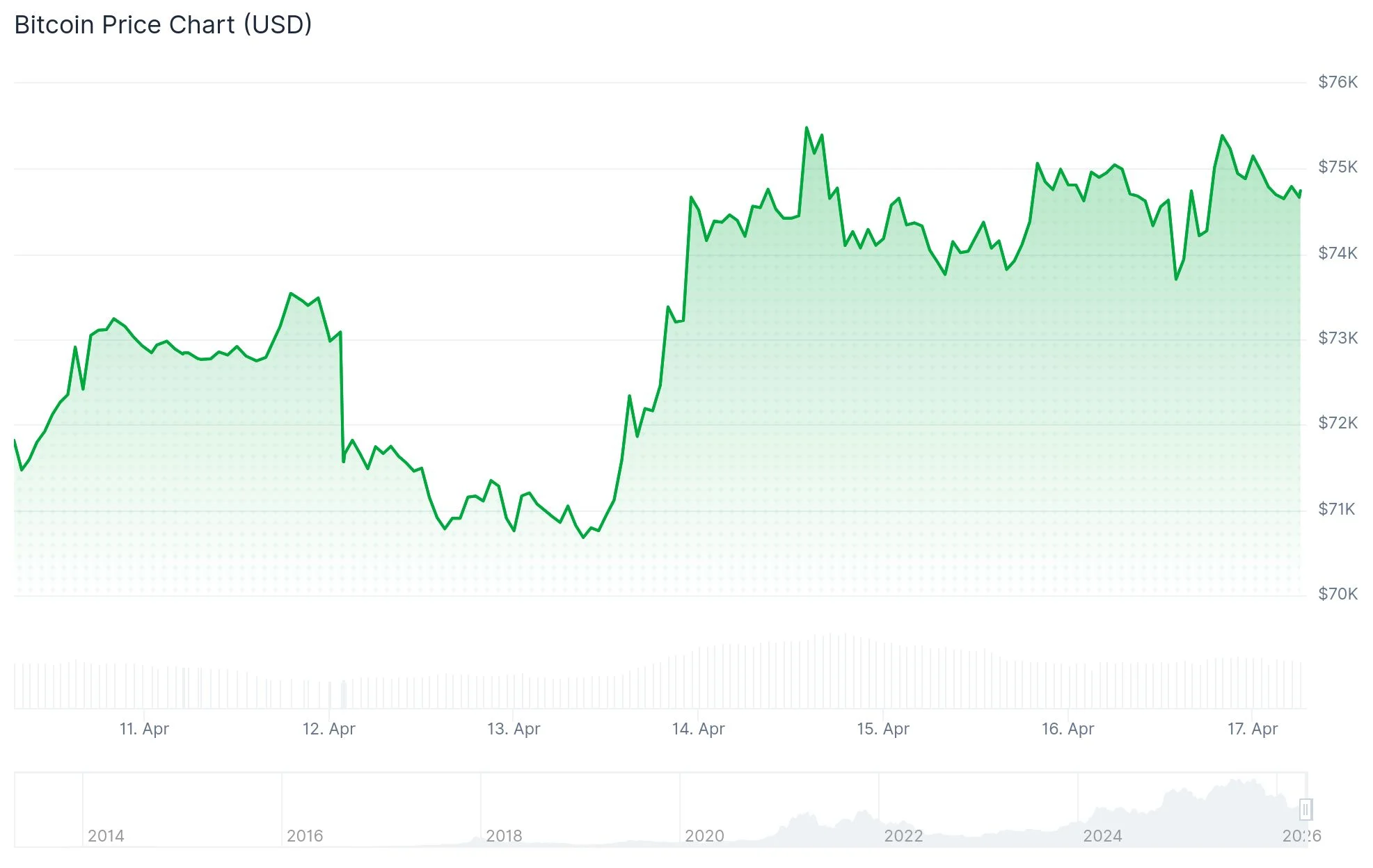
Market analysts view this price territory as critically important. Bitcoin was trading at these levels immediately before the dramatic February 5th selloff that drove valuations down to $60,000. Successfully clearing this barrier would represent a significant milestone on the path toward reclaiming the $90,000 level seen in early January.
The cryptocurrency’s weakness contrasted sharply with traditional equity performance. Both the S&P 500 and Nasdaq established fresh intraday and closing peaks on Thursday, advancing 0.3% and 0.4% respectively. The Dow Jones Industrial Average contributed gains of 115 points.
Equities tied to the cryptocurrency sector followed bitcoin’s downward trajectory. Coinbase, Strategy, Robinhood, and Circle all experienced declines in the 2–3% range during Thursday’s morning session.
Technology Stocks Narrow Performance Gap
Following the escalation of Middle East tensions in late February, bitcoin had maintained a substantial performance advantage over software-focused stocks. The cryptocurrency posted gains exceeding 11% during this timeframe, while IGV, the software sector ETF, managed only approximately 2%.
This performance differential has begun narrowing considerably. Throughout the most recent five-day period, IGV surged as much as 11% while bitcoin remained essentially unchanged. Thursday’s session saw IGV advance 1% as bitcoin slipped 1.5%.
The pattern indicates software equities may have been experiencing temporary underperformance rather than a fundamental break in correlation with bitcoin.
Crude oil markets also showed movement Thursday, climbing roughly 2% back above the $90 threshold as ongoing geopolitical uncertainties maintained focus on potential supply disruptions.
Ceasefire Agreement Boosts Market Sentiment
Friday morning brought modest gains to U.S. equity futures following President Trump’s announcement of a 10-day cessation of hostilities between Israel and Lebanon. The temporary truce represents part of Iran’s preconditions for allowing commerce to resume through the Strait of Hormuz.
S&P 500 futures advanced 0.1%, Dow futures gained 0.2%, while Nasdaq futures traded essentially unchanged. Speaking from the White House, Trump indicated that weekend discussions could potentially yield a lasting peace agreement.
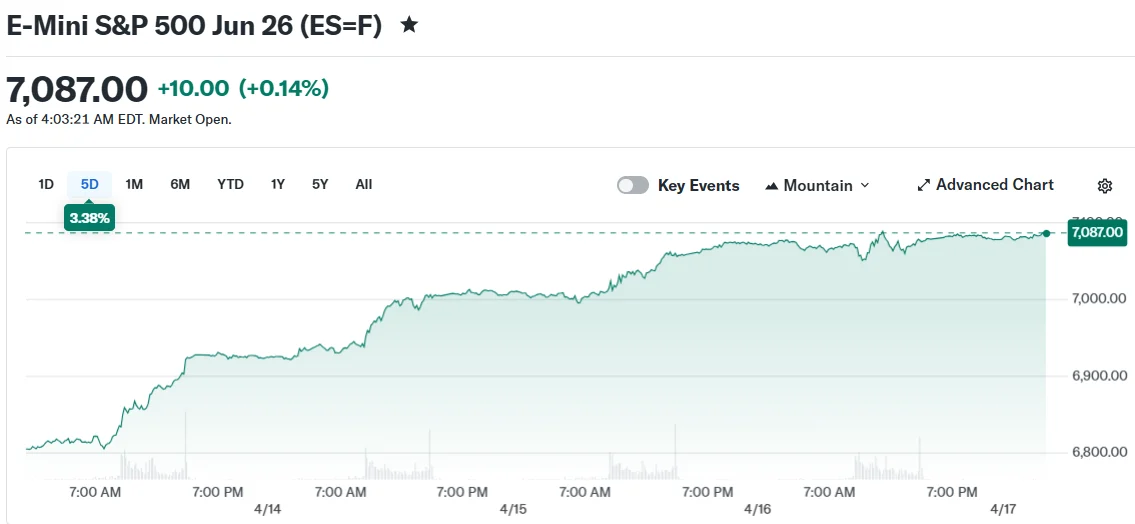
Equity markets have now completely erased declines associated with the Iranian conflict.
Netflix delivered first-quarter financial results that exceeded analyst projections but nevertheless plunged more than 9% in extended trading. The streaming giant’s disappointing guidance for the upcoming quarter triggered the negative investor response.
Several major financial institutions are scheduled to release quarterly earnings before Friday’s opening bell, including Truist Financial, State Street, and Fifth Third Bancorp.
