




Key Takeaways
- BTC demonstrated notable stability, declining merely 1.6% to $74,335 amid escalating U.S.-Iran confrontation, outperforming traditional markets
- Brent crude oil soared 5.7% reaching $95.50 per barrel; WTI climbed 6.9% approaching $90
- Major U.S. equity index futures declined uniformly, with losses ranging from 0.6% to 0.7% in Monday morning trading
- Ethereum decreased 2.6%, Solana shed 1.5%, while BNB remained unchanged
- Former President Trump issued warnings regarding Iranian critical infrastructure via Truth Social following weekend naval confrontation
Cryptocurrency markets weathered Monday’s geopolitical storm significantly better than traditional asset classes as U.S.-Iran relations deteriorated sharply over the weekend.
The United States Navy conducted an interdiction operation against the Iranian vessel TOUSKA, with President Trump announcing via Truth Social that U.S. Marines had taken control of the ship. His statement included stern warnings about potential strikes against Iranian electrical facilities and transportation infrastructure should diplomatic negotiations collapse.
Iran’s government retaliated by reinstating restrictions on maritime traffic through the Strait of Hormuz, a critical chokepoint for international petroleum shipments. This reversal came just days after Tehran had announced the waterway was “completely open” on Friday—news that had propelled the S&P 500 to an all-time high during that session.
The weekend developments erased that optimism swiftly.
Bitcoin was changing hands at $74,335 during Monday morning hours, representing a modest 1.6% pullback across the preceding 24-hour period. The leading cryptocurrency maintained a 4.8% weekly gain. Notably, this marks the fourth significant Iran-related market disruption since hostilities escalated, and Bitcoin’s negative reaction has progressively diminished with each episode.
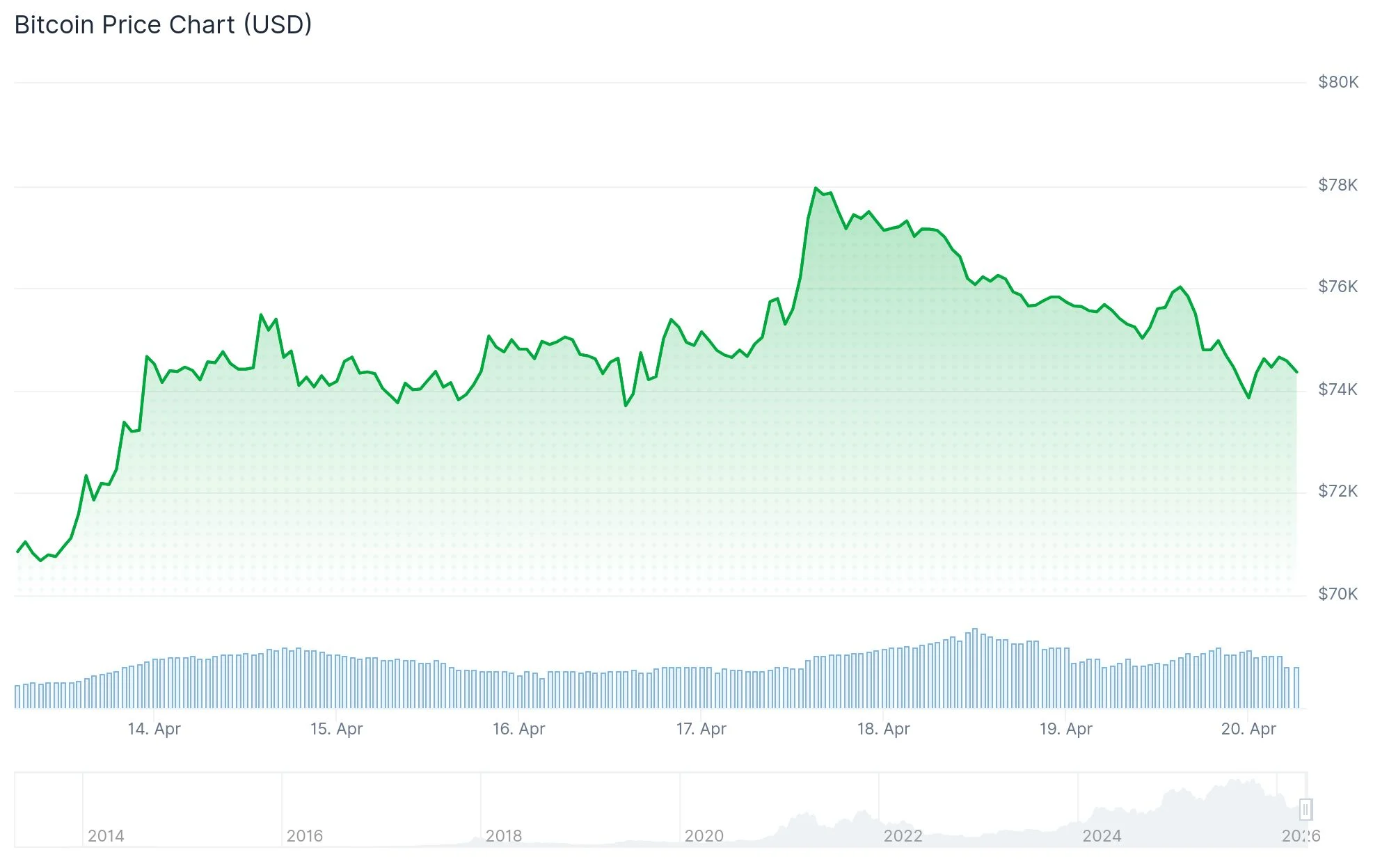
Ethereum retreated 2.6% to $2,272. Solana declined 1.5% to $84. BNB held steady at $618. Remarkably, none of the top ten cryptocurrencies by market capitalization experienced losses exceeding 3%.
Traditional Markets Face Steeper Declines
Oil markets exhibited pronounced volatility. Brent crude petroleum contracts jumped 5.7% to $95.50 per barrel. West Texas Intermediate crude surged approximately 6.9% to just beneath $90 per barrel. European natural gas futures contracts climbed as much as 11%.
Gold retreated 0.8% to $4,790. The U.S. dollar strengthened modestly as market participants rotated into conventional defensive positions.
U.S. equity index futures retreated across the board. Dow Jones Industrial Average futures declined roughly 0.7%. Both S&P 500 and Nasdaq 100 futures contracts fell approximately 0.6%. European equity futures indicated a 1.2% decline at Monday’s opening bell.
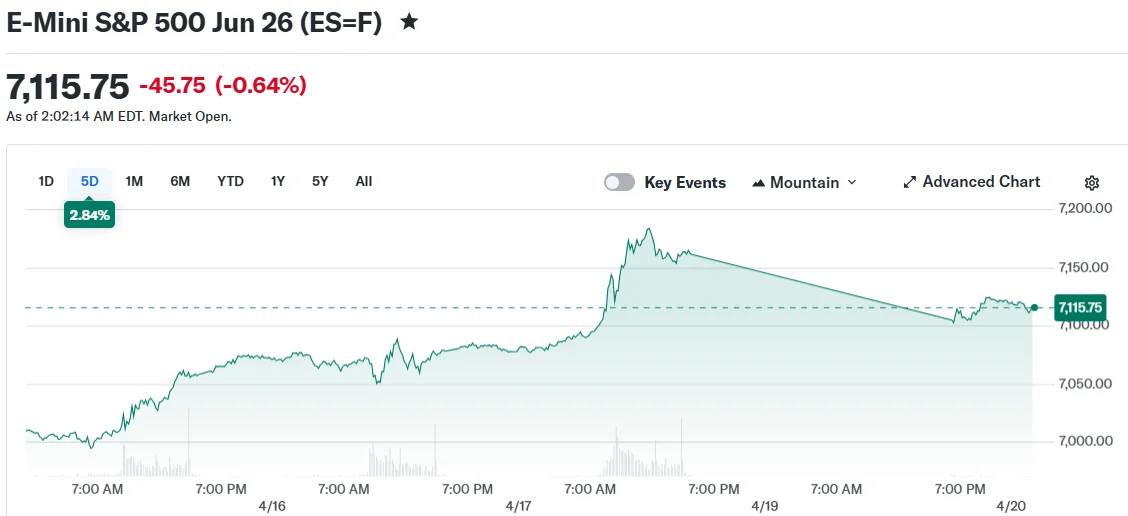
The weekend developments completely reversed three weeks of declining geopolitical risk premiums across financial markets. Equities and emerging market assets had rallied significantly on Friday following Iran’s announcement regarding the Strait of Hormuz.
Diminishing Sensitivity to Middle East Headlines
A clear pattern has emerged with each Iran-related market shock since the conflict’s inception: Bitcoin’s price decline has consistently been smaller than previous episodes. Market observers suggest this pattern may reflect that investors predisposed to selling on geopolitical developments have already exited their positions.
The expanding footprint of spot Bitcoin exchange-traded funds may also be establishing a more resilient price support structure.
Market participants were monitoring whether the 10-year Treasury yield, hovering around 4.27%, combined with dollar strength would exert downward pressure on Bitcoin through broader risk-asset transmission channels.
Bitcoin maintained levels near $74,000 as European trading sessions commenced Monday morning.
Beyond geopolitical concerns, investors are preparing for a densely packed corporate earnings calendar, with Tesla, Intel, and United Airlines among the major companies scheduled to release quarterly results.
