




Ask someone to name a betting company and there is a good chance William Hill comes up in the first few seconds. Ask that same person whether William Hill’s online platform feels cutting edge and the pause before they answer tells you everything. Brand familiarity and product modernity are different things, and in gambling the distance between them is getting wider every year. William Hill has spent decades adapting a historic brand for the digital world. ZunaBet skipped the adapting part entirely and just built a digital platform from nothing in 2026. The difference between those two journeys shows up the moment you use both products back to back.
Contents
William Hill: A Brand That Predates the Technology It Now Depends On
William Hill’s history stretches back to 1934 Britain. The company has navigated through every major shift in how people place bets — from underground bookmaking to licensed shops to dial-up internet platforms to the smartphone era. Now owned by Caesars Entertainment, William Hill operates its online offering across multiple international markets with sportsbook and casino products.
The sportsbook is the part of William Hill that still feels closest to its roots in the best sense. Coverage of football, horse racing, and traditional sports markets runs deep with pricing that holds up well against competitors. Live betting functions adequately and the mobile app manages everyday betting tasks without causing frustration. The casino rounds out the platform with slots, table games, and live dealer rooms from recognised providers. The game library has expanded over the years but at a pace that leaves it well behind the kind of catalogue sizes that casino-first platforms now consider entry level.

Money moves exclusively through conventional channels. Debit cards, bank transfers, PayPal, Skrill, and similar tools handle all financial activity. Deposits land reliably. Withdrawals are at the mercy of banking infrastructure — e-wallets resolve faster while bank transfers can disappear into processing queues for days. Cryptocurrency has never entered the picture.
New players receive the usual mix of free bets on the sportsbook and deposit matches or free spins on the casino side. Values shift by market but stay within the familiar zone that established operators share between them. The loyalty programme runs on points accumulated through play, supplemented by occasional promotions, without a structured tier system or gamified progression visible to the player.
The overall sensation of navigating William Hill’s platform in 2026 is one of functional adequacy wrapped in dated presentation. The interface reveals its layered history — menus that branched as features were added, visual styles that shifted between redesign cycles without fully harmonising, and an information architecture that prioritises completeness over elegance. It is a platform that has been kept running. Whether it has been kept current is a different question.
ZunaBet: What Happens When You Build for Today Without Yesterday’s Baggage
ZunaBet appeared in 2026, built by Strathvale Group Ltd with an Anjouan gaming license and a team whose collective industry experience exceeds twenty years. The platform carries nothing from any previous product. No inherited interface decisions. No legacy code constraining what is possible. No features that survive only because removing them would be more disruptive than maintaining them. Everything on ZunaBet reflects a deliberate choice made this year for this moment.
The design makes that freshness tangible immediately. A dark-themed HTML5 interface loads with speed and fluidity, adapting cleanly to any device without the compromises that come from retrofitting older layouts for newer screens. Content flows through intuitive pathways that feel like they were planned on a whiteboard last month — because they were. There is no archaeological layering of past decisions beneath the surface. The experience is unified from the first click because every pixel was placed with the same design language at the same time.
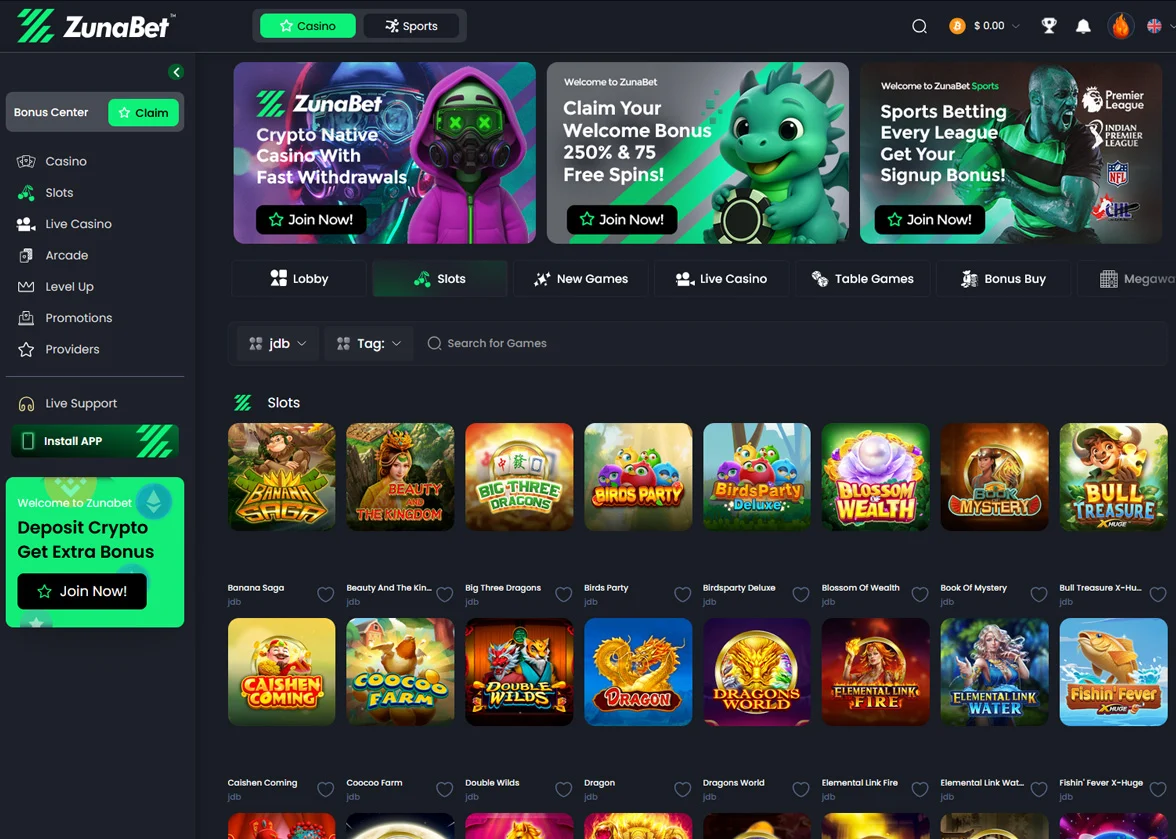
Behind that interface sits a game library that would have seemed impossible for a new platform a few years ago. Over 11,000 titles from 63 providers — Pragmatic Play, Evolution, Hacksaw Gaming, Yggdrasil, BGaming, and a sprawling roster of studios — fill a catalogue that spans slots, RNG table games, and live dealer rooms. William Hill’s collection, assembled gradually across years of provider relationships, occupies a different scale entirely. For players whose sense of what constitutes adequate content was set by platforms where options feel limitless, ZunaBet delivers while William Hill falls short.
The sportsbook carries equal weight. Football, basketball, tennis, NHL, combat sports, and virtual sports get full market coverage. Esports receives particular attention with comprehensive markets for CS2, Dota 2, League of Legends, and Valorant. William Hill has added esports to its roster. ZunaBet built its esports section as though a significant portion of its audience considers competitive gaming their primary betting interest — because it does.
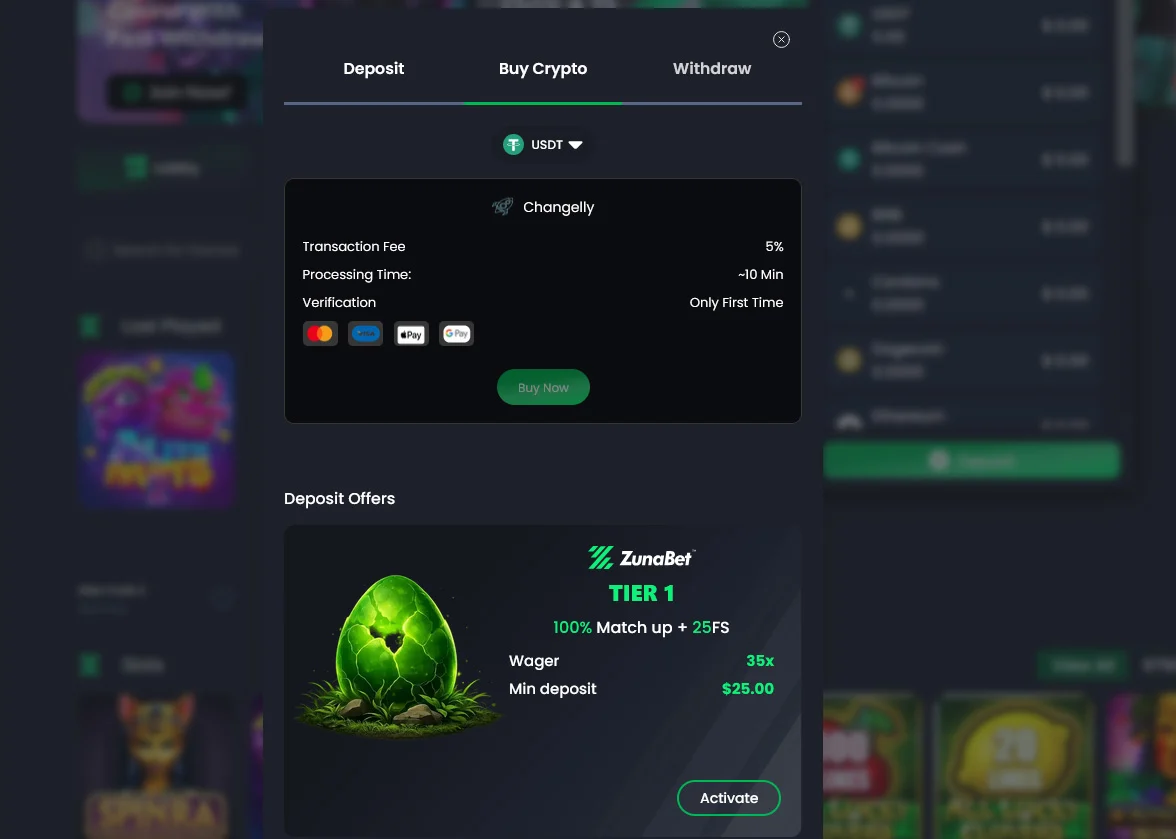
Cryptocurrency powers every transaction. Over 20 coins are supported — BTC, ETH, USDT on several blockchains, SOL, DOGE, ADA, XRP, and more. Zero platform fees. Blockchain-speed withdrawals. No banks, no processors, no institutional timelines dictating when a player receives their money. William Hill’s fiat-only system relies on the same financial infrastructure it has always relied on. ZunaBet’s crypto system relies on infrastructure that did not exist when William Hill was founded and delivers an experience that makes traditional payment processing feel like it belongs to a museum exhibit about how things used to work.
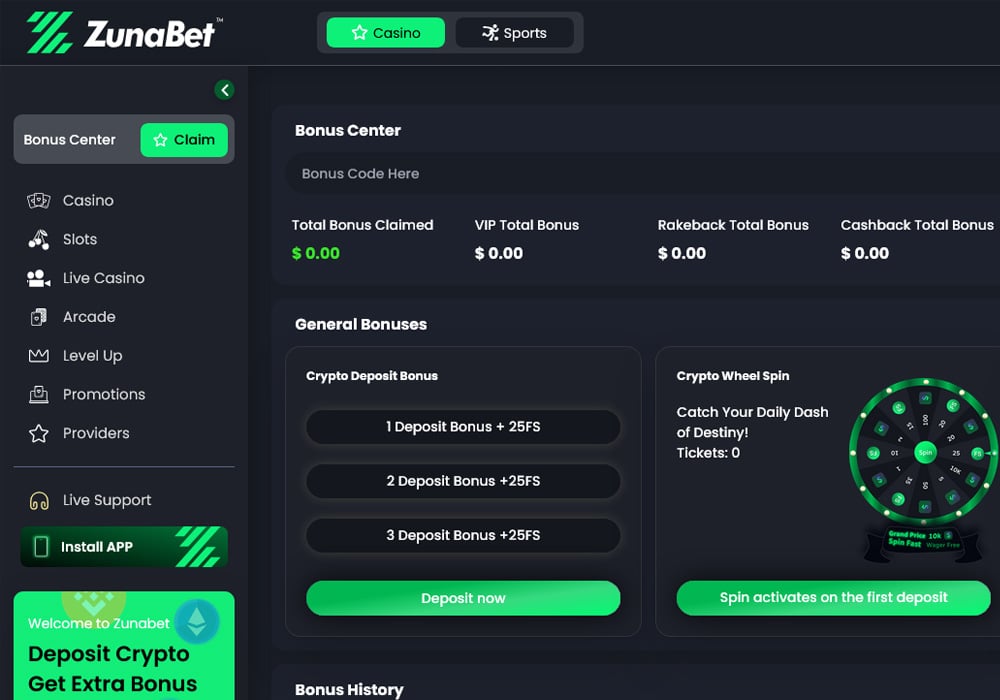
The welcome package reaches up to $5,000 in deposit matches plus 75 free spins over three deposits — 100% up to $2,000 and 25 spins first, 50% up to $1,500 and 25 spins second, 100% up to $1,500 and 25 spins third. That dwarfs whatever introductory value William Hill currently extends in any of its active markets.
Native apps on iOS, Android, Windows, and MacOS deliver the complete platform everywhere. Live chat support never closes.
Silent Loyalty vs Loyalty That Demands Your Attention
William Hill’s loyalty programme operates like a utility running in the background. Points accumulate as players wager. Promotional offers appear from time to time. The system does not announce itself, does not present goals, and does not give players a visible structure to progress through. It rewards activity in the most passive sense — recording what players do and occasionally returning value without making the process particularly interesting or motivating.
ZunaBet transformed loyalty into one of the platform’s headline features. The dragon evolution system built around a mascot named Zuno creates a progression journey through six tiers — Squire, Warden, Champion, Divine, Knight, and Ultimate. Rakeback starts at 1% and climbs to 20%. Free spins reach 1,000 at the top levels. VIP club membership and double wheel spins add further markers along the path.
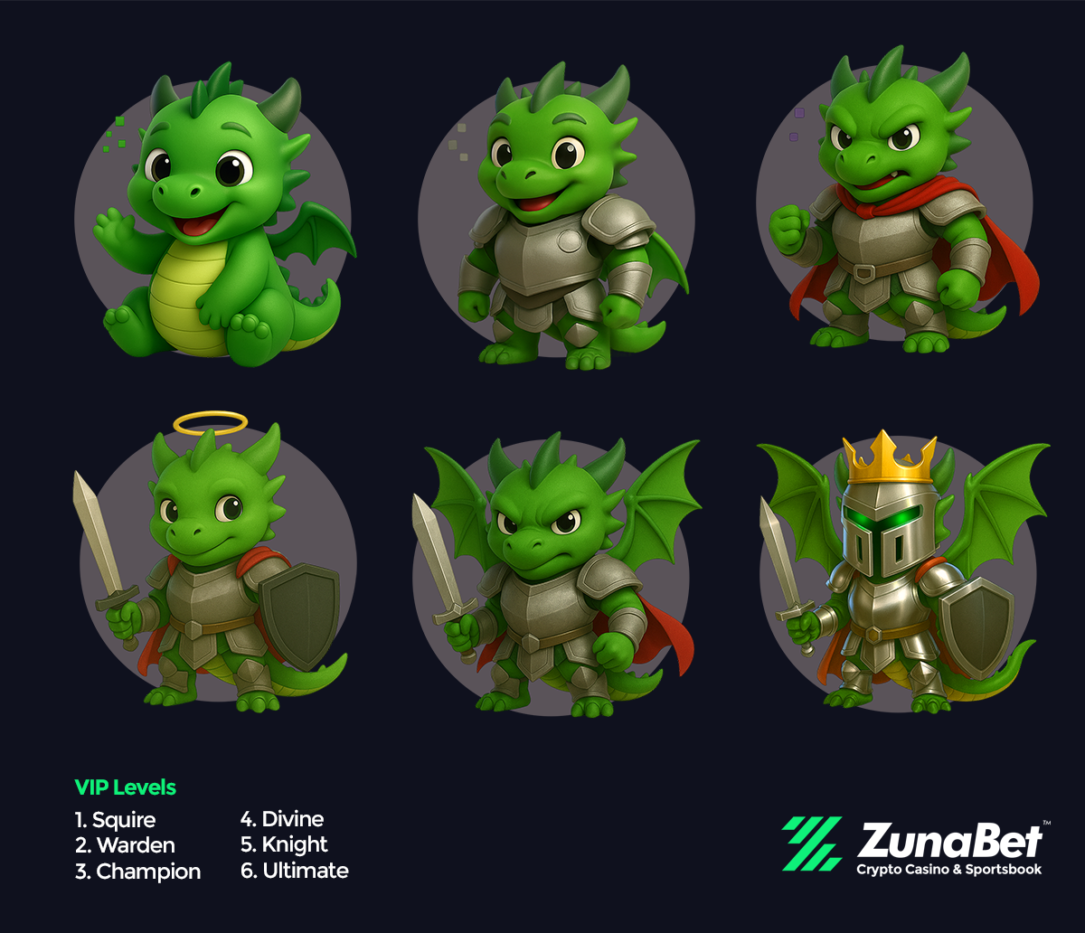
Every element of the system is transparent and designed for engagement. Players see where they stand. They see where the next tier sits. They know exactly what it takes to get there and exactly what it rewards. The gamified structure uses the same progression mechanics that have powered player engagement in video games for decades — visible levels, defined milestones, tangible rewards, and the persistent motivation of the next achievable goal.
The gap between these two loyalty experiences mirrors the broader gap between the platforms themselves. William Hill’s programme runs without asking for attention. ZunaBet’s programme earns attention by giving players something genuinely worth engaging with. One treats loyalty as an administrative function. The other treats it as entertainment. For anyone who has experienced progression systems in gaming, fitness apps, or any other modern digital product, only one of these approaches feels like it belongs to the current era.
How Each Platform Handles the Moment That Matters Most
Every feature a gambling platform offers builds toward a single moment — the moment a player wants their money. How that moment plays out defines the entire experience retroactively. A beautiful interface and generous bonus lose their lustre if the player has to wait days to access their winnings.
William Hill processes withdrawals through the established financial system. Banks and payment providers accept the request and process it according to their own rules and timelines. E-wallets tend to move reasonably quickly. Bank transfers can stall for days. The player waits, checks their account, waits some more, and eventually receives their funds on a schedule they had no part in setting.
ZunaBet processes withdrawals through the blockchain. The request goes out, the network processes it, and the funds land in the player’s wallet. No bank reviews it. No processor sits on it. No calendar determines when it happens. No fee comes out of it. The moment a player asks for their money is the moment the process begins and effectively ends. Every time. Without exception.
For a player deciding which platform feels more modern, this single interaction often provides the definitive answer. One platform makes you wait for institutions to move your money. The other lets the blockchain move it for you. The difference is not theoretical. It is felt every single time a player cashes out.
The Only Question That Matters
William Hill has earned its reputation over ninety extraordinary years. The brand carries a weight of trust and recognition that no platform launched this year can replicate. For players who choose based on heritage and institutional credibility, William Hill continues to make a legitimate case.
ZunaBet has earned attention by building a product that feels entirely of this moment. A cohesive interface without legacy layers. Over 11,000 games from 63 providers. Crypto payments across more than 20 coins with zero fees and blockchain speed. A sportsbook that invests seriously in esports. A $5,000 welcome package. A loyalty programme that makes progression feel like part of the entertainment. Native apps on every device. Always-available support.
The question is not which platform has existed longer or which brand name carries more weight. The question is which platform feels like it was designed for someone sitting down to gamble in 2026. William Hill has adapted to reach this moment. ZunaBet was created for it. And when a player experiences both, the one that was built for right now feels like right now. The other, despite all its history and all its earned respect, feels like it is still trying to get there.
