



Key Takeaways
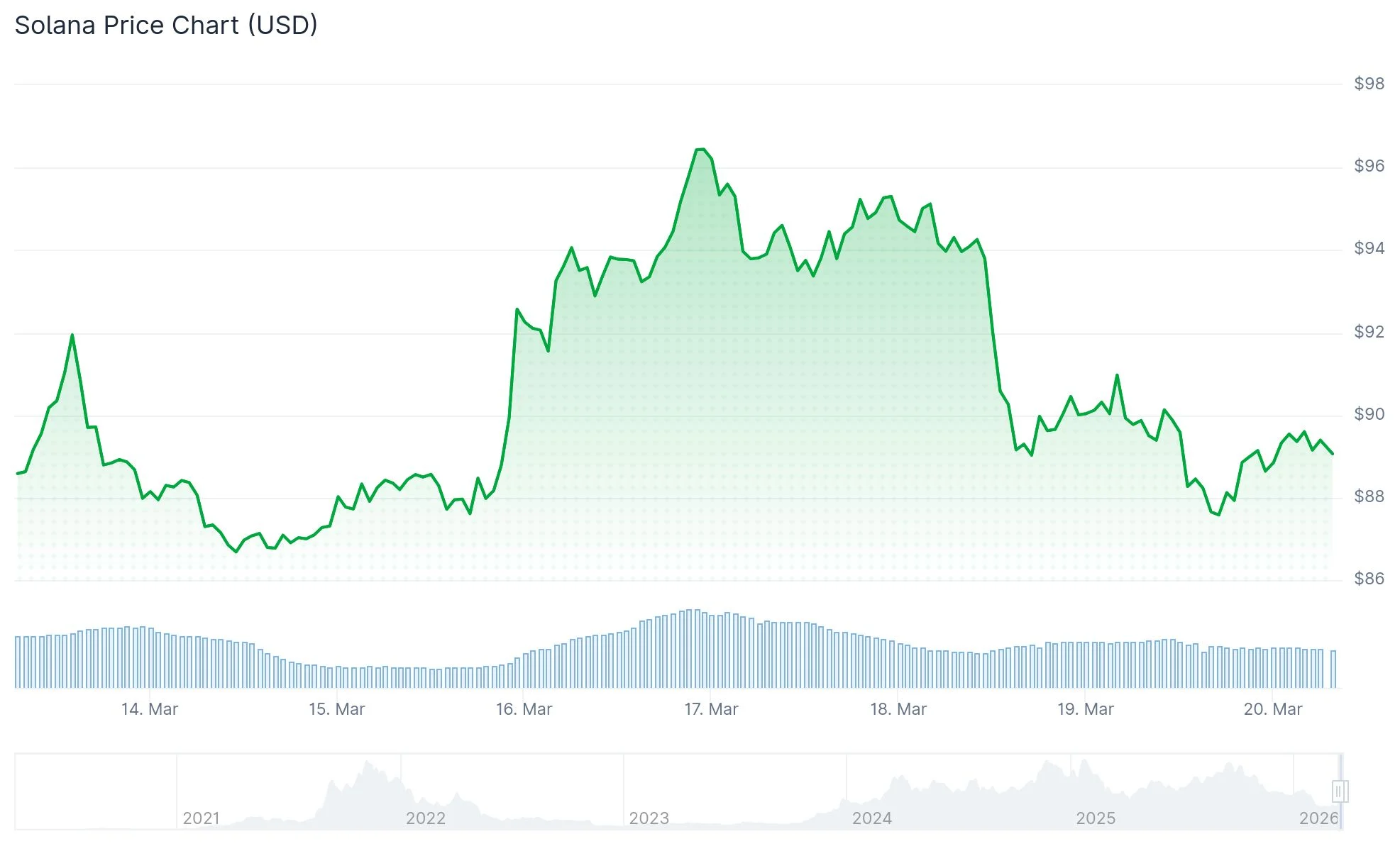
- Solana experienced an 11% decline across three trading sessions, retreating to $87 after reaching $97.70 earlier this week, with $25 million in leveraged longs liquidated.
- Perpetual futures funding rates for SOL have collapsed to 0%, indicating minimal bullish conviction in leveraged trading.
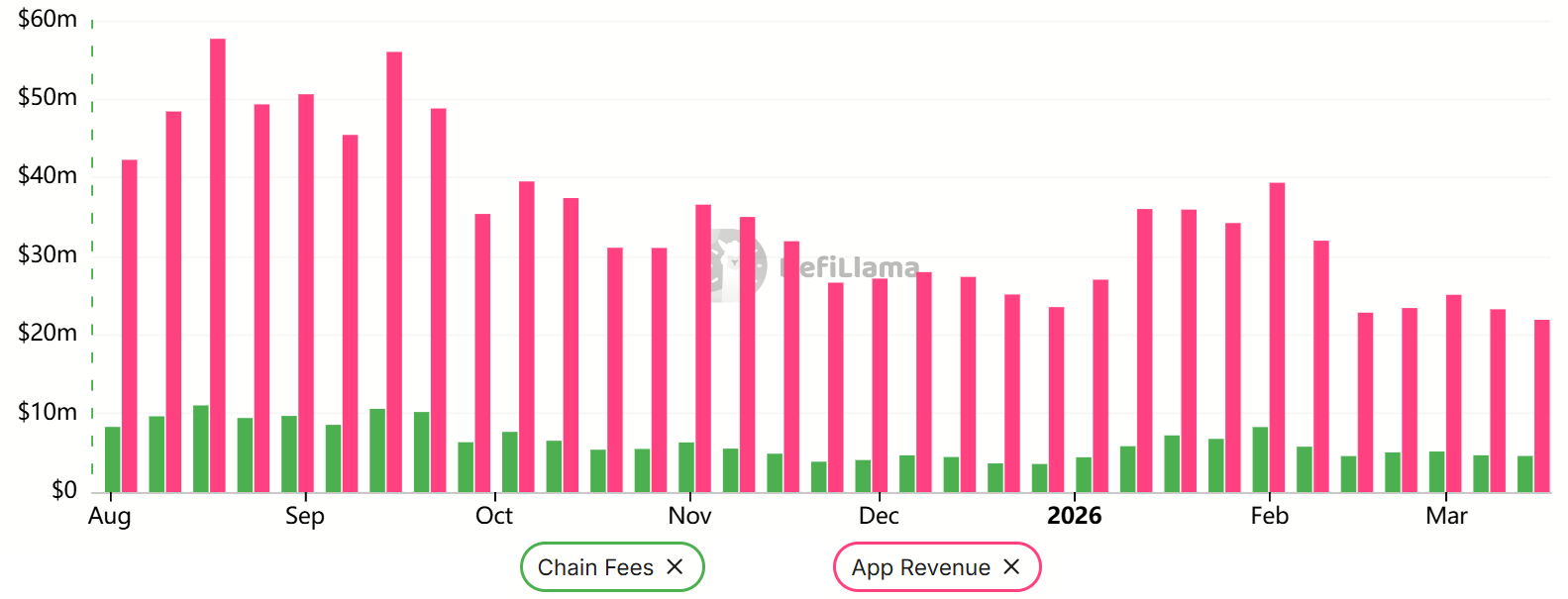
- Revenue from Solana’s decentralized applications plunged to $22 million, marking the lowest point in 18 months compared to $36 million two months prior.
- Specialized derivatives chains like Hyperliquid now command over 80% of perpetual contract trading volume, sidelining Solana.
- Corporate treasury holders of SOL, including Forward Industries and DeFi Development Corp., are experiencing unrealized losses on their positions.
Solana’s native cryptocurrency has endured a challenging period in recent trading sessions. Following a peak of $97.70 earlier in the week, SOL experienced a sharp 11% correction over a three-day span, bottoming out at $87 on Thursday. This price action resulted in the forced closure of $25 million in leveraged long contracts, dampening investor sentiment across the board.
Market indicators from the derivatives sector reveal concerning trends. Funding rates for SOL perpetual futures contracts have plummeted to approximately 0%, signaling a complete absence of appetite for bullish leveraged bets. Typically, these rates maintain positive territory around 9% when market participants exhibit optimism. For the past thirty days, short sellers have dominated the leveraged trading landscape.
The options marketplace is also reflecting defensive positioning. Deribit’s 30-day delta skew metric surged to 12% on Thursday, indicating that put options—instruments designed to profit from declining prices—command a premium relative to call options. This pricing dynamic suggests institutional traders and market makers are actively protecting themselves against additional downside, despite SOL already trading 70% beneath its historical peak.
On-Chain Metrics Signal Declining Network Engagement
Revenue generated by decentralized applications on the Solana network has contracted to an 18-month nadir of $22 million. This represents a significant decline from the $36 million recorded just eight weeks earlier. While this pattern isn’t exclusive to Solana—BNB Chain witnessed a 52% revenue contraction during the identical timeframe—it underscores broader weakness in blockchain utilization.
Solana maintains its leadership position in decentralized exchange transaction volume, powered by platforms such as Pump, Raydium, and Orca. However, the narrative shifts dramatically in perpetual futures trading. Purpose-built derivatives blockchains—encompassing Hyperliquid, Edgex, Zklighter, and Aster—have captured more than 80% of aggregate perpetual contract activity.
The introduction of a formally licensed S&P 500 Index perpetual futures product on Hyperliquid, created by Trade[XYZ], has redirected significant trading flow and attention away from Solana’s ecosystem. The tokenized equities sector now approaches $1.1 billion in cumulative assets under management.
Technical Formation Echoes Previous Bearish Setup
From a chart analysis perspective, market observers have identified a concerning bearish pattern developing on Solana’s price structure. According to technical analyst Elja’s published chart, the present configuration bears striking resemblance to a January 2026 formation where SOL rallied into overhead resistance before experiencing a steep selloff. Both instances featured the token advancing toward a resistance zone following a decline, only to lose upward momentum rapidly.
https://twitter.com/Eljaboom/status/2034310769488416909?s=20
SOL maintains a market capitalization of $51 billion, representing a 42% valuation discount relative to BNB’s $88 billion. Interestingly, Solana demonstrates superior network fundamentals in several key metrics—its trailing 30-day fee generation reached $20.8 million versus BNB Chain’s $9.1 million, while its total value locked of $6.9 billion surpasses BNB Chain’s $5.7 billion.
Corporate entities that integrated SOL into their balance sheets, such as Forward Industries and DeFi Development Corp., are presently facing underwater positions on these holdings.
