



Key Highlights
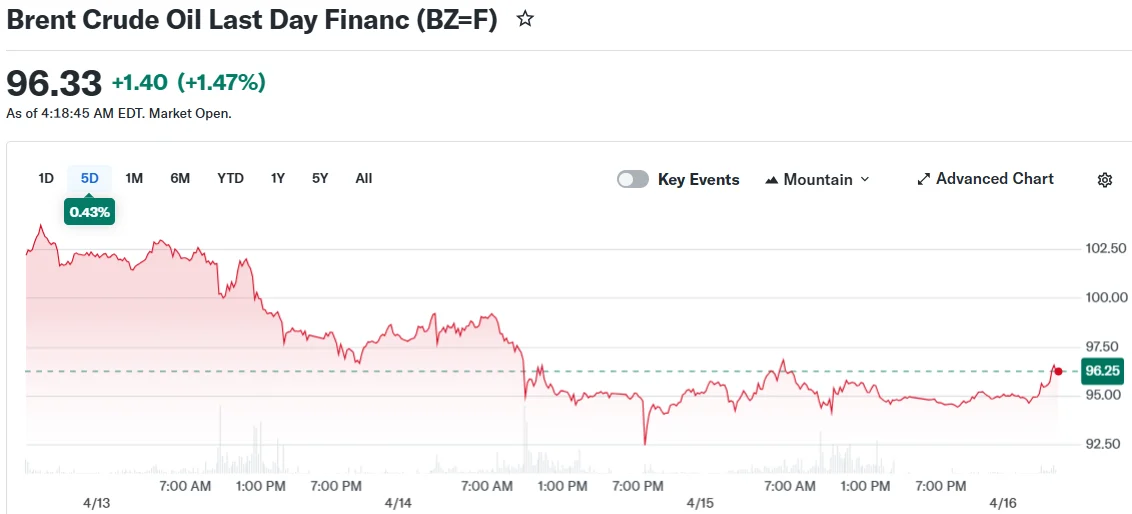
- Brent crude oil maintains position close to $95 per barrel, while WTI fluctuates between $88 and $91
- Washington and Tehran exploring potential 14-day ceasefire prolongation before the April 21 deadline
- Strait of Hormuz blockade continues, threatening approximately 3.8 million barrels per day in transit
- Chinese economic expansion reached 5% annually in Q1, providing modest support for demand forecasts
- International energy organizations project weaker consumption due to conflict-related uncertainties
Energy markets have maintained relative stability throughout the week as the United States and Iran contemplate extending their temporary truce by an additional two weeks, providing further opportunity for diplomatic resolution despite ongoing challenges.
Brent crude continues trading in the vicinity of $95 per barrel. The West Texas Intermediate benchmark fluctuates within the $88 to $91 range. These prices reflect approximately one-third increases compared to pre-conflict levels from late February, though significantly below the $120 highs witnessed during the initial conflict phase.
The temporary cessation of hostilities between the two nations faces an April 21 expiration date. Diplomatic sessions conducted in Pakistan over the previous weekend failed to produce breakthrough agreements. International mediators currently focus on organizing technical-level meetings addressing core contentious matters, particularly the Strait of Hormuz access and Tehran’s uranium enrichment activities.
Ali Abdollahi, commanding Iran’s combined military operations center, issued a stark declaration: should American blockade measures persist, Tehran will prevent all commercial traffic through the Persian Gulf, Sea of Oman, and Red Sea waterways.
Washington maintains naval enforcement operations restricting Iranian maritime movement. Meanwhile, Iran keeps the strategic strait predominantly closed to international shipping. This critical waterway serves as the primary connection between Persian Gulf petroleum reserves and worldwide energy markets.
Vivek Dhar, an analyst with Commonwealth Bank of Australia, highlighted that the ongoing blockade jeopardizes roughly 3.8 million barrels of crude oil and refined products that traversed the passage during the previous month.
Futures Pricing Versus Physical Market Realities
Kaes Van’t Hof, serving as chief executive of Diamondback Energy, expressed concern that oil futures trading inadequately captures actual physical market conditions. According to Van’t Hof, futures contracts increasingly incorporate de-escalation expectations rather than acknowledging current ground realities.
Warren Patterson, commodities strategist at ING Groep, reinforced this perspective, noting that any ceasefire arrangement will likely prove fragile given the substantial gap between American and Iranian positions, creating substantial upward price risk potential.
Both the International Energy Agency and the Organization of the Petroleum Exporting Countries issued warnings this week regarding conflict-induced pressure on worldwide oil consumption.
Chinese Economic Data Provides Limited Support
China’s economy expanded at a 5% annual rate during 2026’s opening quarter, achieving the top end of Beijing’s yearly growth objectives. This performance exceeded analyst predictions and bolstered optimism regarding petroleum demand from the planet’s premier crude importing nation.
Nevertheless, economic growth decelerated as the quarter concluded. China’s substantial reliance on Iranian crude imports introduces additional uncertainty into its energy security planning.
In related developments, Thailand pursues emergency procurement agreements for petroleum and agricultural fertilizers via Omani intermediaries. Australia faces domestic fuel production constraints following a fire incident at Viva Energy’s Geelong refining facility. Indian officials cautioned that the conflict’s economic reverberations could rival pandemic-era disruptions.
President Donald Trump indicated this week that conflict resolution appears imminent, suggesting additional diplomatic discussions could commence within days.
