



Key Takeaways
- German airline may be forced to ground as many as 40 planes (roughly 5% of total fleet) because of Middle East fuel supply constraints
- Disruption at the Strait of Hormuz has severely restricted global jet fuel availability, with Europe relying on Persian Gulf imports for approximately 50% of supply
- Morgan Stanley revised DLAKY rating from “overweight” to “equal-weight,” reducing 2026 EBITDA projection by 17%
- Anticipated fuel cost pressure expected to create a €1.6bn expense increase and approximately €800m EBITDA decline
- Load factor projections show a ~2% year-over-year decline starting Q3 2026, while capacity expansion trimmed from 4% to 2.5%
The German flag carrier is confronting dual headwinds this week — a significant analyst downgrade coupled with mounting concerns over jet fuel availability. Among European airlines, Lufthansa has emerged as particularly vulnerable to the ongoing energy market volatility, and financial projections are beginning to capture this reality.
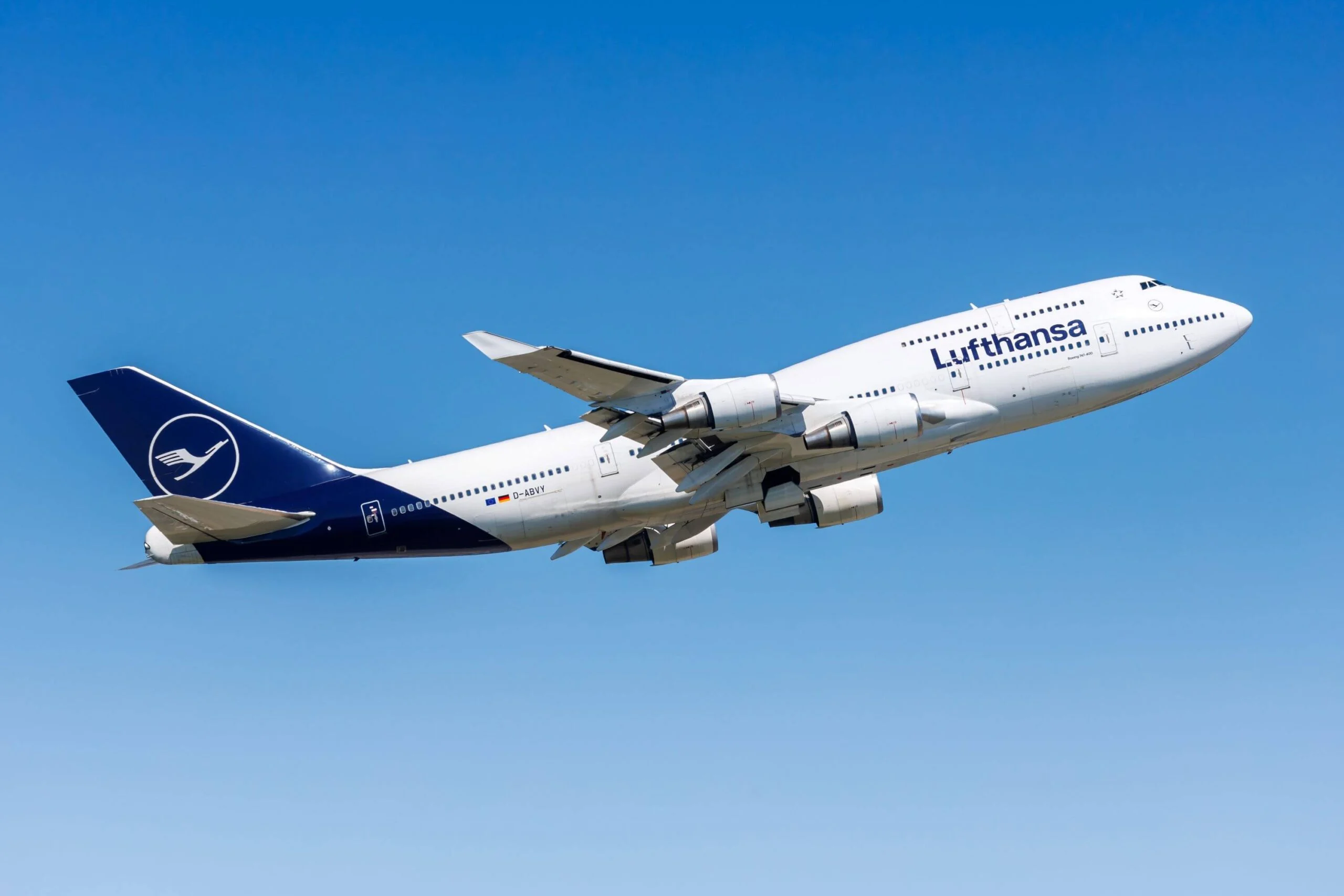
CEO Carsten Spohr has instructed operational teams to prepare multiple contingency scenarios based on varying disruption levels. The most tangible measure under consideration involves idling up to 40 aircraft, representing approximately 5% of the airline’s total fleet. Rather than adopting a wait-and-see approach to demand patterns, management is clearly leaning toward proactive cost management.
The fundamental issue stems from the practical shutdown of the Strait of Hormuz, a vital passage for international jet fuel distribution. Asian refineries have already begun scaling back output in response, with Europe facing particularly acute exposure — approximately half of all jet fuel consumed in the EU and UK originates from Persian Gulf sources.
This supply constraint extends beyond simple pricing concerns. The possibility of actual fuel scarcity introduces an unpredictable element that proves difficult to mitigate through hedging strategies, particularly problematic for a carrier already trailing competitors in fuel hedging effectiveness.
Analyst Downgrades Rating While Slashing Profit Projections
Morgan Stanley revised its stance on Lufthansa to “equal-weight” from “overweight” on Wednesday, pointing to deteriorating earnings prospects and inferior fuel hedging positions compared to rivals including IAG and Air France-KLM.
The investment bank reduced its 2026 EBITDA forecast for Lufthansa by 17% — notably more aggressive than the 6% adjustment for IAG or the 10% revision for Air France-KLM. This disparity primarily reflects hedging strategy differences. According to Morgan Stanley, Lufthansa’s fuel hedging positions “remains less attractive vs. peers.”
In absolute terms, the firm projects a €1.6bn increase in fuel expenses for the year, driving an approximately €800m decrease in FY26 EBITDA compared to previous estimates.
Capacity expansion forecasts were similarly reduced, dropping from 4% to 2.5%, while load factors are anticipated to decline roughly 2% year-over-year beginning in Q3 2026.
Fare Increases Provide Incomplete Relief
On the revenue front, Morgan Stanley anticipates that Lufthansa will successfully implement fare increases. Passenger yield projections show gains of +7% in Q2, +11% in Q3, and +11% in Q4 of 2026.
However, these revenue improvements are insufficient to completely offset the fuel cost burden. While legacy carriers typically enjoy greater pricing flexibility than budget competitors, Lufthansa still fares worse than European counterparts when fuel costs are factored into the equation.
Notably, Morgan Stanley highlighted that Lufthansa’s year-to-date stock decline of roughly 9% is actually more modest than the ~16% losses experienced by IAG and Air France-KLM, characterizing this disparity as “a disconnect we view as unjustified.”
The stock experienced an 8.1% surge during early Frankfurt trading on Tuesday following announcement of the contingency planning — after having declined approximately 16% year-to-date at that juncture. Nevertheless, the combination of the downgrade and troubling fuel outlook has sustained downward pressure on shares.
