



TLDR
- Precious metal climbed past $4,700 per ounce, reaching its strongest level in fourteen days
- Diplomatic progress between Washington and Tehran sent crude oil lower, reducing inflation concerns
- Dollar weakness against major currencies increased gold’s appeal to international investors
- Tehran evaluating a 14-point proposal from Washington, with diplomatic meetings scheduled in Pakistan
- Other precious metals rallied alongside gold, with silver surging more than 5%
The precious metal extended its winning streak to three consecutive sessions Thursday, breaking through the $4,700 threshold as diplomatic developments between Washington and Tehran raised hopes for resolving the Strait of Hormuz crisis.
Spot prices advanced 1.2% to reach $4,747.26 per ounce during mid-morning trading in New York. June-dated futures contracts climbed 1.3% to settle at $4,753.71.
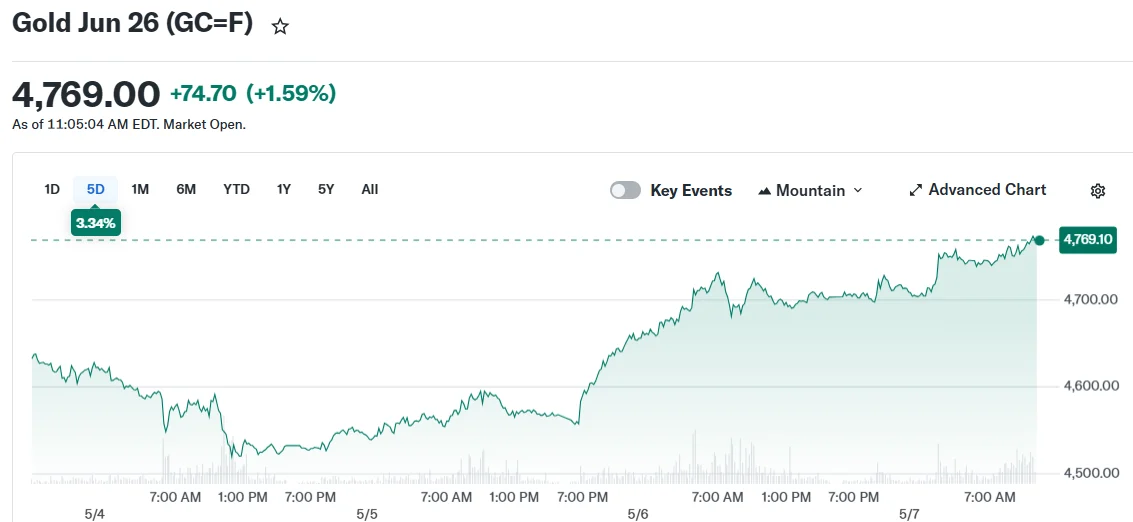
The previous trading session saw the yellow metal surge more than 3% — marking its most significant single-day advance since March concluded. This momentum pushed prices to their strongest position in a fortnight.
White metal followed suit with impressive gains. Silver advanced over 5% Thursday following a 6.2% rally in the prior session. Both platinum and palladium posted solid increases as well.
Gold had retreated approximately 10% following the outbreak of tensions with Iran in late February. The blockade of the Strait of Hormuz — a critical shipping channel responsible for roughly 20% of global petroleum transit — propelled energy costs significantly higher, sparking concerns about persistent inflation.
Elevated inflation typically prompts central banks to maintain or raise borrowing costs. This environment generally hurts non-yielding assets like the precious metal. Conversely, when inflationary pressures diminish, bullion typically finds support.
Diplomatic Breakthrough Alleviates Price Pressures
Washington has presented a single-page, 14-point diplomatic framework aimed at restarting negotiations with Tehran. The Wall Street Journal reports that formal discussions are anticipated to commence next week in Pakistan.
Iran’s top diplomat Abbas Araghchi conducted meetings with his Pakistani equivalent to address the developing situation. Both parties emphasized the importance of maintaining diplomatic channels and preventing further conflict escalation.
Tehran was anticipated to deliver its formal response to Washington’s proposal through Pakistani intermediaries within 48 hours of Wednesday. CNN indicated this reply was expected by Thursday evening.
President Trump told reporters at the White House Wednesday that communications with Iranian officials had been “very good” during the past day. He indicated the United States had achieved its objectives in the confrontation.
Washington has also announced it successfully established a navigable corridor through the Strait of Hormuz, according to statements from US Central Command.
Currency Weakness Provides Additional Support
Oil prices continued their decline Thursday, although they remain elevated compared to pre-conflict benchmarks. Declining energy costs alleviated concerns that inflationary pressures would persist over the medium term.
US government bond yields retreated in response. This shift enhanced the precious metal’s attractiveness for investors seeking safe-haven assets.
The greenback declined to levels last seen before hostilities erupted. Because bullion is denominated in dollars internationally, currency depreciation makes it more affordable for foreign purchasers, typically boosting global demand.
The Bloomberg Dollar Spot Index slipped 0.2% Thursday after declining 0.6% during the previous session.
ING analysts said a potential drop in energy prices “gives the Fed more room to cut rates, which is positive for gold.”
TD Securities strategist Ryan McKay said gold needs to hold above $4,700 to keep its upward momentum, with the next key level at $4,900.
Investors are now focused on Friday’s US non-farm payrolls report for additional insights into the Federal Reserve’s potential interest rate trajectory.
