



Key Takeaways
- Greg Brockman, OpenAI’s president, described fearing physical violence from Elon Musk during a 2017 confrontation over company control
- Musk reportedly connected his OpenAI takeover bid to financing an $80 billion Mars colonization project
- The billionaire abruptly exited a critical meeting and threatened to cut funding after his equity proposals were denied
- Brockman linked Musk’s insistence on a for-profit pivot to his need for massive capital raising capabilities
- OpenAI considers a $1 trillion public offering for 2026 while SpaceX prepares for a summer IPO
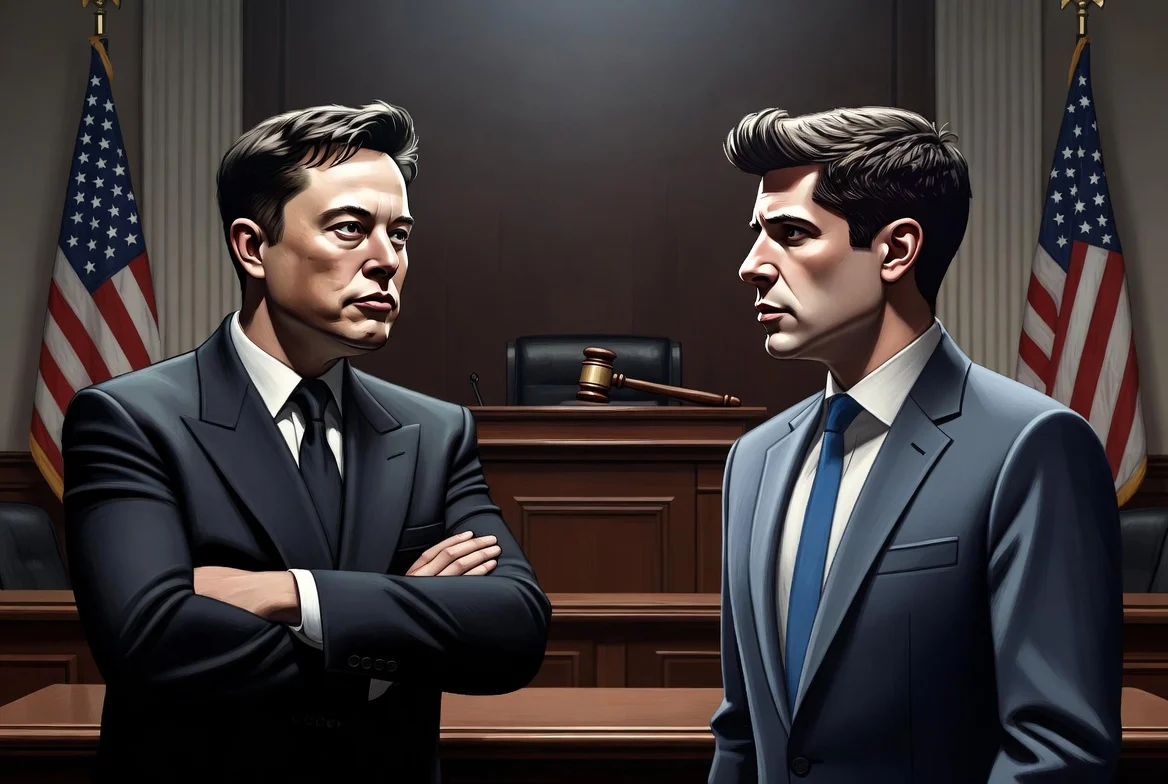
This week, Greg Brockman, co-founder and president of OpenAI, delivered striking testimony in an Oakland federal courtroom, offering unprecedented insight into the increasingly bitter legal dispute between Elon Musk and the artificial intelligence company.
Brockman’s testimony centered on a pivotal August 2017 encounter where Musk pressed his case for obtaining majority ownership of OpenAI. According to Brockman, Musk justified his demands by pointing to his proven entrepreneurial success and insisted he should assume leadership of the organization. Sam Altman emerged as the only alternative leadership candidate discussed during these deliberations.
The atmosphere turned threatening when the discussion shifted to an equity arrangement Musk opposed. Brockman recounted to jurors: “I actually thought he was going to hit me.” Musk responded with a curt “I decline” before abruptly departing.
Following his dramatic exit, Musk issued an ultimatum: he would suspend all financial support to [[LINK_START_0]]OpenAI[[LINK_END_0]] until the governance questions were settled to his satisfaction. Since the nonprofit’s 2015 inception, Musk had served as one of its principal financial supporters.
Brockman’s testimony also revealed that Musk advocated transforming OpenAI into a for-profit entity during this same period. Musk’s rationale centered on the argument that nonprofit status would prevent the organization from securing the extraordinary funding required for cutting-edge artificial intelligence development.
The Mars Financing Strategy
Perhaps the most explosive element of Brockman’s testimony involved directly tying Musk’s aggressive pursuit of OpenAI control to his interplanetary colonization goals. Brockman testified that Musk explicitly stated he required approximately $80 billion to establish a Martian city and viewed OpenAI as a vehicle for generating that capital.
This account aligns with documented SpaceX governance actions from January 2026, when the company’s board authorized granting Musk 200 million super-voting shares contingent on SpaceX achieving a $7.5 trillion valuation and Musk successfully establishing a Mars settlement with a minimum population of one million.
Musk departed OpenAI’s board in February 2018, years before the organization released ChatGPT and ascended to become one of the technology sector’s most valuable enterprises.
OpenAI contends that Musk’s current litigation stems partially from resentment over forfeiting the opportunity to participate in that extraordinary growth. The company further argues the lawsuit strategically advances his competing artificial intelligence venture, xAI, which completed a merger with SpaceX in February 2026.
The Road Ahead for OpenAI and SpaceX
Following Brockman’s testimony, Shivon Zilis is scheduled to take the witness stand. Zilis, who has four children with Musk, previously served on OpenAI’s board before resigning in March 2023 as Musk was establishing xAI.
OpenAI has reportedly initiated preliminary discussions with major investment banks regarding a potential $1 trillion initial public offering, with a tentative timeline for late 2026. Competing AI developer Anthropic has announced similar IPO ambitions.
SpaceX has submitted confidential registration documents to U.S. securities regulators and is targeting a June 2026 market debut.
