




Key Takeaways
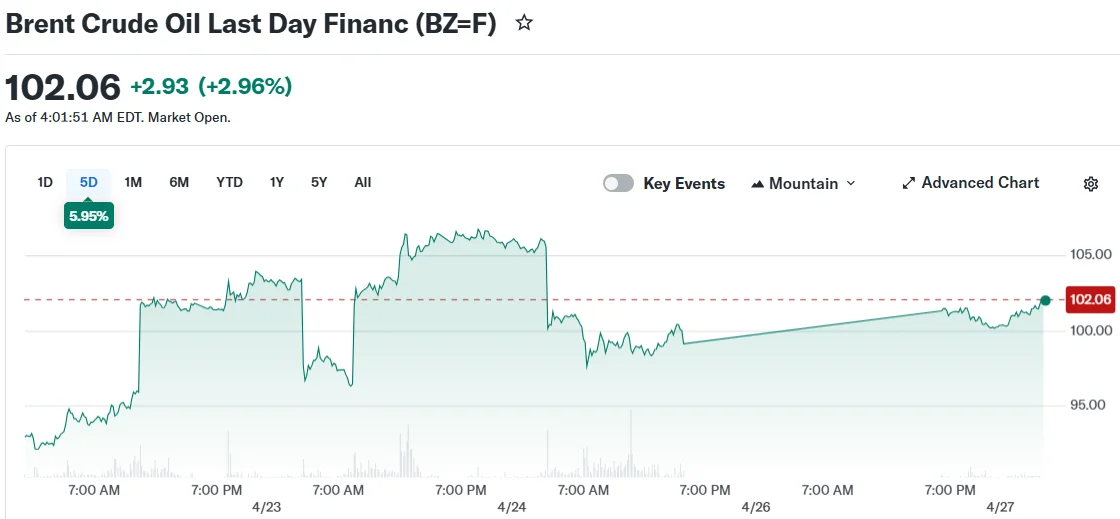
- Brent crude surged up to 2.5%, reaching $107.97 per barrel, while WTI approached $97
- The critical Strait of Hormuz corridor continues to be virtually impassable, eliminating approximately 20% of worldwide oil supply
- Diplomatic negotiations between Washington and Tehran fell apart during the weekend following Trump’s decision to cancel envoy travel to Pakistan
- Tehran submitted a fresh proposal aimed at reopening the Hormuz passage, deferring nuclear discussions to future negotiations
- Energy analysts at the IEA have characterized this situation as the most severe energy supply disruption ever recorded
Energy markets experienced significant upward momentum Monday following the disintegration of diplomatic initiatives between the United States and Iran over the weekend, as the strategically vital Strait of Hormuz enters its ninth consecutive week of effective closure.
Brent crude futures climbed as high as 2.5%, touching $107.97 per barrel during trading. West Texas Intermediate similarly gained ground, approaching the $97 mark. Some of these advances were pared back after reports emerged from Axios indicating Tehran had transmitted a fresh diplomatic proposal to Washington aimed at restoring passage through the waterway.
The Strait of Hormuz, a critical chokepoint controlling approximately one-fifth of worldwide petroleum shipments, has remained under dual blockade imposed by both Washington and Tehran since the final days of February. Vessel traffic traversing the strait has essentially ceased.
The confrontation originated when Iranian forces initiated blocking measures in reaction to combined U.S.-Israeli military activities. While a cessation of hostilities was established in early April, the naval obstruction has persisted without meaningful progress toward resolution.
President Donald Trump abruptly called off a scheduled diplomatic mission by his special envoys Jared Kushner and Steve Witkoff to Pakistan, which had been facilitating intermediary discussions. Trump subsequently informed media representatives that Iranian concessions were “substantial, but insufficient.”
Iranian leader Masoud Pezeshkian declared that his government would refuse to participate in “coerced negotiations conducted under duress or siege.” While both nations have avoided direct military engagement since the ceasefire implementation, fundamental disagreements persist on critical matters.
According to Axios reporting, Iran’s latest diplomatic overture would restore strait navigation and terminate current hostilities, while postponing nuclear program discussions to subsequent negotiations. Washington has consistently insisted that Tehran surrender its uranium stockpiles and cease all atomic development activities—conditions that Iranian officials have predominantly refused.
Worldwide Markets Face Historic Disruption
The International Energy Agency has characterized the ongoing crisis as generating the most substantial energy supply disruption in recorded history. Analysts now consider the loss of 1 billion barrels virtually inevitable, representing more than twice the volume of strategic reserves governments have deployed.
India has experienced severe shortages of liquefied petroleum gas. Airlines have implemented flight reductions. Agricultural fertilizer and transportation fuel distribution networks have encountered significant interruptions.
“The waterway remains effectively besieged, with commercial traffic completely halted,” stated Mona Yacoubian from the Center for Strategic and International Studies. “We find ourselves trapped in this limbo, completely deadlocked.”
Robert Yawger, who directs energy futures trading at Mizuho Securities, indicated that price stabilization above the $100 threshold appears increasingly likely, noting that prospects for a negotiated settlement diminish with each passing day.
U.S. Central Command announced that American naval forces intercepted a sanctioned commercial vessel in Arabian Sea waters on Saturday. Since the blockade’s implementation, a total of 38 vessels have been rerouted.
Economic Restrictions Intensify Pressure
The Treasury Department has verified it will not extend a special exemption that previously permitted acquisition of Russian and Iranian petroleum already in transit, eliminating a provisional mechanism that had partially mitigated supply shortfalls.
Last Friday, Washington imposed sanctions on Chinese refining facility Hengli Petrochemical due to alleged Iranian business relationships, a decision implemented several weeks before an anticipated meeting between Trump and Chinese leader Xi Jinping. Hengli has categorically rejected any commercial activity with Iran.
Iranian crude exports predominantly flow to China, where independent Chinese refineries purchase the discounted barrels.
Haris Khurshid, serving as chief investment officer at Karobaar Capital, projects Brent crude will probably fluctuate within a $100 to $115 per barrel range absent broader regional military escalation.
Trump has scheduled a national security council meeting Monday to evaluate the stagnated negotiation process.
