



Key Highlights
- US naval forces intercepted and captured an Iranian commercial vessel attempting to breach a maritime blockade in the Gulf of Oman
- Tehran reimposed restrictions on the Strait of Hormuz just days after temporarily lifting them
- Brent crude oil rallied by as much as 7.9% while European natural gas prices climbed up to 11% during Monday trading
- The temporary ceasefire arrangement between Washington and Tehran is scheduled to lapse on April 21, with diplomatic efforts appearing stalled
- Maritime activity through the strategic waterway has dropped to minimal levels, with only a few ships attempting passage
Energy markets experienced significant volatility on Monday following the US military’s interception of an Iranian commercial vessel and Tehran’s decision to reimpose restrictions on the Strait of Hormuz.
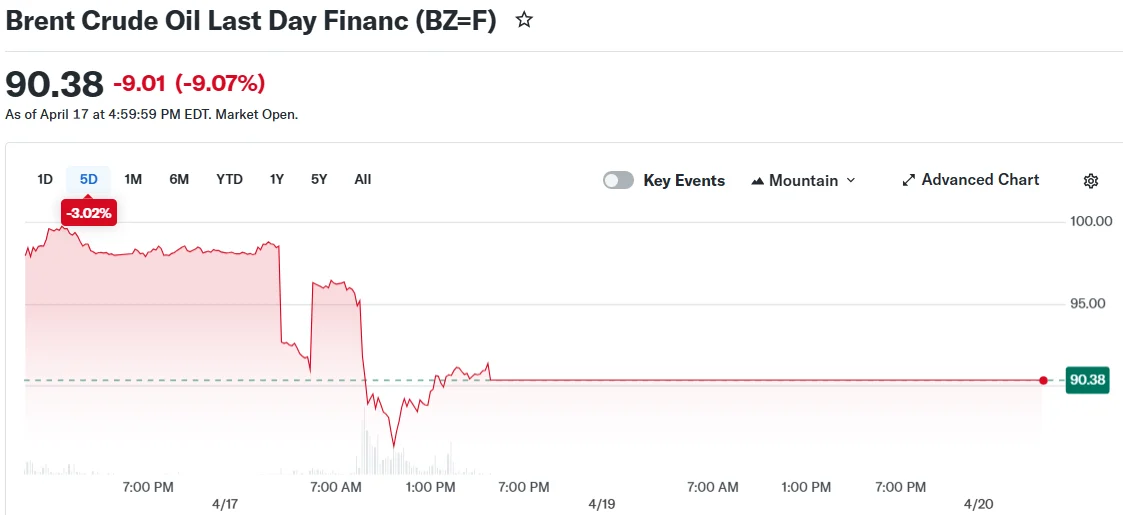
Brent crude oil prices climbed as high as 7.9%, clawing back the majority of Friday’s steep decline when prices had plummeted more than 9% after Iran initially announced plans to reopen the critical shipping lane. Meanwhile, European natural gas markets saw prices surge by up to 11%.
President Donald Trump publicly acknowledged that US naval forces had engaged and captured the Iranian-registered ship in Gulf of Oman waters. According to Trump, the vessel had disregarded multiple directives to halt its approach toward the Strait of Hormuz.
Tehran issued strong condemnations of the military action and signaled potential retaliatory measures. Iranian state-controlled media outlets reported that Iranian forces had engaged several additional ships attempting to navigate the channel during the weekend, ultimately leading to Saturday’s closure decision.
Iranian officials argued that the US naval blockade of Iranian-associated shipping constituted a breach of the ceasefire framework, which is scheduled to conclude on Tuesday, April 21.
The Strait of Hormuz functions as a critical chokepoint for global energy supplies, facilitating the transport of approximately one-fifth of worldwide oil and liquefied natural gas shipments. The waterway has faced substantial disruptions since the US-Israeli war against Iran commenced in late February.
Diplomatic Efforts Face Uncertainty
Considerable ambiguity surrounds whether renewed diplomatic discussions will occur ahead of the ceasefire expiration. Trump indicated that American representatives, including Vice President JD Vance, special envoy Steve Witkoff, and Jared Kushner, were traveling to Islamabad on Monday evening for Tuesday negotiations.
Nevertheless, Iranian state media sources reported that Tehran had declined additional diplomatic engagement. The Tasnim news agency stated Iran would not dispatch representatives to Islamabad and refused to participate in discussions while American naval forces maintained their blockade operations.
Shipping activity through the Strait of Hormuz had essentially ground to a halt by Monday. Maritime tracking showed only a single petroleum products tanker attempting to exit the strait, with merely two additional vessels traveling in the reverse direction.
Oil prices had previously reached peaks near $120 per barrel when hostilities first erupted, before moderating during the past fortnight as Trump indicated potential diplomatic progress.
Market Expert Commentary
Analysts from OCBC Bank suggested markets may have prematurely anticipated a swift restoration of energy transportation. “The confrontation appears poised to persist as both parties gauge tolerance levels,” their analysis stated.
Haris Khurshid from Karobaar Capital noted that while markets maintain an elevated risk premium, full commitment remains absent. He projected prices could steadily advance toward the $105–$115 range if current tensions persist.
Robert Rennie from Westpac Banking indicated that actual fuel costs would remain subject to upward momentum as long as Strait of Hormuz throughput stays restricted.
The fourteen-day ceasefire between Washington and Tehran reaches its conclusion on April 21, with no confirmed diplomatic meetings arranged as of Monday.
