




TLDR
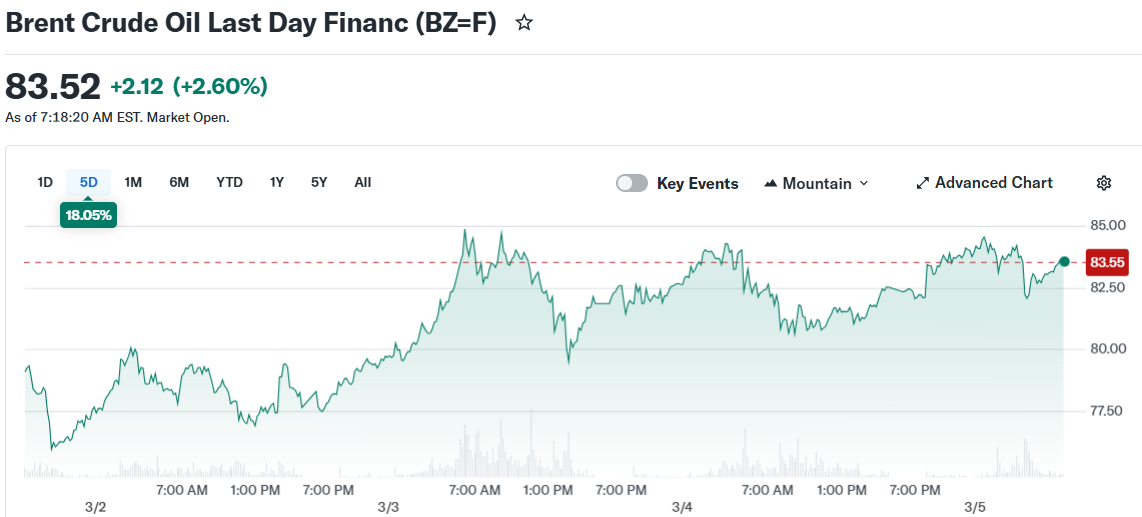
- Brent crude advanced 2.6% to reach $83.54 per barrel; WTI surged 3.1% to $76.96 during Thursday trading
- The Strait of Hormuz faces effective closure by Iran — vessel traffic plummeted more than 95%
- Iraq announced force majeure, slashing approximately 1.5 million barrels daily from production
- Market experts caution Brent may surge to $140/barrel under sustained blockade; $100 under partial closure
- Beijing ordered refineries to stop fuel shipments abroad; Tokyo considered accessing emergency oil stockpiles
The escalating Middle Eastern crisis reached its sixth consecutive day on Thursday without any resolution in sight, driving crude oil valuations to levels unseen since July 2024.
Brent crude contracts increased 2.6% to settle at $83.54 per barrel. Meanwhile, West Texas Intermediate jumped 3.1% to reach $76.96. The rally marks five consecutive trading sessions of gains for both oil benchmarks.
Hostilities erupted last weekend following joint military operations by the United States and Israel targeting Iranian positions. Subsequently, American naval forces destroyed an Iranian military vessel operating in international waters near Sri Lanka.
Lawmakers in the U.S. Senate rejected a measure on Wednesday that would have mandated Congressional authorization for continuing aerial operations. The vote split predominantly along partisan divisions.
Officials in Tehran dismissed claims suggesting Iran’s intelligence ministry initiated diplomatic outreach to Washington. Iranian representatives characterized these reports as “complete fabrication.”
Hormuz Strait Becomes Critical Bottleneck
The Strait of Hormuz has emerged as the epicenter of this energy crisis. Approximately 20 million barrels of oil and refined products transited through this waterway each day during 2025, data from the International Energy Agency confirms.
Vessel tracking information compiled by Bloomberg reveals maritime traffic through the strait has declined over 95%. The vast majority of ships are now steering clear of this transit route.
Iraqi officials declared force majeure affecting certain crude shipments resulting from the transportation crisis. The nation reduced production volumes by approximately 1.5 million barrels daily, sources confirmed to Reuters.
As OPEC’s second-biggest oil producer, Iraq’s substantial output reduction represents a primary catalyst behind current price escalation.
A spokesperson from Iran’s armed forces stated on government-controlled media that Tehran does “not believe in closing” the waterway. Nonetheless, virtually no shipping companies are prepared to risk passage.
American authorities have floated proposals to offer insurance coverage guarantees and potential military convoy protection for commercial vessels. However, Marsh, the world’s premier insurance brokerage firm, indicated such arrangements might require several weeks to implement.
One petroleum tanker, identified as the Sonangol Namibe, sustained damage in an incident within the northern Persian Gulf. The vessel leaked water from a ballast compartment but avoided crude oil spillage.
Asian Nations Implement Emergency Measures
Chinese authorities instructed major government-controlled refineries to suspend diesel and gasoline shipments internationally. The directive aims to safeguard domestic energy supplies amid tightening global fuel markets.
Japanese officials requested government action to tap into strategic petroleum stockpiles. Additionally, a prominent Indian refining company notified clients of suspended product export operations.
Energy strategists at ING projected that complete closure of the strait might propel Brent valuations to $140 per barrel. Under scenarios involving partial disruption with ongoing vessel attacks, prices could spike toward $100 before stabilizing within an $80–$90 trading band.
American crude inventories expanded by 5.6 million barrels during the week concluding February 28, figures from the American Petroleum Institute indicated. This increase exceeded market forecasts of a 2.2 million barrel addition.
Official stockpile statistics from the U.S. Energy Information Administration were scheduled for release later Thursday.
