




TLDR
- Brent crude declined more than 2% to settle at $99.11 per barrel; WTI slid to $93.08 Thursday
- Wednesday’s session saw both contracts tumble over 7% amid growing diplomatic optimism
- Media outlets report Washington and Tehran nearing a brief memorandum of understanding to conclude hostilities
- Central to the agreement: phased reopening of the Strait of Hormuz, a conduit for approximately 20% of worldwide oil shipments
- American crude stockpiles decreased by 2.3 million barrels, below forecasted withdrawal of 3.4 million barrels
Crude oil markets experienced another session of significant declines Thursday, building on sharp losses recorded a day earlier, as diplomatic progress between Washington and Tehran raised expectations for resuming traffic through a vital energy chokepoint.
Brent crude futures retreated $2.16, representing approximately 2.1%, settling at $99.11 per barrel. West Texas Intermediate crude for US delivery decreased $2 to close at $93.08. Wednesday’s trading had already witnessed both international benchmarks plunge more than 7%, reaching their lowest levels in two weeks.
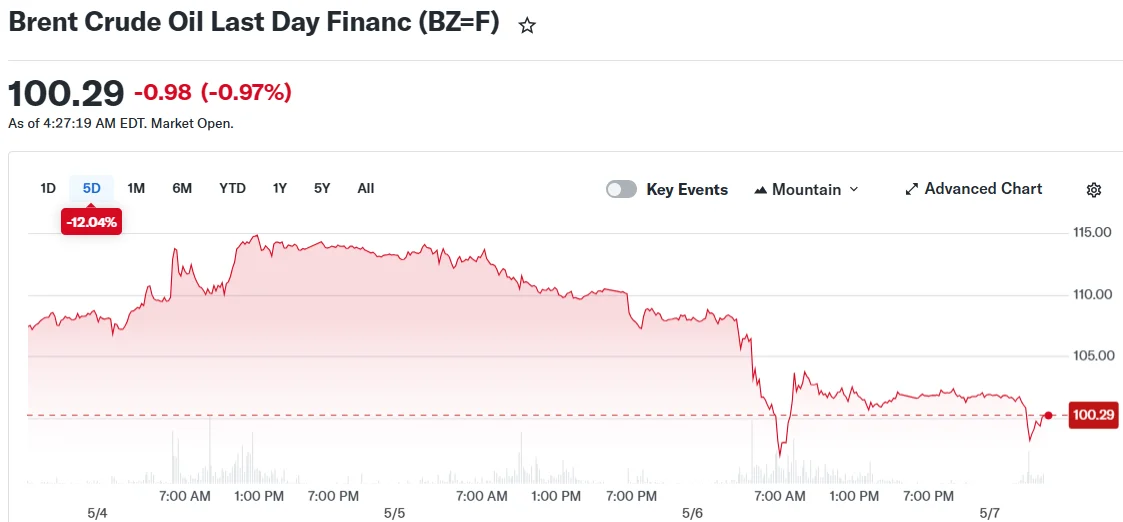
The primary catalyst behind the selloff emerged from multiple media sources indicating that the United States and Iran are approaching consensus on a concise memorandum of understanding that would officially terminate current hostilities.
According to Axios, administration officials anticipated receiving Iran’s formal response within a 48-hour window. CNN’s reporting suggested Tehran would deliver its answer to Washington’s proposal by Thursday. Iranian foreign ministry representatives publicly confirmed that their government would transmit its response through established mediation channels.
Saudi Arabian news network Al Arabiya additionally reported that negotiators from both nations had achieved preliminary understandings to reduce American naval blockades of Iranian maritime facilities in return for a gradual restoration of commercial passage through the Strait of Hormuz. Reuters was unable to independently confirm these specific details.
The Strait of Hormuz represents among the planet’s most strategically significant petroleum shipping corridors. Approximately 20% of internationally traded oil traverses this narrow waterway. Any interruption or normalization of maritime traffic through the strait creates immediate impacts on worldwide supply dynamics and commodity pricing.
Earlier during the current week, American military forces temporarily suspended operations aimed at restoring commercial navigation through the strategic passage following armed resistance from Iranian forces.
Diplomatic Progress Fuels Market Volatility
Financial markets have demonstrated heightened sensitivity to each development emerging from ongoing negotiations. Priyanka Sachdeva, who serves as senior market analyst with Phillip Nova, characterized energy markets as having been “caught between diplomacy and disruption for over two months.”
Sachdeva projected that formalization of an agreement could trigger substantial declines in oil prices as traders eliminate geopolitical risk premiums currently embedded in valuations.
Research analysts from ING suggested that successful restoration of Hormuz shipping lanes would diminish supply-disruption premiums, though any setbacks in negotiations could rapidly reverse downward price momentum.
US Treasury Secretary Scott Bessent appealed to Chinese officials this week to leverage their influence with Iran to secure reopening of the strait. Bessent indicated that President Trump and Chinese President Xi Jinping would address the situation during their scheduled meeting next week.
Hiroyuki Kikukawa from Nissan Securities Investment projected that diplomatic engagement would probably persist at minimum through the upcoming US-China leadership summit, though he characterized post-summit developments as uncertain.
Inventory Statistics Constrain Price Rebound
Weekly petroleum inventory statistics released by the Energy Information Administration provided modest underlying support for crude valuations. American crude oil reserves contracted by 2.3 million barrels during the week concluding May 1, bringing total stockpiles to 457.2 million barrels.
Market forecasters had anticipated a more substantial inventory decline of 3.4 million barrels, meaning the actual reduction fell short of expectations and limited any potential price recovery.
Gasoline reserves decreased by 2.5 million barrels during the reporting period. Distillate inventories, encompassing diesel fuel and heating oil, contracted by 1.3 million barrels.
The EIA dataset additionally revealed robust American petroleum export activity, signaling sustained international demand for US energy products while Middle Eastern supply channels remain compromised.
Iranian officials stated Wednesday they were conducting internal review of Washington’s diplomatic proposal, which according to informed sources would officially terminate current military confrontations while leaving unaddressed several key American objectives, including Iranian suspension of nuclear enrichment activities.
