




Key Takeaways
- The 21 million coin supply cap, coupled with the 2024 halving event, continues reducing Bitcoin’s new coin production rate
- Market experts forecast a central scenario targeting $180,000 BTC by 2029, while optimistic projections approach $350,000
- Exchange-traded funds offering direct Bitcoin exposure have created accessible entry points for mainstream financial institutions
- Even pessimistic forecasts position BTC around $90,000 by 2029, underpinned by market dominance and institutional acceptance
- Weighted probability calculations across all projections suggest approximately $200,000 as a reasonable 2029 target
Bitcoin’s evolution from a niche technology experiment to a major global asset class marks a fundamental transformation in digital finance. The conversation surrounding cryptocurrency’s flagship asset has fundamentally changed—the question isn’t whether Bitcoin survives, but how large it becomes.
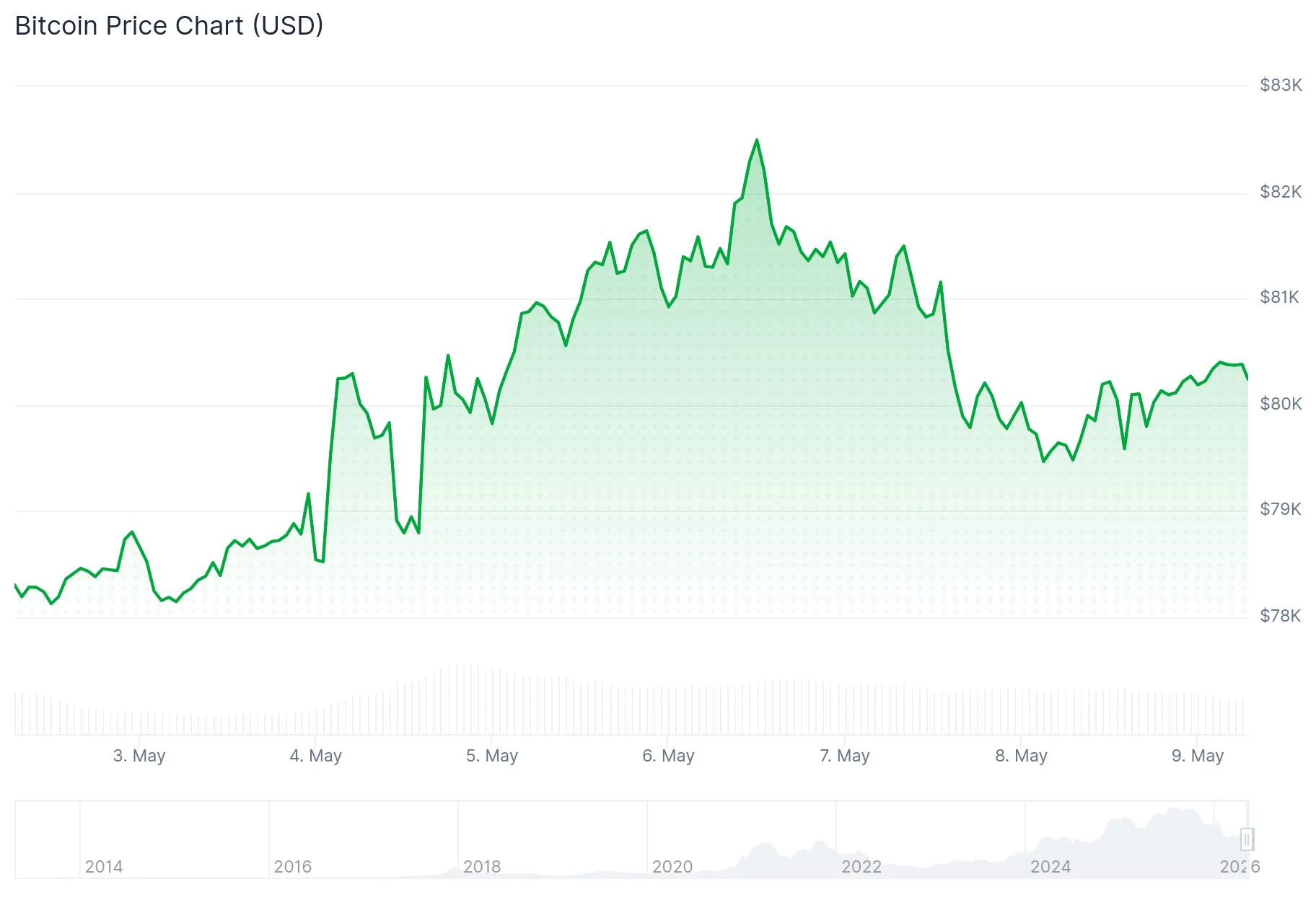
Market researchers are developing concrete projections for Bitcoin’s potential value by decade’s end, revealing a substantial spread between scenarios.
Bitcoin’s programmed scarcity continues driving extensive analysis. The protocol enforces a hard cap at 21 million coins. Approximately 20 million tokens currently exist in circulation. When the 2024 halving reduced block rewards from 6.25 to 3.125 BTC, it marked another step in Bitcoin’s deflationary design. The upcoming 2028 halving will further reduce new supply.
Previous market cycles demonstrate that decreasing inflation rates combined with increasing adoption typically catalyze upward price momentum for Bitcoin.
Breaking Down the 2029 Price Projections
The middle-ground forecast positions Bitcoin near $180,000 by the end of the decade. This valuation implies a network capitalization between $3.5 and $4 trillion. To put this in perspective, the global gold market exceeds $20 trillion in total value. Bitcoin capturing even a modest portion of digital store-of-value demand could justify these price levels.
This moderate outlook assumes continued ETF capital inflows, growing institutional portfolio allocations, and Bitcoin maintaining between 45% and 55% dominance across cryptocurrency markets.
The optimistic scenario projects prices reaching $300,000 to $350,000. Achieving these levels requires significantly broader acceptance—including meaningful allocation from retirement funds, government treasury positions, and widespread corporate balance sheet adoption. Supporting these valuations would require total market capitalization exceeding $7 trillion.
The conservative forecast anticipates Bitcoin around $90,000 by 2029. This outcome reflects potential headwinds including restrictive regulatory frameworks, diminished ETF enthusiasm, or competing blockchain platforms capturing greater market share. Nevertheless, Bitcoin’s established reputation, network security, and institutional recognition likely preserve its position as the dominant cryptocurrency.
The ETF Revolution’s Impact on Bitcoin Adoption
The approval of spot Bitcoin exchange-traded funds represents a pivotal development in cryptocurrency accessibility. Previously, institutional participants faced challenges with custody solutions and navigating crypto-specific infrastructure. ETFs eliminated these friction points by packaging Bitcoin exposure in conventional investment vehicles.
This breakthrough removed significant adoption barriers. Traditional finance institutions have consistently allocated capital through these products since their introduction, with analysts identifying ETFs as a critical long-term demand catalyst.
Weighting all three scenarios by probability suggests Bitcoin trading near $200,000 by 2029.
Current market data confirms institutional participation continues expanding, with ETF net inflows maintaining positive momentum throughout 2025.
