



There is a particular type of industry problem that persists not because it cannot be solved but because the dominant players have no financial incentive to solve it. The problem exists. Players complain about it consistently. The data showing how much it costs in player churn is available. And yet the platforms that could fix it choose not to because the status quo serves them well enough and the cost of change is easier to avoid than to absorb.
Online gambling has several of these problems. Slow withdrawals that keep player funds on the platform longer. Opaque loyalty programs that deliver less value than they appear to. Limited crypto support that redirects players toward payment methods with more favourable processing economics for the operator. Game libraries that are adequate rather than exceptional because adequacy retains players at lower cost than excellence. Sportsbooks that justify a feature listing without being built to the standard that would make them genuinely useful.
These problems have been documented in player forums, review sites, and gambling communities for years. The major platforms know about them. Some have made incremental improvements at the margin. None of them have solved them structurally because solving them structurally would require rebuilding infrastructure that currently works in the operator’s favour.
ZunaBet launched in 2026 and was built around solving each of them. Not incrementally. Structurally. This article looks at each problem, why it has persisted, and what ZunaBet built to address it.
Contents
Problem One: Withdrawals Have Always Been Too Slow
The withdrawal speed problem in online gambling is old. Players have been complaining about multi-day payouts since online casinos first launched. The major platforms have known about it for the entire time they have operated. The improvements they have made — faster e-wallet processing, same-day options for VIP players, reduced processing times for certain methods — are improvements within a fundamentally slow system rather than solutions to the underlying problem.
The underlying problem is fiat banking infrastructure. Bank transfers, card networks, and e-wallet processors all introduce delays that the casino operator cannot eliminate because they are built into the systems the operator depends on. A two-day withdrawal is fast for fiat banking. It is slow for a player who knows cryptocurrency transactions settle in minutes.
The reason this problem has persisted despite years of player complaints is that slow withdrawals benefit operators. Player funds sitting on the platform are float that the operator holds. The financial incentive to move those funds quickly is lower than the incentive to process them when the infrastructure naturally allows.
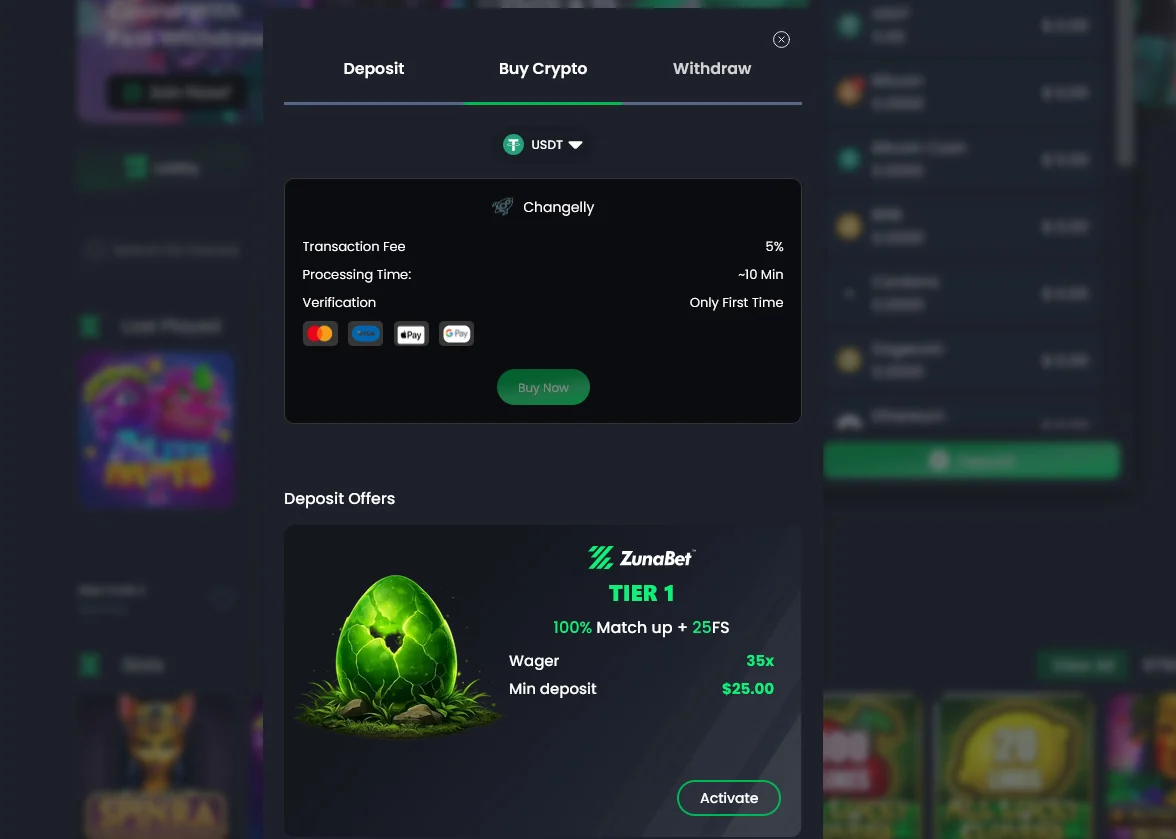
ZunaBet was built on crypto infrastructure that eliminates the problem structurally rather than improving it marginally. More than 20 cryptocurrencies supported natively — BTC, ETH, USDT across multiple chains, SOL, DOGE, ADA, XRP, and others. No platform processing fees. Withdrawals settling at network speed in minutes. The withdrawal problem does not require management at ZunaBet because the infrastructure that caused it was never built into the platform.
Problem Two: Crypto Support Has Always Been Too Limited
The crypto support problem has been visible since major casinos first began accepting Bitcoin. A single coin added to a fiat platform to satisfy player demand without any intention of building genuine cryptocurrency infrastructure. Bitcoin joined eventually by Ethereum. A handful of others added over years as player pressure mounted. The coin list on the homepage grew while the underlying infrastructure remained fiat-first with crypto treated as an edge case.
Players holding diverse crypto portfolios — Solana, USDT across multiple chains, XRP, ADA, DOGE alongside the major coins — found their options consistently limited to converting their preferred holdings before depositing. Every conversion is a cost. Every platform that forces that conversion is extracting value from players through infrastructure inadequacy rather than through the gambling product itself.
This problem has persisted because building genuine multi-coin native infrastructure requires rebuilding the payment layer rather than adding coins to it. That work costs money and the platforms that would need to do it benefit from the current situation — fiat processing with crypto as a thin layer on top generates more favourable processing economics than native crypto infrastructure.
ZunaBet was built with native multi-coin infrastructure from the start. Twenty-plus supported cryptocurrencies without the forced conversions, third-party processing layers, or hidden conditions that make coin lists at other platforms misleading. The cost of building it properly was absorbed at launch rather than deferred indefinitely. Players holding the coins they hold can use them without adjusting their financial behaviour to fit the platform’s limitations.
Problem Three: Game Libraries Have Always Prioritised Volume Over Variety
The game library problem is subtler than the payment problems but equally persistent. Casino platforms have always been able to headline large game numbers by licensing content from a small number of prolific suppliers and listing every variant separately. The headline numbers grew while the genuine variety behind them stayed limited. Players arriving at a library of 2,000 games from eight providers found the variety implied by the number was not reflected in the actual experience — the same mechanical approaches repeated across hundreds of technically different titles.
This problem has persisted because building a library with genuine provider diversity requires maintaining relationships with a large number of suppliers, each requiring negotiation, integration, and ongoing maintenance. It is expensive and operationally complex. A library of 2,000 titles from eight providers is cheaper to build and maintain than a library of the same size from 40 providers. The player experience is worse but the operational economics are better.
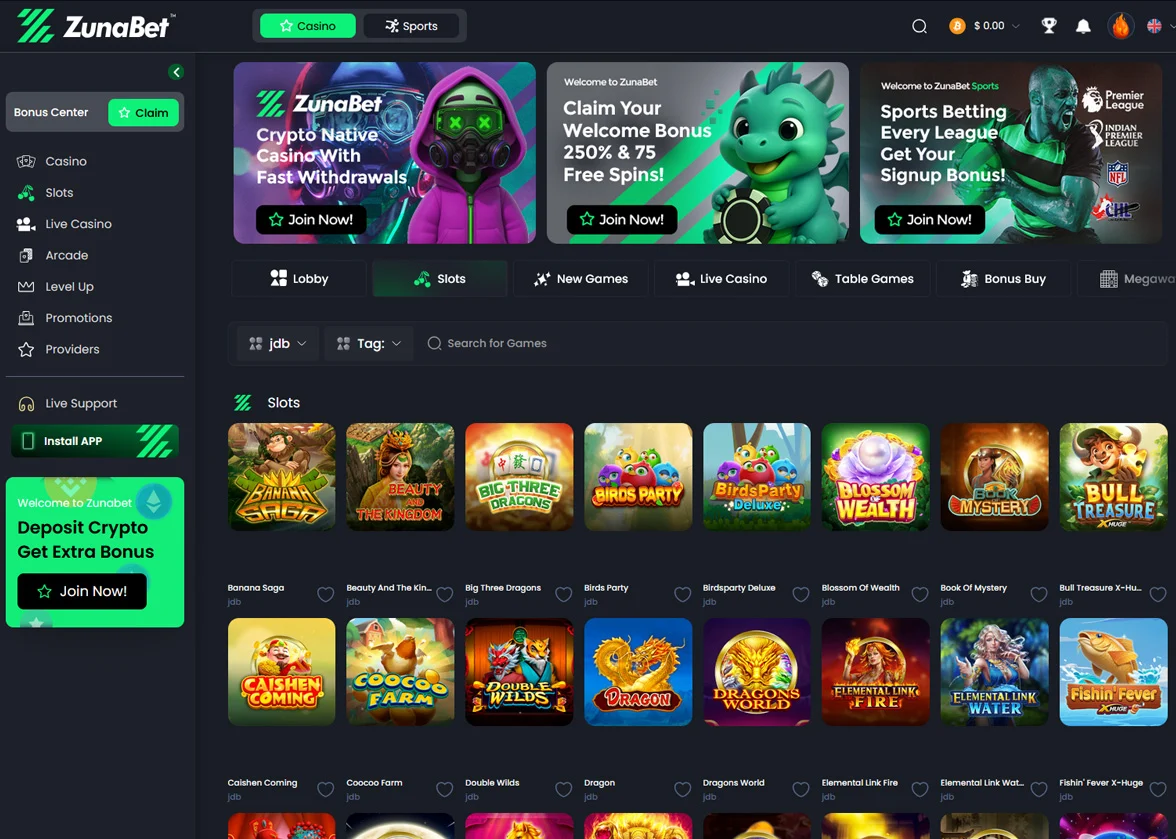
ZunaBet carries 11,294 titles from 63 providers. The investment in provider relationships required to reach 63 suppliers is significant. It was made because the platform was designed around what the player experience requires — genuine variety across mechanical approaches, volatility profiles, and design philosophies — rather than around what the operational economics favour. Evolution for live dealer, Pragmatic Play across multiple categories, Hacksaw Gaming for high-volatility mechanics, Yggdrasil for distinctive design approach, BGaming among dozens of others. The library has genuine depth because the investment in building it that way was made.
Problem Four: Loyalty Programs Have Always Obscured Their Value
The loyalty program problem is the most deliberately constructed of the industry’s persistent issues. Points systems were not designed to be opaque by accident. The opacity is functional — it allows platforms to create the impression of generous rewards while delivering less actual value than the impression suggests. Conversion rates that vary by game, redemption values that depend on the option chosen, tier thresholds that keep players climbing without arriving — each of these design elements reduces the effective return while maintaining the headline impression.
This problem has persisted because fixing it requires giving up the financial advantage that opacity provides. A loyalty program that clearly states its return rate and delivers it consistently cannot be quietly adjusted downward when processing economics change. The commitment is explicit rather than hidden behind conversion rate flexibility. Operators have avoided making that commitment because it reduces their control over the actual cost of the loyalty program.
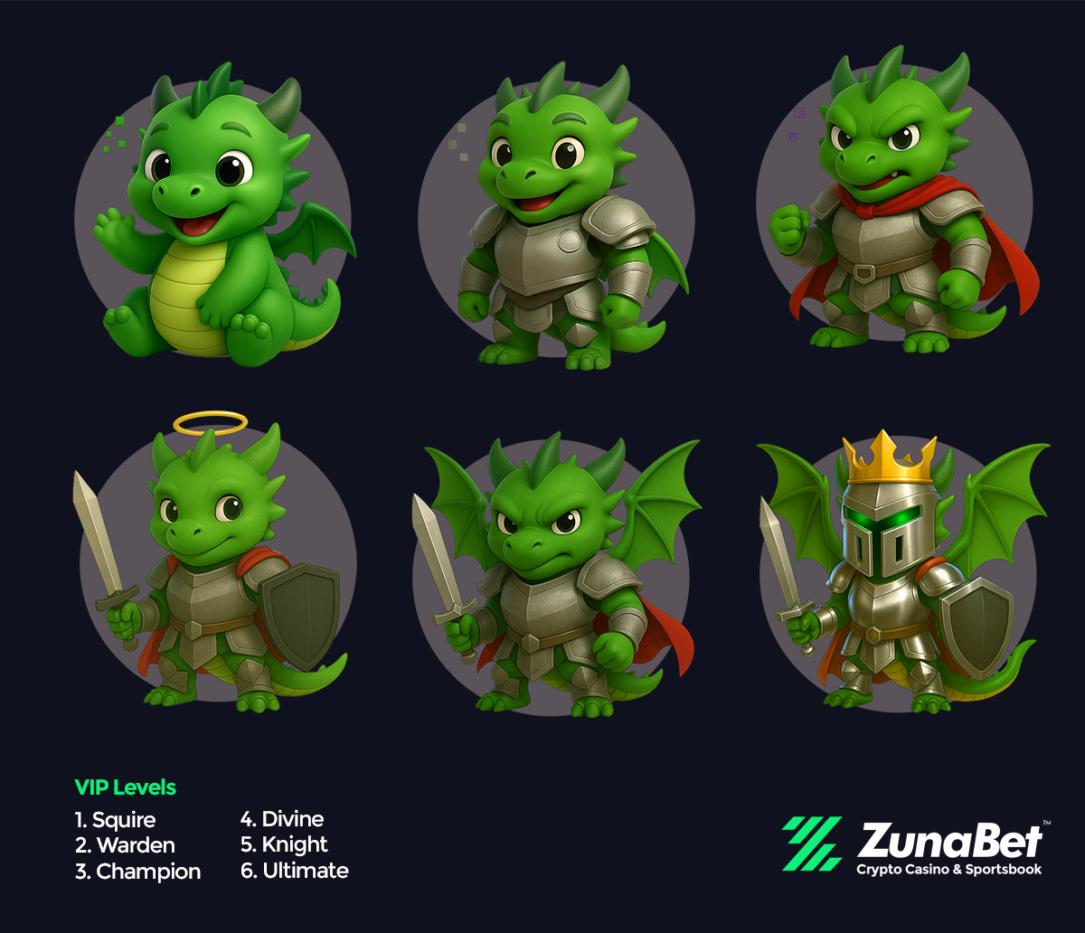
ZunaBet’s dragon evolution loyalty system makes that commitment explicitly. Six tiers — Squire, Warden, Champion, Divine, Knight, and Ultimate — with a gamified identity built around a mascot called Zuno and direct rakeback rates of 1%, 2%, 4%, 5%, 10%, and 20%. These rates apply to all activity on the platform without contribution percentages or conditions that reduce the effective rate below the stated one. The commitment is made and it is verifiable — players can calculate their actual return against the stated rate and confirm they match.
Additional tier benefits — up to 1,000 free spins, VIP club access, double wheel spins at higher levels — are concrete additions on top of a core structure that already delivers direct financial value at a rate that is explicitly stated and consistently applied.
Problem Five: Sportsbooks Have Always Been Treated as Features Rather Than Products
The sportsbook problem at casino platforms has been consistent for as long as combined casino and sportsbook operations have existed. Casinos list sportsbooks because players expect them. They do not build them to the standard that would make them genuinely useful because doing so requires investment that the casino’s core economics do not prioritise. The result is a generation of casino sportsbooks that technically exist and practically disappoint.
For esports bettors this problem has been particularly acute. CS2, Dota 2, League of Legends, and Valorant are mainstream betting markets with large and active audiences. Casino sportsbooks have been slow to cover them seriously because the audience demographics are newer and the market intelligence less developed than for traditional sports. The players who want to bet on these titles have been underserved by casino sportsbooks for years.
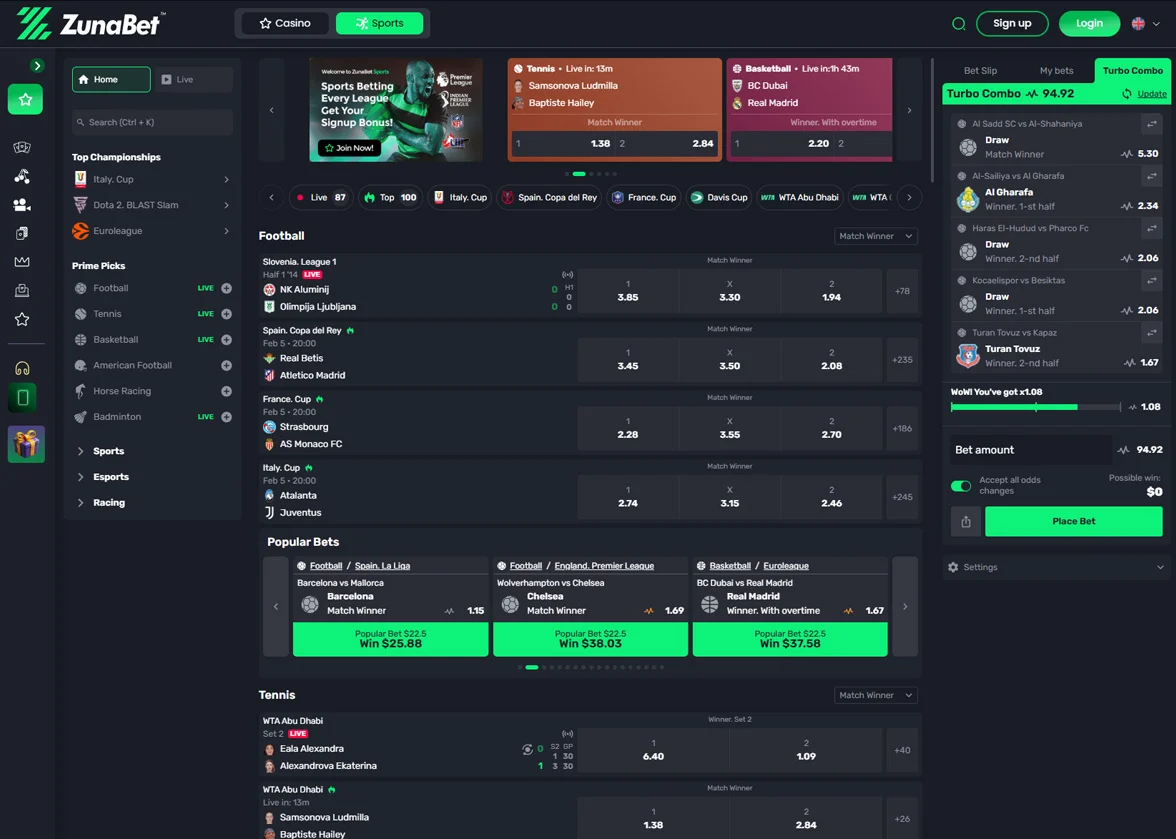
ZunaBet’s sportsbook covers football, basketball, tennis, NHL, and other major global sports alongside CS2, Dota 2, League of Legends, and Valorant as genuine betting markets. Virtual sports and combat sports extend the offering. It was built to be a primary betting destination rather than a feature listing — the investment was made because the platform was designed to consolidate everything a player might want under one account and one loyalty program rather than expecting them to go elsewhere for part of their activity.
The Welcome Bonus and Credentials
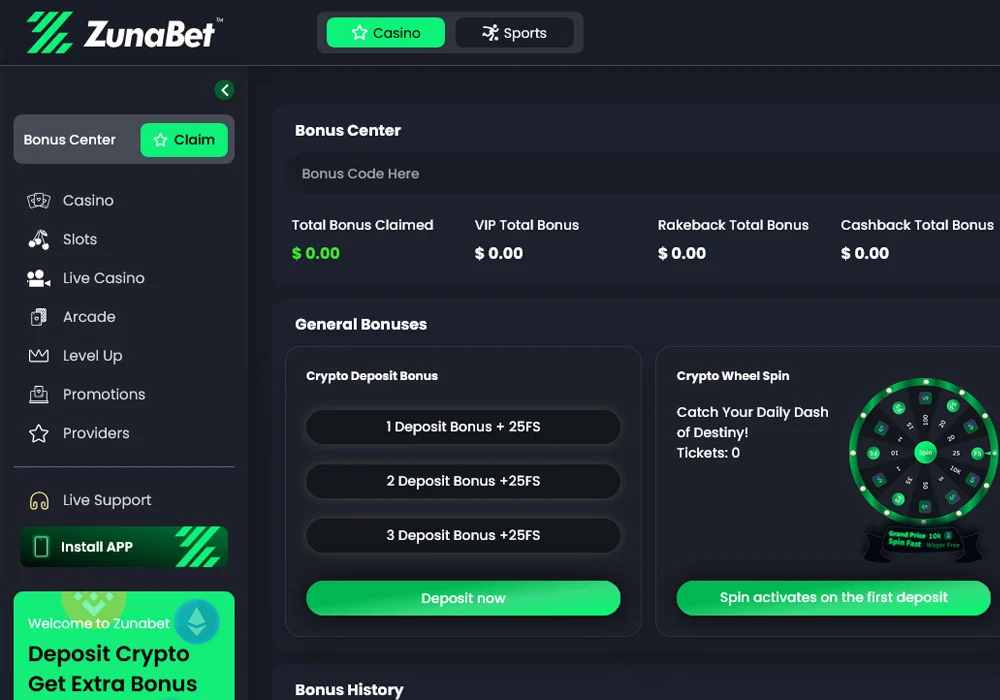
New players receive a bonus across three deposits totalling up to $5,000 plus 75 free spins. First deposit 100% up to $2,000 with 25 free spins. Second deposit 50% up to $1,500 with 25 spins. Third deposit 100% up to $1,500 with 25 spins.
ZunaBet is owned by Strathvale Group Ltd, operates under an Anjouan gaming license, and is registered in Belize. The team brings over 20 years of combined industry experience. Apps run on iOS, Android, Windows, and MacOS with 24-hour live chat support.
ZunaBet launched in 2026 and its operational track record is still short. The problems it has solved structurally are real and the solutions are already in place. Whether it maintains those solutions consistently over the long term is what time will confirm. For players who have spent years on platforms that chose not to solve the problems ZunaBet has addressed — the platform represents something the industry has been capable of building for a long time and chose not to until now.
