



Contents
Key Takeaways
- WLFI functions as a governance token offering no direct financial benefits to token holders
- Project documentation explicitly states holders should not anticipate profits
- Insiders, including the Trump family, maintain control over 75% of net token sale proceeds and 60% of operational revenue
- Approximately 5% of capital raised was allocated to platform development
- Transfer restrictions on tokens create additional supply-related uncertainties
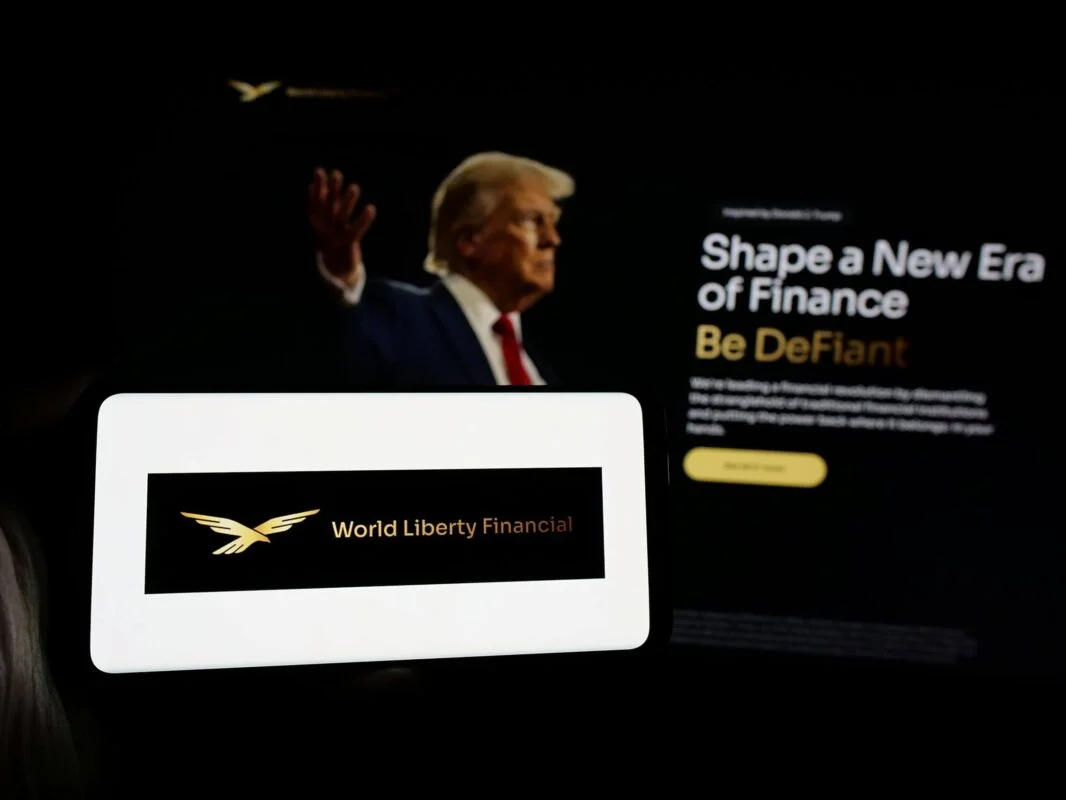
World Liberty Financial (WLFI) has emerged as one of crypto’s most talked-about projects. The convergence of cryptocurrency, political connections, and high-profile branding has generated significant attention. However, a closer examination of official documentation presents a different perspective.
WLFI serves as the governance mechanism for the World Liberty Financial platform. The initiative encompasses USD1, a stablecoin pegged to the dollar, alongside broader DeFi objectives. The concept appears promising at first glance.
Yet the project’s official terms clarify that WLFI operates strictly as a governance instrument. Token holders possess no financial entitlements connected to protocol operations. Documentation explicitly warns against profit expectations stemming from the project’s performance.
This represents critical information for potential long-term investors evaluating WLFI.
Governance Structure Provides Minimal Economic Benefits
The fundamental issue centers on value distribution. While a project may expand and release new features, tokens that grant holders no revenue or fee participation mean growth doesn’t necessarily translate into holder benefits.
WLFI’s framework seemingly divorces token possession from any legal or financial stake in underlying business operations. This structure complicates traditional fundamental valuation approaches.
A Reuters investigation in March 2025 revealed that the Trump family established majority oversight via a holding entity. This arrangement allocated 75% of net proceeds from token sales and 60% of operational income to insiders. Following this distribution, only about 5% of raised capital remained for actual platform construction.
This configuration clearly advantages insiders over regular token purchasers.
Transfer Restrictions Impact Market Dynamics
WLFI debuted with transfer prohibitions in place. Token unlocking has proceeded according to a predetermined timeline, constraining when initial purchasers could transact their holdings. These limitations reduce available liquidity and introduce questions regarding future supply releases.
Token unlock schedules can influence price movements as significantly as product announcements for investors tracking these dynamics.
Reuters documented in March 2026 that the project extended guaranteed direct engagement with its business development team to investors committing $5 million in staked WLFI for six-month periods. This arrangement included voting privileges and governance-based token yields. This effectively positions WLFI as an access mechanism for high-value participants.
Concluding Assessment
WLFI may maintain prominence through its political associations and ecosystem developments. However, official documentation confirms the token provides governance participation without substantial economic entitlements, while insiders retain the majority of financial benefits.
The March 2026 Reuters coverage regarding the $5 million staking access program represents the latest publicly documented development concerning the project’s token functionality.
