



FanDuel and BetMGM are locked in a permanent competition for the same regulated US market. Both have the budgets, the brand recognition, and the product quality to justify the fight. For players inside the traditional betting ecosystem, picking between them is a reasonable exercise. For crypto bettors in 2026, it’s a debate about two platforms that were never designed for them — and ZunaBet is the platform that was.
Contents
FanDuel: Sharp Sportsbook, Closed Door for Crypto
FanDuel’s sportsbook is genuinely good. Deep markets, competitive odds, fast in-play functionality, and a mobile app that performs consistently under load. It earned its market position and continues to hold it. For regulated US sports betting through traditional channels, the product is hard to fault.
The casino offering has filled out over time. Licensed states get a solid mix of slots, live dealer tables, and RNG games delivered through a clean, well-optimised interface. The overall platform feels cohesive and professionally built.
What it doesn’t have is any meaningful crypto infrastructure. Deposits and withdrawals go through cards, bank transfers, and approved e-wallets. There is no BTC deposit option, no stablecoin support, no on-chain withdrawal pathway. For a player whose financial life runs through a self-custody wallet, that’s not a workaround situation — it’s a hard incompatibility.
FanDuel Rewards accumulates points through play and converts them to site credit on redemption. The return rate is never made explicit. Players earn without a clear picture of what percentage of their activity is actually coming back to them. It functions as a loyalty mechanism but not a transparent one.
BetMGM: The Casino Name That Still Runs on Banks
BetMGM leans into its casino identity and the MGM brand gives that identity real credibility. The live dealer product is polished, the slot library is one of the wider ones in licensed US markets, and the platform carries a premium feel that traces back to its land-based casino roots.
The sportsbook is reliable without being remarkable. It covers US leagues well, handles in-play betting competently, and integrates cleanly with the rest of the product. It supports the casino rather than competing with it for attention.

MGM Rewards is the feature that genuinely differentiates BetMGM for a specific player — someone who engages with MGM resort properties and wants online gambling activity to carry over into real-world benefits. That crossover has real value for that person. For the majority of online-only players, it’s a structured points program that doesn’t do anything particularly distinctive.
Crypto is not part of BetMGM’s product in any practical sense. Fiat payments, banking timelines, and standard KYC processes tied to traditional financial institutions define the experience. The same structural incompatibility with on-chain players that applies to FanDuel applies here just as completely.
A Gap That Licensed US Operators Cannot Close
The absence of crypto at both platforms is a feature of their operating environment, not an oversight. Licensed US gambling operators work within a regulatory framework that requires traditional financial infrastructure — banking partnerships, identity verification tied to conventional systems, state-level compliance structures that don’t accommodate crypto payments at the level crypto players expect.
That framework produces reliable, consumer-protected products. It also produces platforms that are functionally inaccessible to players who hold BTC, route transactions through USDT on Solana or Ethereum, and expect withdrawal speeds measured in minutes rather than business days. No amount of product improvement at FanDuel or BetMGM changes that underlying structural reality.
ZunaBet: Launched in 2026, Designed for the On-Chain Generation
ZunaBet came to market in 2026 operated by Strathvale Group Ltd under an Anjouan gaming license. The team behind it brings over 20 years of industry experience and the platform reflects that — it launched as a complete, well-considered product rather than a work in progress finding its footing.
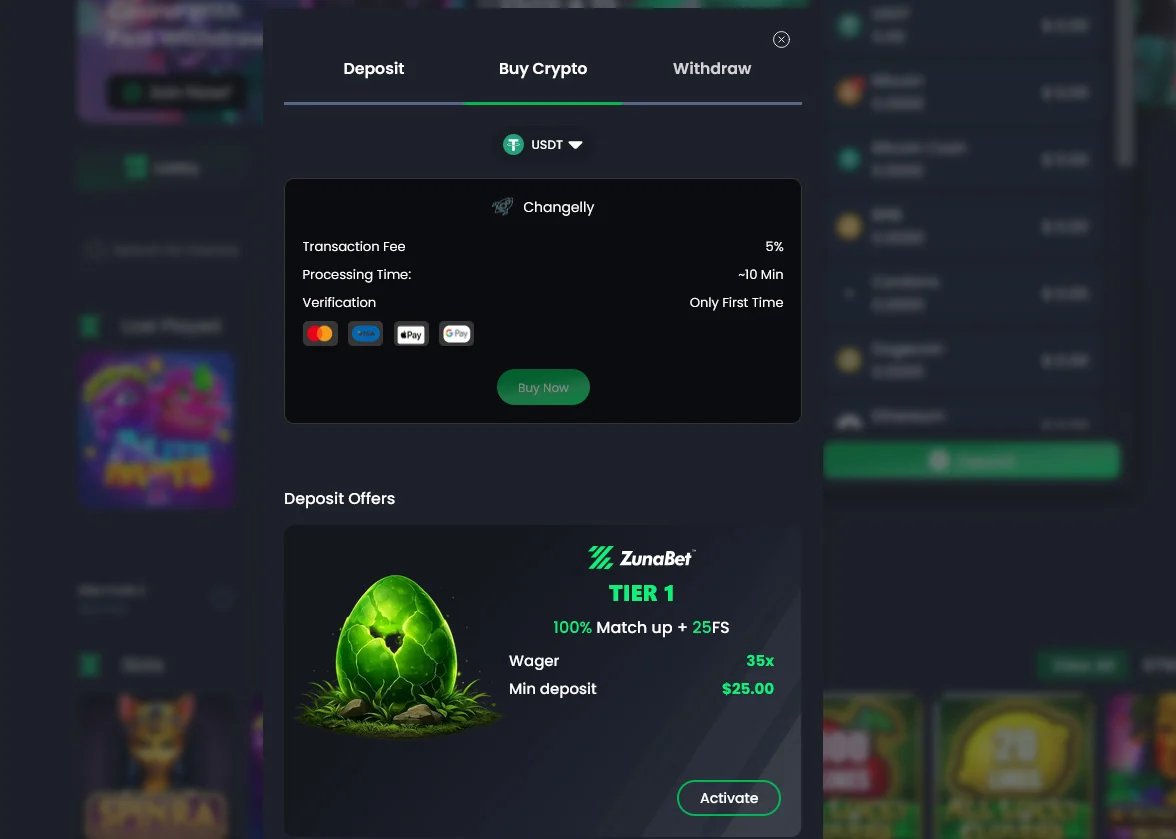
The crypto foundation is genuine. More than 20 digital assets are supported including BTC, ETH, SOL, USDT across multiple chains, XRP, ADA, DOGE, and others. No platform processing fees. Withdrawals settle at the speed the underlying networks allow. The payment architecture treats crypto as the primary method of transaction — not a feature added to attract a niche.
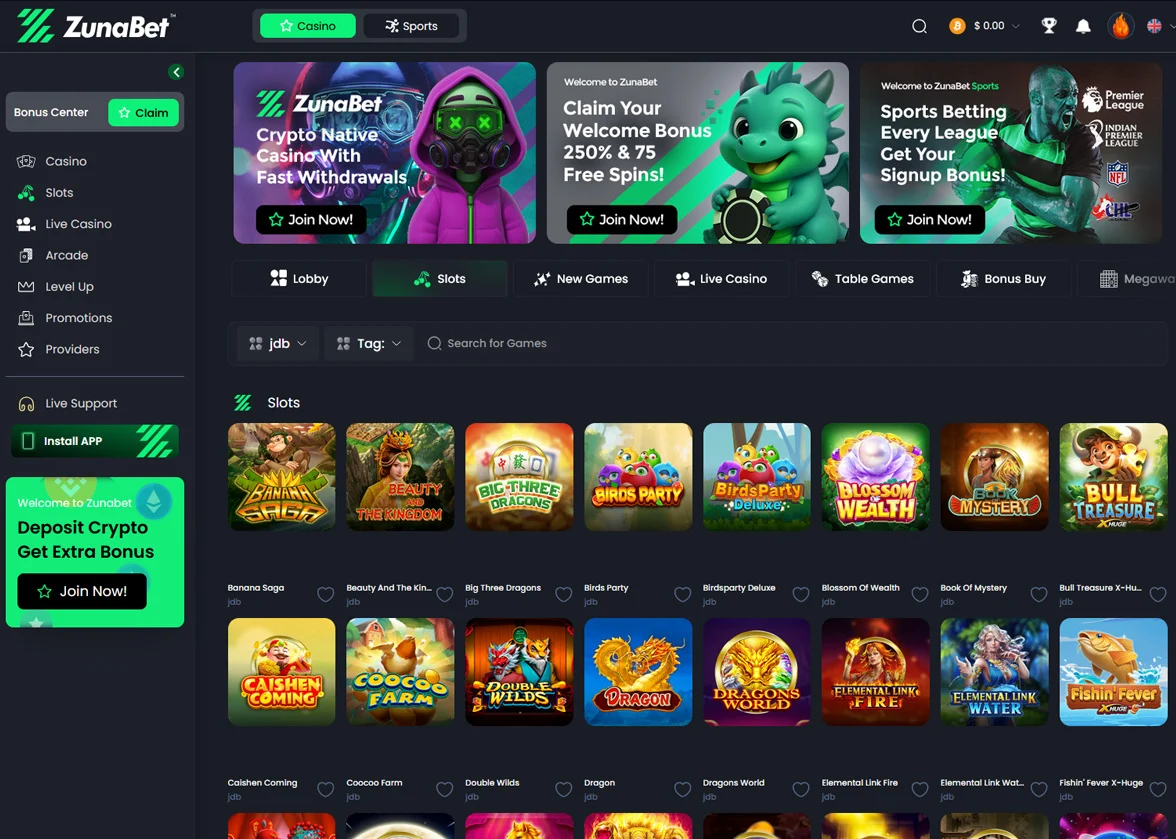
The game library exceeds 11,000 titles sourced from over 60 providers. Pragmatic Play, Evolution, Hacksaw Gaming, Yggdrasil, and BGaming are among the suppliers in a catalogue covering slots, live dealer content, and RNG table games at a scale that places ZunaBet among the larger libraries in the market by any reasonable measure — not just within the crypto casino category.
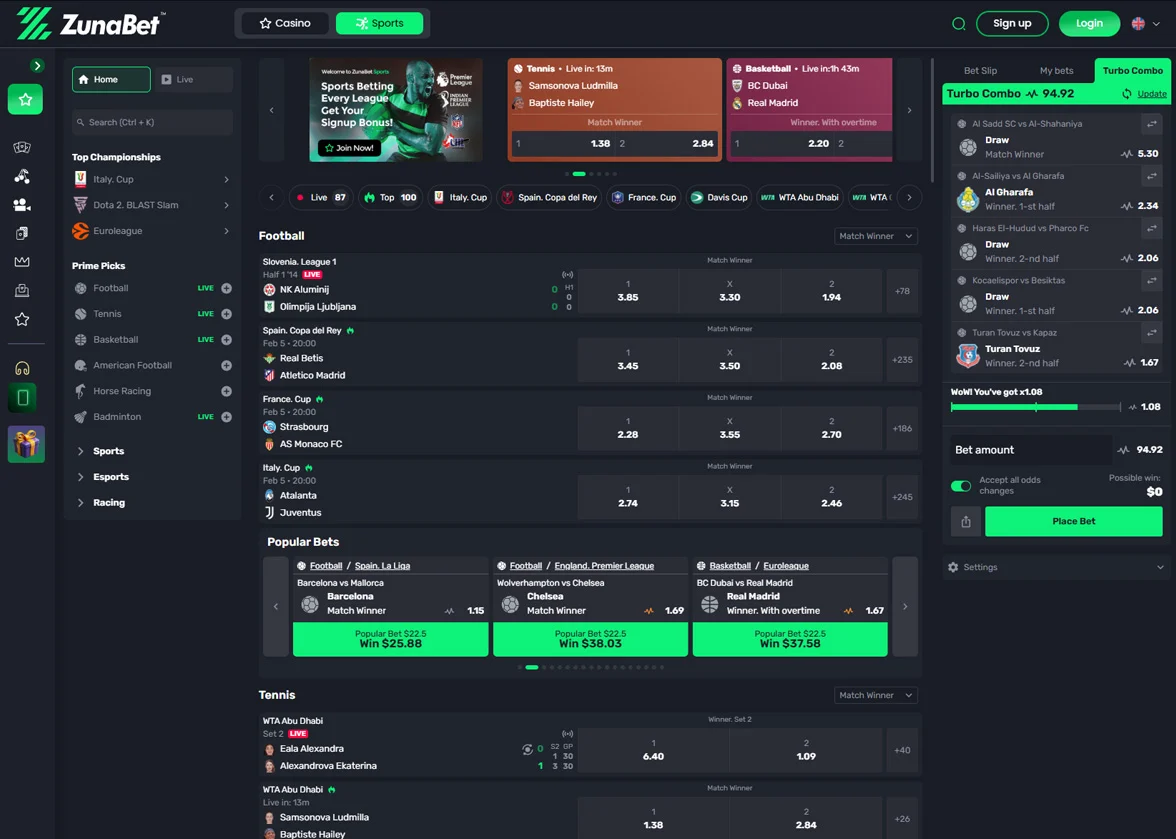
The sportsbook is fully built out. Global sports, US leagues, and a complete esports offering covering CS2, Dota 2, League of Legends, and Valorant are all present alongside virtual sports and combat sports markets. This is a genuine hybrid platform — casino, sportsbook, and esports integrated properly rather than assembled from loosely connected parts.
The Bonus: $5,000 and 75 Free Spins Spread Across Three Deposits
ZunaBet’s welcome package delivers up to $5,000 plus 75 free spins across the first three deposits. The first deposit gets a 100% match up to $2,000 with 25 spins attached. The second gets 50% up to $1,500 with 25 spins. The third gets 100% up to $1,500 with the final 25 spins.
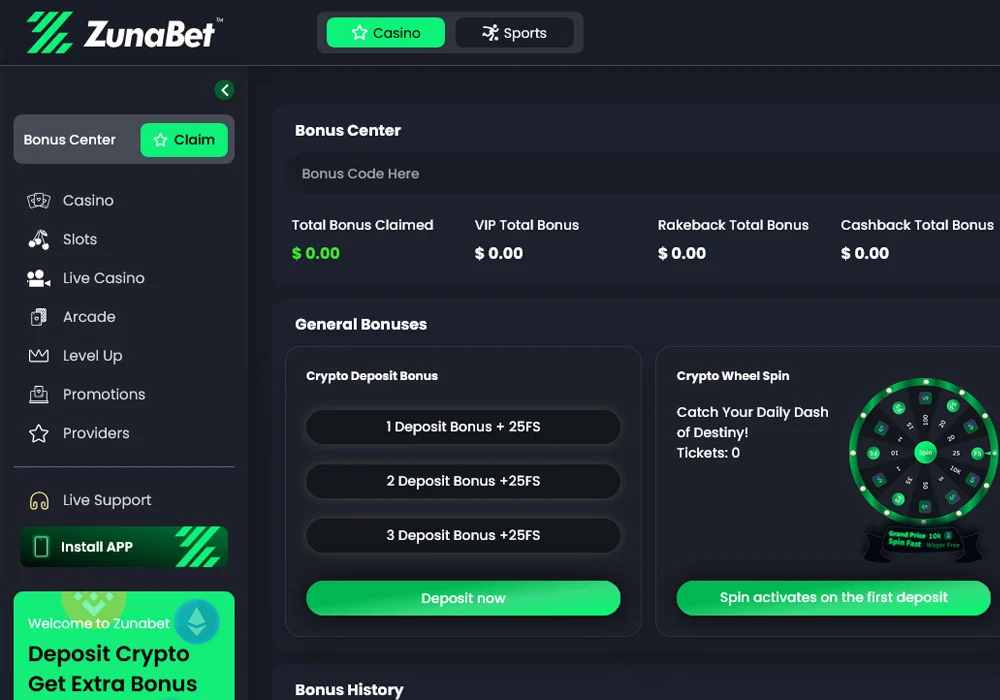
Distributing the offer across three deposits instead of front-loading everything into one is a deliberate structural choice. It extends genuine value across an onboarding period and rewards consistent engagement rather than a single large deposit made to capture a bonus before moving on. For crypto players depositing incrementally, it maps naturally onto how they already interact with a platform.
Rakeback vs Points: One of These Is Transparent
The design principle of points-based loyalty programs is consistent across FanDuel Rewards, MGM Rewards, and most traditional operator equivalents — keep the actual return rate vague. Points accumulate, conversion rates are set by the platform, and the percentage of play genuinely coming back to the player is rarely stated in plain terms.
ZunaBet’s Zuno program is built on rakeback and publishes the rates at each tier. Squire returns 1%. Warden returns 2%. Champion returns 4%. Divine returns 5%. Knight returns 10%. Ultimate returns 20%. Those numbers are fixed and stated. A player at any tier knows exactly what they’re getting back without needing to decode a points conversion table.
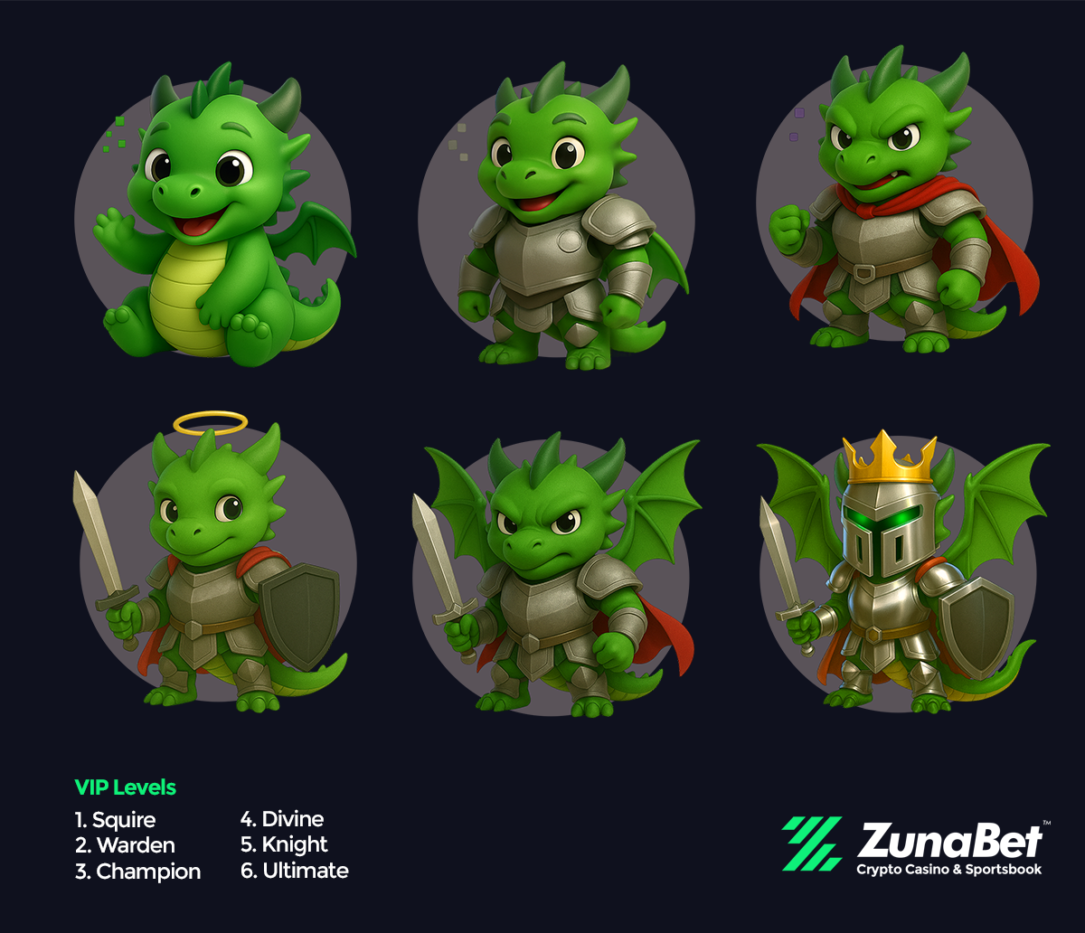
Tier progression beyond rakeback includes up to 1,000 free spins, VIP club access, double wheel spins, and a gamified dragon evolution system built around the platform mascot Zuno. For a high-volume player, the combination of transparent rakeback at up to 20% and meaningful tier rewards represents a fundamentally different value proposition to anything a traditional points program offers.
The Divide Is Structural and It Is Growing
Crypto-native platforms and fiat-dependent operators are not on a path toward each other. The regulatory constraints keeping FanDuel and BetMGM in the traditional financial lane are entrenched. The number of players operating on-chain as their default is increasing. Those two facts produce a widening gap — and ZunaBet sits on the right side of it.
This isn’t a temporary positioning advantage. It reflects a real and durable difference in what these platforms are built to do and who they are built to serve.
Where That Leaves Each Platform
FanDuel is the right product for regulated US sports betting within the traditional financial system. BetMGM is the right product for licensed casino play, particularly for players who benefit from the MGM resort loyalty crossover. Both are well-built for their intended audience.
That audience is not the crypto bettor. ZunaBet is built for exactly that player — 20+ cryptocurrencies, 11,000+ games, a full sportsbook with proper esports coverage, a $5,000 welcome bonus structured across three deposits, and a rakeback loyalty program with a 20% ceiling at the top tier. For players already living on-chain, it’s the platform that fits — and the one the traditional names were structurally incapable of becoming.
