



TLDR
- Bitcoin declined to $66,700 on Monday following U.S.-Israel military operations against Iran
- Crude oil prices jumped more than 6%, with Brent reaching $77.50 in the largest single-day gain since early 2022
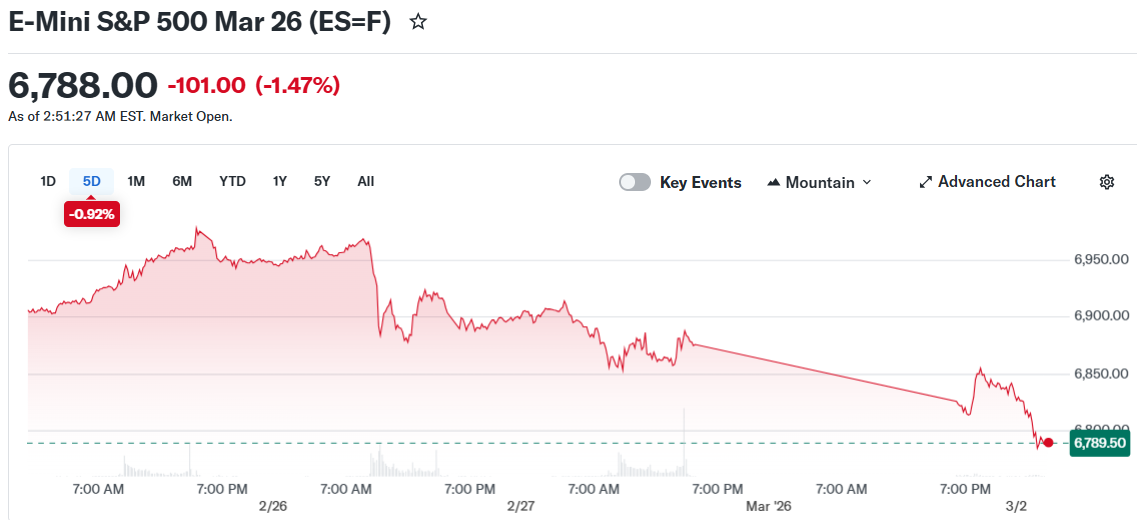
- Equity futures across major U.S. indices dropped approximately 1%, with declines across the Dow, S&P 500, and Nasdaq
- The critical Strait of Hormuz, which facilitates about 20% of worldwide oil transport, has been effectively shut down
- Rising crude costs are sparking inflation worries that may postpone anticipated Federal Reserve interest rate reductions
Cryptocurrency and U.S. equity futures experienced significant declines Monday following weekend military operations by the United States and Israel targeting Iran. As trading resumed, markets immediately began factoring in the geopolitical escalation with notable price movements.
[[LINK_START_2]]Bitcoin[[LINK_END_2]] slid to $66,702, representing a 1.1% decline over the previous 24-hour period. The drop eliminated gains from Sunday’s temporary climb to $68,000, which occurred after news emerged confirming the death of Supreme Leader Khamenei.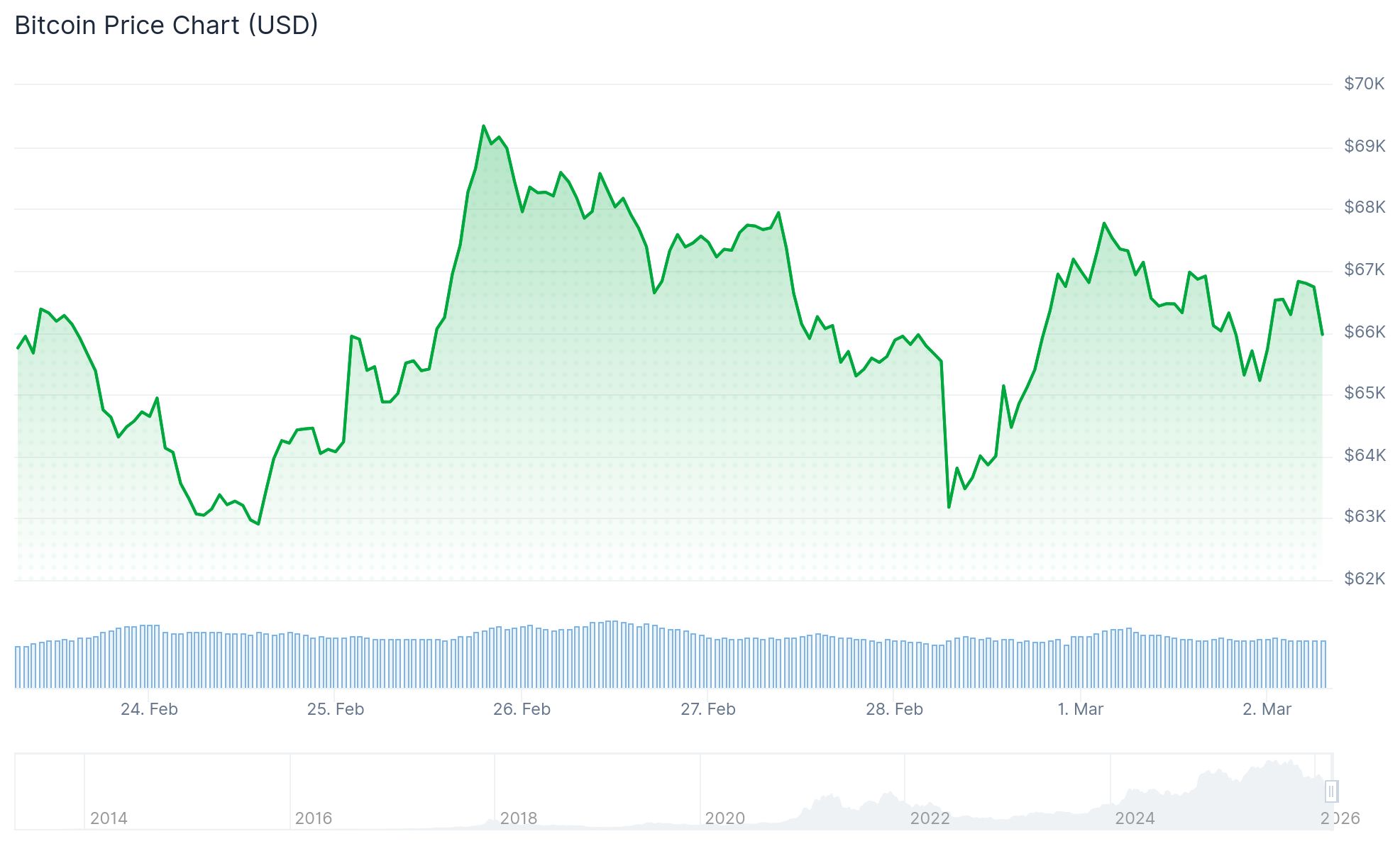
Alternative digital currencies similarly retreated. Ether decreased 2.5% to $1,967, Solana declined 4.1% to $84, while XRP shed 3.6% to reach $1.36. Examining the seven-day performance, Solana experienced the steepest losses among leading cryptocurrencies, falling 8.1%.
The military action followed Iran’s refusal to comply with U.S. demands regarding its nuclear program reduction. Tehran’s leadership has vowed significant retaliation, intensifying worries about potential regional conflict expansion.
[[LINK_START_4]]Oil prices[[LINK_END_4]] experienced dramatic movement following the weekend developments. Brent crude initially spiked as much as 13% at market open before stabilizing near $77.50, maintaining a 6.4% gain. This represents the most substantial one-day increase since Russia’s 2022 invasion of Ukraine.West Texas Intermediate, the domestic U.S. benchmark, traded approximately $73 per barrel. As OPEC’s fourth-largest producer, Iran’s involvement adds considerable uncertainty to global supply.
According to Bloomberg, the Strait of Hormuz, which facilitates roughly one-fifth of worldwide oil transport, has been effectively closed. This development is amplifying price pressures and destabilizing energy markets globally.
Stock Futures and Safe-Haven Assets React
U.S. equity futures experienced broad declines of approximately 1%. Dow Jones futures dropped over 500 points, while S&P 500 and Nasdaq 100 futures declined roughly 1.4% and 1.8% respectively. Asian markets fell 1.4%.
Gold advanced to $5,350 per ounce as market participants rotated into traditional safe-haven investments.
The S&P 500 had previously closed February in negative territory. Heightened volatility in artificial intelligence and software equities had already created market uncertainty entering the week.
Escalating oil costs are intensifying inflation anxieties. Should inflation accelerate, the Federal Reserve might postpone anticipated rate reductions, which would restrict market liquidity and apply additional pressure to risk-sensitive assets including equities and cryptocurrencies.
What Traders Are Saying About Crypto’s Downside Risk
Certain cryptocurrency market participants believe digital asset downside potential may be constrained. Jeff Mei, COO at BTSE, noted that Iran’s extended isolation from international financial systems diminishes the direct impact on crypto markets.
Mei further suggested that increased production from OPEC and U.S. sources could compensate for Iranian oil losses and contribute to price stabilization over the coming period.
Contradictory reports surfaced Monday regarding potential nuclear negotiations between Iran and the U.S. The Wall Street Journal indicated Iran might pursue diplomatic talks, while Iran’s national security chief explicitly rejected any negotiation possibility.
President Trump stated military operations would persist until stated objectives are achieved.
Investors are anticipating earnings releases from Broadcom and Marvell Technology this week, alongside retail financial results from Target and Costco. Friday’s February employment report is also scheduled, with analysts projecting 60,000 new jobs added.
