



Key Takeaways
- Equity futures retreated Monday following weekend escalation in US-Iran hostilities that threaten diplomatic progress
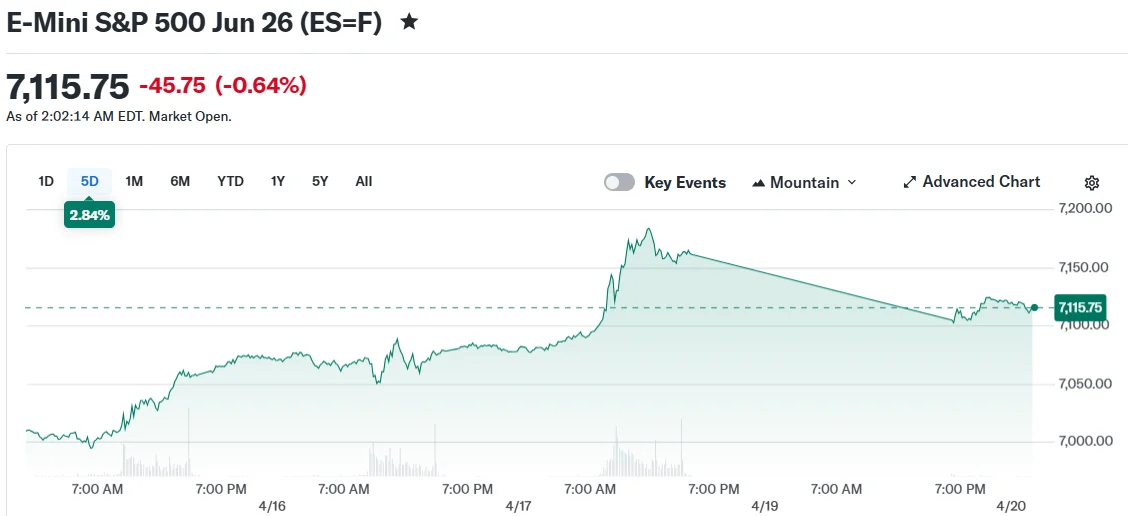
- Dow futures declined 0.6%, while S&P 500 and Nasdaq 100 futures each lost 0.5%
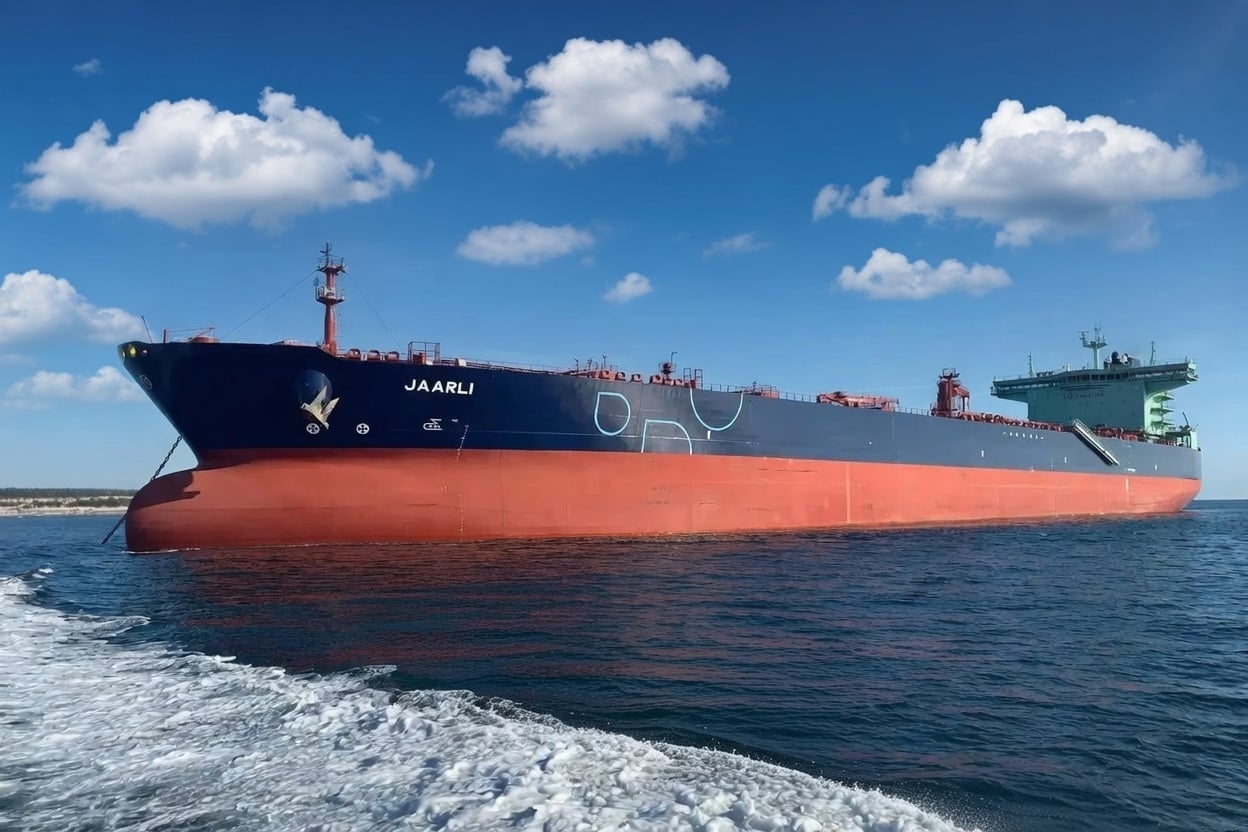
- The US Navy intercepted an Iranian vessel; Iran responded by firing on ships and closing the Strait of Hormuz
- Crude oil jumped dramatically, with WTI climbing 5.7% to approximately $87/barrel and Brent rising 4.7% to roughly $95/barrel
- Gold declined 1.3%, the greenback gained 0.1%, and Bitcoin dropped 0.5% to $74,942
Equity futures signaled a lower open Monday following a weekend clash between the United States and Iran that dampened peace prospects and triggered a sharp rally in crude oil.
Dow Jones Industrial Average futures declined 394 points, representing a 0.6% loss. Both S&P 500 and Nasdaq 100 futures retreated approximately 0.5%.
The downturn follows a robust performance on Wall Street. Both the S&P 500 and Nasdaq reached fresh record peaks last week. The Nasdaq had just completed its 13th straight session of gains — marking its longest winning run since 1992.
That upward trajectory now confronts a significant challenge.
During the weekend, President Trump announced the US Navy had intercepted an Iranian-flagged cargo vessel trying to evade its Strait of Hormuz blockade, damaging its engine room with an explosion. Iran retaliated by attacking vessels in the strait and halting all passage through the critical waterway, reversing an earlier commitment to permit limited ship traffic.
Iran’s official news agency also challenged reports regarding a second phase of peace negotiations, stating the “outlook for constructive talks remains bleak.” US representatives are reportedly still planning to travel to Pakistan for additional diplomatic discussions.
Crude Prices Surge, Mixed Safe-Haven Response
Oil markets responded swiftly. Brent crude surged 4.8% to approximately $94.70 per barrel. WTI advanced 5.1% to $86.82. While both benchmarks remain beneath the $100 threshold that would amplify inflation concerns, the upward trajectory is unsettling investors.
The renewed disruption at the Strait of Hormuz — a critical passage for approximately 20% of worldwide oil shipments — is resurrecting inflation worries just as markets had begun anticipating a more predictable environment.
Deutsche Bank macro strategist Jim Reid made an unsettling parallel. He referenced the S&P 500’s surge of over 10% during the opening weeks of the Ukraine conflict as investors wagered on rapid peace negotiations. “That episode is a clear warning sign,” he stated.
The dollar advanced 0.1% versus a basket of major currencies. Gold, traditionally considered a safe-haven asset, surprisingly declined 1.3% to $4,818 per ounce. Bitcoin retreated 0.5% over 24 hours to $74,942. The 10-year Treasury note yield increased 3 basis points to 4.27%.
Week Ahead Preview
Corporate earnings continue at full pace. Tesla (TSLA), INTC), and United Airlines ($UAL) are scheduled to deliver quarterly results this week, providing markets opportunities to concentrate on corporate performance instead of geopolitical developments.
As of Monday morning’s pre-market session, Dow futures stood at 49,365, S&P 500 futures registered 7,129.50, and Nasdaq 100 futures traded at 26,718.75.
Iran’s Islamic Republic News Agency maintained skepticism about negotiation prospects as of Sunday.
