



Key Takeaways
- BTC declined 1.5% on Friday to approximately $67,766 while maintaining a modest 0.6% weekly increase, confined within a narrow trading corridor
- Market experts characterize the downturn as a leverage liquidation event rather than a directional shift, with purchasing activity resuming Friday morning
- Alternative cryptocurrencies outshined Bitcoin over the weekly period — Cardano rose 7%, Solana gained 5.5%, Ethereum climbed 4.8%, BNB increased 4.3% — while XRP declined 0.1%
- Nvidia (NVDA) shares tumbled 5.5% following earnings despite robust results, weighing on U.S. equity futures and cryptocurrency prices
- Asian stock markets are experiencing their strongest February performance since 1998, redirecting investment flows from U.S. exchanges
Cryptocurrency prices retreated Friday alongside declining U.S. stock futures after Nvidia (NVDA) shares experienced a notable downturn. The digital asset weakness reflects widespread risk aversion across international financial markets.
Bitcoin was changing hands near $67,766, representing a 1.5% daily decline. The world’s largest cryptocurrency nonetheless preserved a 0.6% advance for the week.
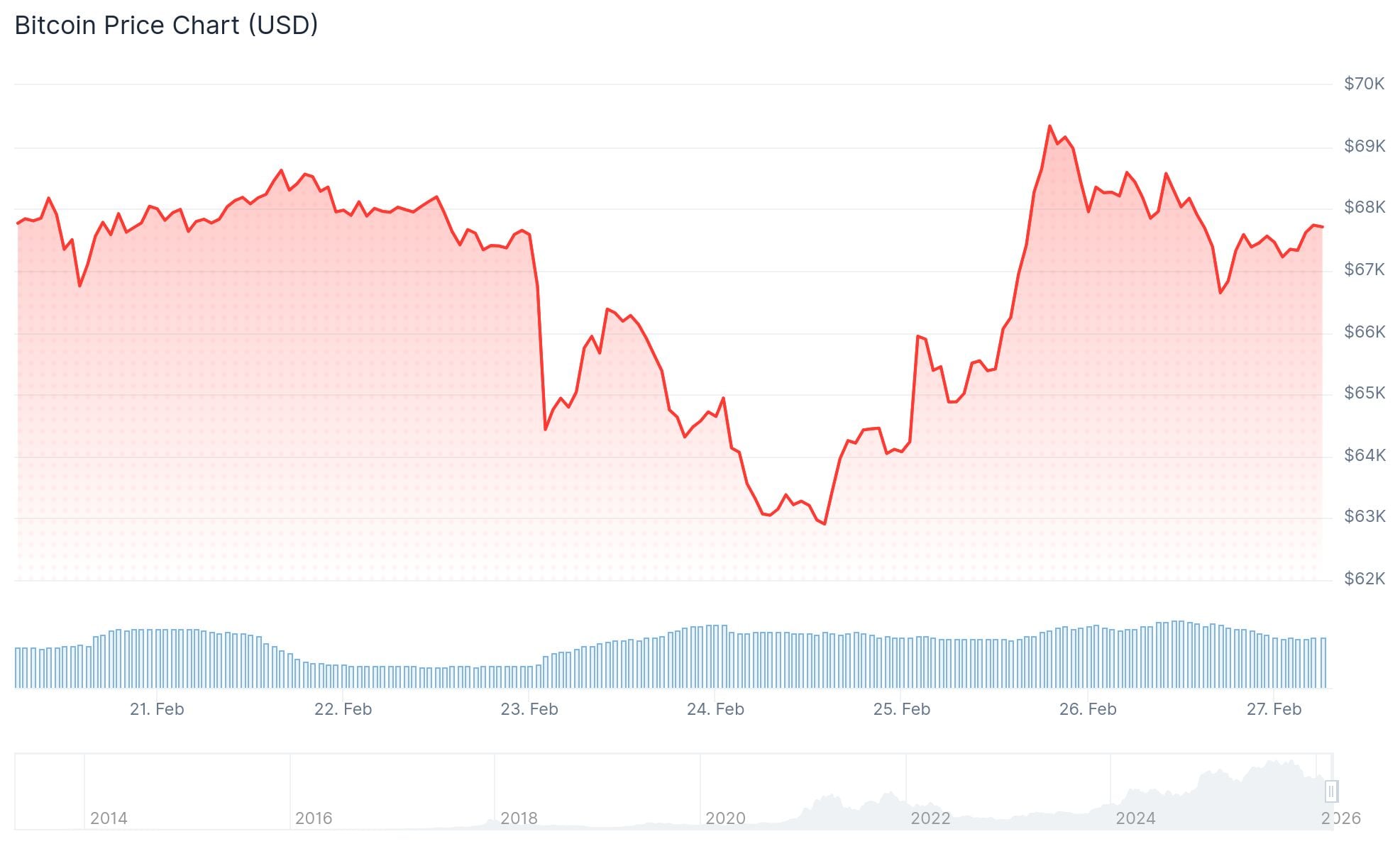
Ethereum decreased 1.5% over 24 hours to slightly above $2,047. Both leading digital currencies continue trading within constrained ranges established following a February 5 market correction.
Nvidia shares declined 5.5% Thursday despite surpassing fourth-quarter profit forecasts. The retreat seemingly indicated investor skepticism regarding whether substantial artificial intelligence investments can sustain current market valuations.
Digital assets mirrored equity weakness as market participants reduced exposure to speculative positions. This correlation has persisted throughout recent weeks, with Bitcoin movements closely aligned with Nasdaq fluctuations.
“The current market action shows Bitcoin behaving like a broader risk asset,” explained Daniel Reis-Faria, CEO of ZeroStack. “The Nasdaq declined following Nvidia’s earnings report, and cryptocurrency markets followed suit.”
He characterized the downturn as a position adjustment rather than a fundamental shift. “Significant leverage accumulated during the recent rally, and when equities sell off, crypto typically becomes the initial de-risking target.”
By Friday’s opening hours, hourly cryptocurrency performance metrics had returned to positive territory. This recovery indicates market participants re-entered following overnight liquidations that eliminated excessive leverage.
Alternative Tokens Surpass Bitcoin Weekly Performance
Cardano topped major cryptocurrency performers with a 7% seven-day advance. Solana registered a 5.5% increase, Ethereum gained 4.8%, and BNB rose 4.3%, each surpassing Bitcoin’s weekly performance.
XRP represented the sole major asset posting weekly losses, declining 0.1% over seven days and 3.7% during the 24-hour period. This relative weakness proved notable considering most alternative cryptocurrencies withstood identical macroeconomic pressures while preserving gains.
U.S. Index Futures and International Equity Movements
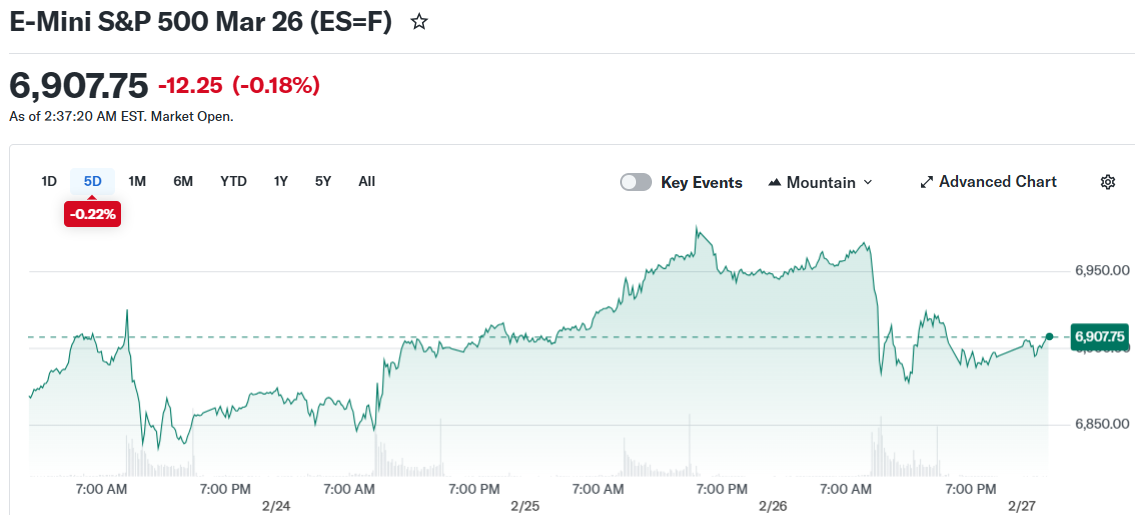
Dow futures retreated approximately 0.6%, S&P 500 futures decreased 0.4%, and Nasdaq 100 futures declined 0.3% during Friday’s overnight session.
Asian equity markets are positioned for their most robust February showing since 1998. South Korean technology stocks advanced roughly 20% throughout the month, with capital flowing into artificial intelligence infrastructure companies.
The MSCI Asia Pacific Index appears set to exceed S&P 500 returns for a consecutive third month. This geographic rotation has diverted investment capital from American markets.
Block shares surged over 23% during after-hours trading following CEO Jack Dorsey’s announcement of workforce reductions approaching 50%, attributing the restructuring to artificial intelligence capabilities transforming company operations.
Market attention now shifts to Friday’s producer price index data release, with economists projecting a 0.3% monthly increase in both headline and core wholesale inflation measures.
