



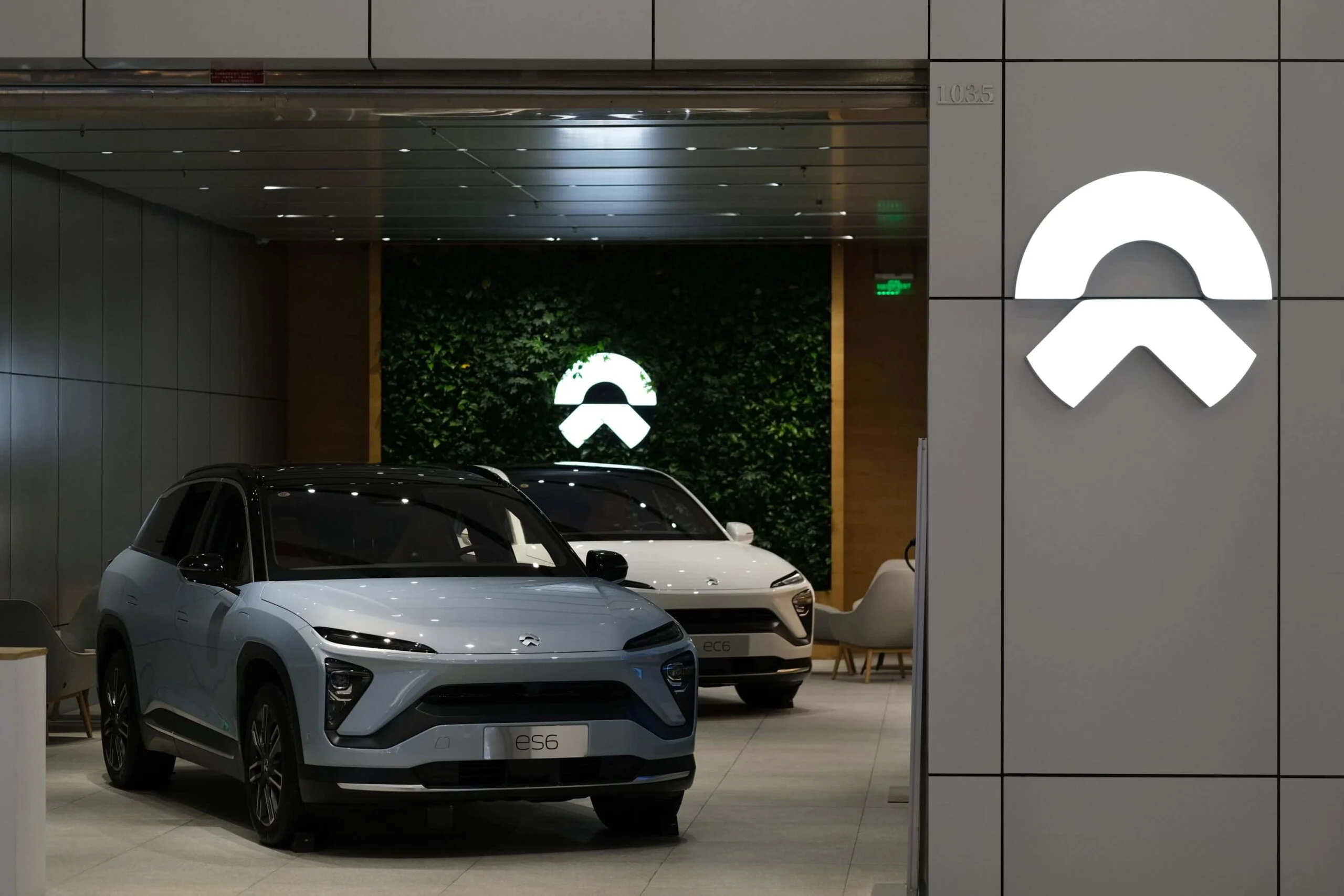
Key Takeaways
- April deliveries totaled 29,356 vehicles, representing a sequential decline from March’s 35,486 units but a 22.8% increase compared to last year.
- Shares of NIO declined approximately 4.6% during Friday’s early trading session, despite maintaining a 25% gain year-to-date.
- Rivals Li Auto and XPeng similarly experienced sequential delivery reductions in April.
- The three EV manufacturers collectively delivered 94,452 vehicles in April, down from the previous month’s 103,954 units.
- China’s electric vehicle sector faces headwinds from market saturation, with battery-electric vehicles comprising approximately 30% of domestic new vehicle sales.
The Chinese electric vehicle manufacturer reported April deliveries of 29,356 units, falling short of the 35,486 vehicles delivered in March while surpassing last year’s April figure of 23,900 — representing a year-over-year increase of 22.8%.
Breaking down the April figures, the company’s flagship NIO brand accounted for 19,024 units, while the Onvo family-oriented line contributed 5,352 vehicles and the compact Firefly brand added 4,980 units. The automaker’s total cumulative deliveries reached 1,110,413 vehicles through the end of April.
NIO stock experienced a decline of roughly 4.6% during Friday’s opening trading hours following the delivery announcement.
The market’s negative response carries added significance considering the stock had gained 25% since the start of the year and climbed 58% over the trailing twelve months. During the past year, the company has delivered a total of 372,855 vehicles — representing a substantial 54% increase from the previous 12-month period.
Investor expectations had clearly been elevated heading into the release.
Competitors Face Similar Sequential Challenges
Li Auto reported April deliveries of 34,085 units, marking a decrease from March’s 41,053 vehicles but slightly exceeding the 33,939 units delivered in April 2025. The company’s shares gained 0.7% on Friday. However, Li Auto has been the weakest performer among the trio — up merely 5% year-to-date and down 27% over the past year. The automaker’s trailing twelve-month deliveries totaled 408,767 vehicles, reflecting a 22% year-over-year decline.
XPeng emerged as the sole month-over-month winner. The company delivered 31,011 vehicles in April, representing an increase from March’s 27,415 units. That said, the figure still fell short of last year’s April total of 35,045 vehicles. XPeng’s stock traded flat on Friday and remains down 20% for the year.
When aggregated, the three automakers delivered 94,452 vehicles in April — a decline from March’s 103,954 units and only marginally above the April 2025 combined total, with roughly 2% growth.
Saturation Challenges Emerge in China’s EV Sector
The underlying narrative points to a decelerating Chinese electric vehicle marketplace. Industry leader BYD reported all-electric vehicle sales of 147,601 units in March — an 11% year-over-year decrease. April figures from BYD remain unreported at this time. A significant detail: exports represented 40% of BYD’s total March volume, indicating that domestic Chinese demand is considerably weaker than surface-level metrics might imply.
China’s overall new vehicle sales contracted during the first quarter. Battery-electric vehicles currently represent approximately 30% of the country’s new vehicle market. When plug-in hybrid models are included, electrified vehicles account for nearly 50% of sales. With market penetration already reaching such elevated levels, the period of straightforward expansion has concluded.
The American market confronts distinct challenges. The federal $7,500 EV tax incentive lapsed in September, increasing the effective purchase price for consumers. First-quarter U.S. EV sales plummeted 27% year-over-year, representing roughly 6% of total new vehicle sales.
Tesla’s shares edged up 0.3% on Friday. The S&P 500 advanced 0.5% while the Dow Jones Industrial Average rose 0.4%.
As of April 30, 2026, NIO’s lifetime deliveries totaled 1,110,413 vehicles.
