



TLDR
- The precious metal experienced a dramatic reversal, falling almost 5% before climbing back 2% as bargain hunters stepped in
- Dollar strength, increasing approximately 1.5% over the week, is limiting gold’s upward momentum
- Geopolitical tensions between the US and Iran are fueling safe-haven flows while simultaneously elevating crude oil costs
- Elevated energy prices are intensifying inflation concerns, dampening expectations for Federal Reserve monetary easing
- Market participants now assign 80% probability to more than one rate reduction in 2025, down from two fully priced cuts last Friday
The gold market experienced dramatic whiplash this week, plunging sharply before staging a notable recovery as market participants balanced geopolitical risk against currency headwinds.
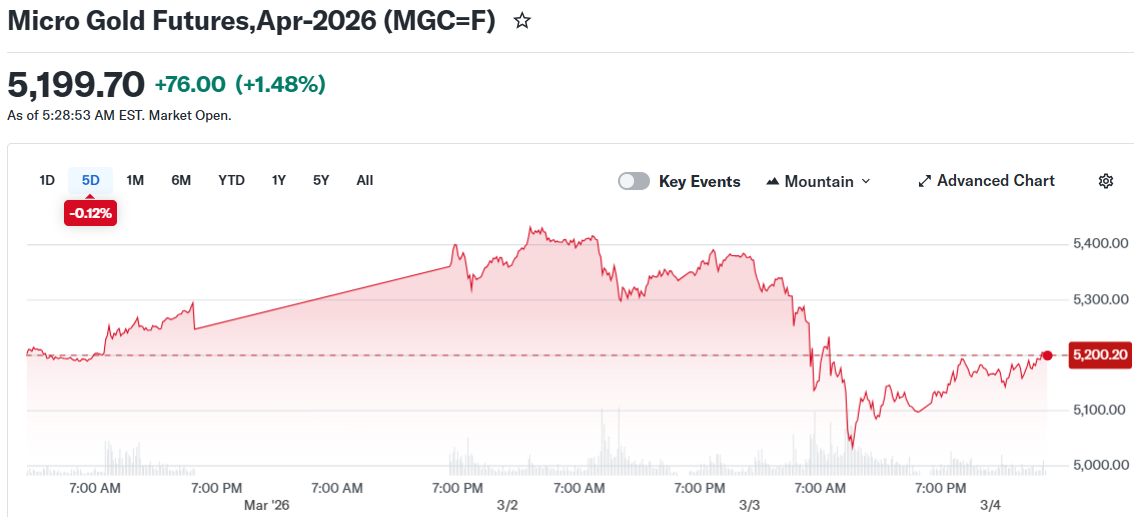
By late morning trading in London, spot gold had advanced 1.6% to reach $5,171.89 per ounce. This recovery followed the previous session’s 4.5% decline, marking one of the most significant single-day retreats in recent memory.
The yellow metal achieved a record peak exceeding $5,595 per ounce during late January. Year-to-date gains now stand at approximately 20%.
The midweek selloff stemmed from a powerful rally in the US Dollar Index, which surged nearly 1.5% across two sessions to touch six-week peaks. Dollar appreciation increases the cost of gold for international buyers utilizing alternative currencies.
Forced liquidation by investors covering margin calls in other asset classes compounded the downward pressure.
Silver experienced even sharper volatility, tumbling more than 8% before recovering 4.1% to $85.38. Platinum declined 10% before rallying 2.8% to $2,148.50 per ounce.
Geopolitical Tensions Support Haven Assets
The military confrontation between US-Israeli forces and Iran has entered its fifth day. Israeli forces conducted additional strikes on Tehran and targeted a structure in Qom where religious leaders were reportedly convening to select a replacement for Supreme Leader Ayatollah Ali Khamenei, according to reports from Israel’s Kan News. Iran’s semi-official Mehr news agency acknowledged the strike but maintained the facility was unoccupied.
The escalating situation has injected volatility across financial markets and maintained heightened investor anxiety. Concerns regarding wider regional destabilization are mounting as Iran has pledged retaliation following American attacks on Iranian-associated facilities.
Commercial activity through the Strait of Hormuz, which handles approximately one-fifth of global oil and natural gas transit, has virtually ceased. President Trump announced the US would supply naval protection and insurance coverage for petroleum vessels navigating the strait, though maritime industry representatives characterized it as an incomplete solution.
Energy Costs Reshape Interest Rate Outlook
Escalating petroleum prices are elevating inflation projections. This development is reducing the likelihood that monetary authorities, particularly the Federal Reserve, will implement rate reductions in the near term.
Market pricing now reflects 80% probability of more than one quarter-point Federal Reserve rate cut throughout the year. Just last Friday, financial markets were completely pricing in two separate reductions.
Elevated interest rates present challenges for gold since the commodity generates no yield.
Institutional investors’ net long exposure in gold has contracted since late January to approach decade lows, based on CFTC reports. Market strategists suggest this diminished positioning might establish a floor under potential declines.
In China, government PMI figures indicated manufacturing contraction, while independent survey data revealed better-than-anticipated expansion, suggesting conflicting economic signals from the world’s second-largest economy.
