



Key Takeaways
- European natural gas prices soared more than 40% following Qatar’s decision to suspend LNG production after Iranian drone attacks on Ras Laffan facilities
- All LNG output from QatarEnergy was halted after strikes damaged two gas production sites
- The blockade of the Strait of Hormuz is disrupting more than 20% of the world’s LNG supply
- Goldman Sachs increased its Q2 TTF price projection to 45 euros/MWh from 36 euros/MWh, warning of a potential 130% surge from previous week’s trading levels
- Depleted European gas storage reserves entering the refill season are intensifying supply concerns
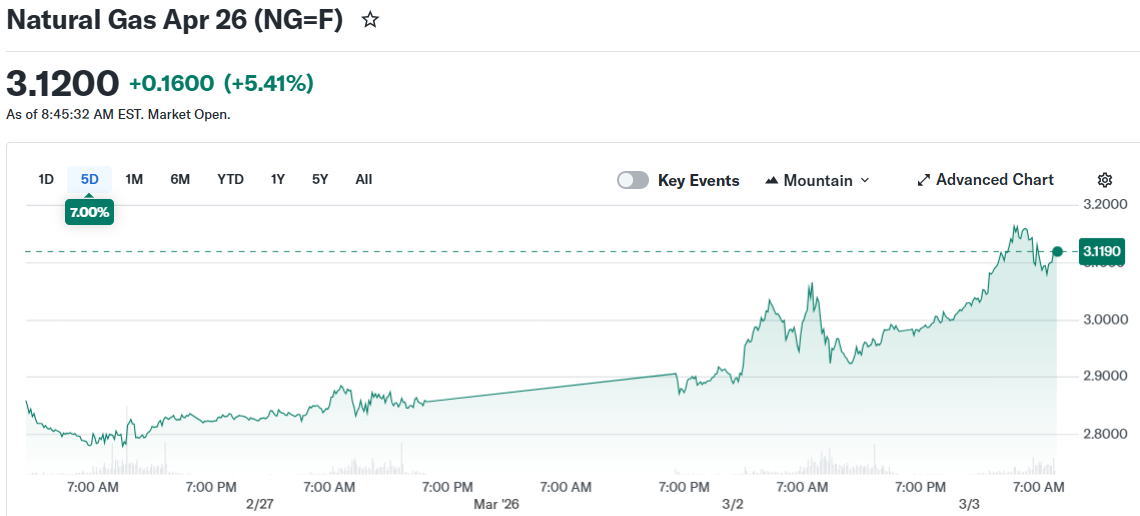
European natural gas markets experienced a second consecutive day of dramatic price increases after Qatar announced a complete shutdown of its liquefied natural gas operations. The Dutch Title Transfer Facility (TTF) benchmark, Europe’s primary gas pricing indicator, climbed over 40% to exceed 62 euros per megawatt-hour during Tuesday trading.
The dramatic price movement came after QatarEnergy announced the suspension of all liquefied natural gas production at its Ras Laffan facility. The state-owned company attributed the shutdown to Iranian drone attacks that struck two of its natural gas infrastructure sites.
As the planet’s second-biggest LNG exporter, Qatar plays a critical role in global energy markets. Although its primary customer base is in Asia, any extended production stoppage would create intense competition between Asian and European purchasers in the global spot market.
Market tensions had already been escalating before Qatar’s production suspension. Futures contracts began their upward trajectory on Monday following Iran’s effective closure of the Strait of Hormuz, a critical maritime corridor at the entrance to the Persian Gulf.
The Strait of Hormuz serves as the transit route for over 20% of global LNG shipments. Iranian authorities have issued warnings that vessels attempting passage through the waterway will face attacks.
Energy analysts from ANZ described the situation as “the biggest threat to world gas markets since Russia invaded Ukraine in 2022.” That military conflict propelled European gas prices to unprecedented levels and sparked an energy emergency across the continent.
Goldman Sachs Revises European Gas Price Projections Upward
Goldman Sachs commodity strategists, led by Samantha Dart and Frederik Witzemann, have revised their April TTF price projection upward to 55 euros per megawatt-hour. This represents a substantial increase from their prior forecast of 36 euros per megawatt-hour.
The investment bank’s revised average projection for the second quarter of 2026 now stands at 45 euros per megawatt-hour, up from their previous 36 euros estimate. Goldman’s analysis suggests prices could potentially surge by as much as 130% compared to last week’s trading levels.
The TTF benchmark had already climbed over 31% to approximately 58.60 euros per megawatt-hour by Tuesday afternoon. This positions it near its peak levels last observed in 2023.
Middle Eastern sources account for roughly 5% of Europe’s natural gas imports. Despite this relatively modest direct exposure compared to Asia’s dependence, the ripple effects through international spot markets are already driving prices upward.
Depleted Storage Reserves Compound Supply Concerns
Europe’s gas inventory levels are currently tracking below typical seasonal averages as the continent enters the critical period for replenishing reserves before the next winter season. Unexpectedly high consumption of gas for power generation during the previous winter has exacerbated the deficit.
Goldman’s commodity team noted that uncertainty surrounding the duration of Qatar’s production suspension, coupled with persistent threats to maritime traffic through the Strait of Hormuz, will “drive TTF prices temporarily higher still.”
Alternative supply sources are available but constrained. While the United States has capacity to boost LNG exports, market participants indicate that American production volumes alone would prove insufficient to offset a prolonged absence of Qatari supply.
The Center for Strategic and International Studies informed the New York Times that reduced gas availability for Asian markets could redirect Asian purchasers toward American and other non-Middle Eastern suppliers. Market analysts suggest European prices may continue their ascent even after QatarEnergy resumes normal operations.
Goldman Sachs noted that the TTF was trading near its highest levels since 2023 as of Tuesday morning.
