



Key Takeaways
- Goldman Sachs analysts recommend buying market pullbacks rather than selling, citing solid economic fundamentals
- Middle East tensions persist into day five, with continued strikes on Tehran amid Khamenei funeral preparations
- Reports emerged of Iran’s intelligence ministry contacting US intelligence agencies to discuss conflict resolution
- Crude oil retreated modestly on diplomatic news, with Brent hovering around $82 per barrel
- Futures for the S&P 500 and Nasdaq turned positive following reports of Iranian diplomatic engagement
Wall Street futures advanced Wednesday following breaking news that Iran’s intelligence apparatus made confidential contact with American intelligence officials to discuss potential de-escalation with Israel.
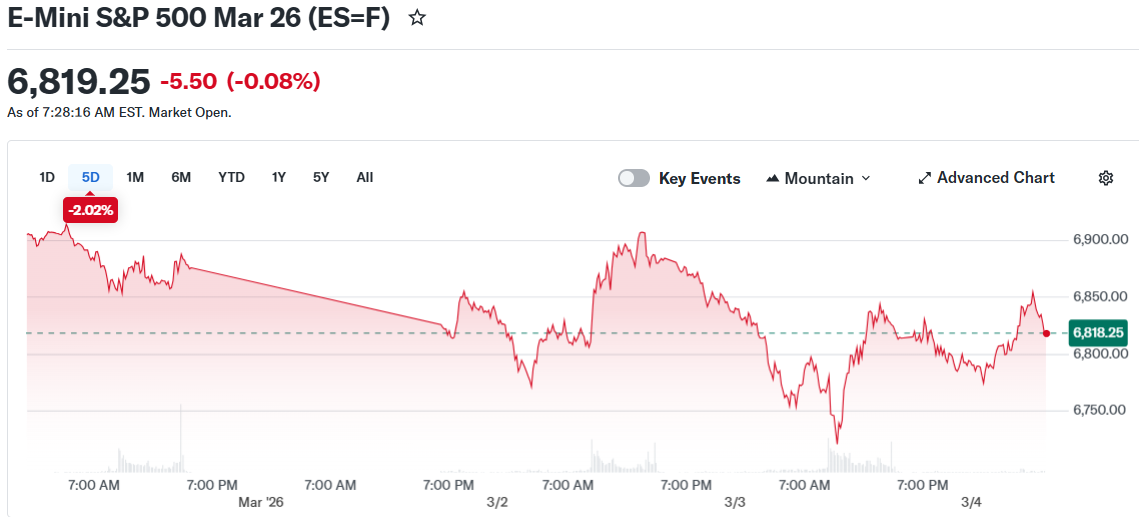
S&P 500 futures advanced 0.1% while Nasdaq 100 contracts climbed approximately 0.2%, erasing morning declines. Dow Jones futures hovered around unchanged levels after all three primary indices suffered steep Tuesday losses.
The Middle East crisis reached its fifth consecutive day Wednesday. Israeli forces conducted additional strikes against Tehran while Iran organized funeral proceedings for Supreme Leader Ali Khamenei, who perished in weekend military operations.
Global financial markets have experienced significant volatility from the escalating situation. South Korea’s benchmark equity index recorded its largest one-day decline in history on concerns about regional contagion.
News of Tehran’s diplomatic initiative temporarily eased investor anxiety. Nevertheless, American intelligence officials reportedly expressed skepticism about the overture, with market observers cautioning against premature optimism.
Goldman Sachs Advises Opportunistic Buying
Goldman Sachs investment strategists, under Peter Oppenheimer’s leadership, issued research advising clients to view market weakness as attractive entry points. Their analysis emphasized that robust corporate earnings and economic stability would limit downside potential.
“We see correction risks as high given current valuations, but expect this to present a buying opportunity with relatively low risk of a more protracted and deep bear market,” Oppenheimer wrote.
The research team acknowledged that global equity markets trade at elevated valuations compared to two-decade historical averages. This valuation premium makes stocks more vulnerable to disruptions including Middle East military actions and artificial intelligence concerns.
Oppenheimer added that “most geopolitical shocks in recent years have not had a long-lasting impact on markets.”
Energy Markets and Critical Shipping Routes
Surging energy prices have emerged as a primary market concern. President Trump announced Tuesday that American forces would provide security and insurance coverage for petroleum tankers navigating the Strait of Hormuz, where shipping has stalled amid Iranian military posturing.
Brent crude contracts declined more than 2% following the diplomatic reports, settling near $82 per barrel. West Texas Intermediate fell toward $75.
Elevated petroleum prices threaten to reignite inflationary pressures, potentially constraining the Federal Reserve’s ability to implement interest rate reductions.
Market participants are closely monitoring Wednesday’s ADP employment figures. The private sector jobs data precedes Friday’s comprehensive labor market report, both critical indicators for Federal Reserve monetary policy decisions.
Quarterly results from Broadcom, Costco, and Alibaba are anticipated later this week.
