




TLDR
- Precious metal declined approximately 2% following weekend incidents at the Strait of Hormuz
- US Navy intercepted an Iranian vessel, with mutual accusations of ceasefire breaches
- Crude prices jumped as much as 7%, triggering inflation concerns that pressured gold
- The greenback strengthened by 0.2%, creating headwinds for dollar-denominated bullion
- Bullion has shed roughly 9% since conflict with Iran escalated in late February
Bullion experienced a significant decline Monday as escalating tensions near the Strait of Hormuz disrupted financial markets and sent crude oil soaring, pulling the precious metal down almost 2% during its weakest moment.
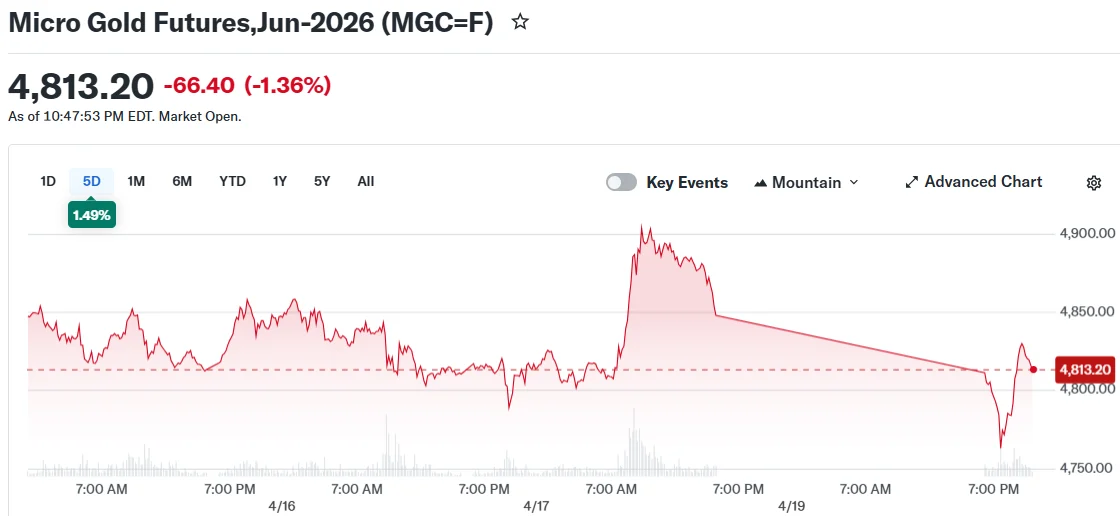
Spot bullion decreased 0.9% to reach $4,786 per ounce during Asian market hours. Futures contracts fell 1.5% to $4,804 per ounce. While both measurements rebounded modestly from their lowest points, downward pressure persisted.
President Donald Trump disclosed during the weekend that US Navy forces engaged and captured an Iranian-registered cargo vessel that was attempting to evade a maritime blockade. Tehran cautioned that any ships nearing the Strait of Hormuz would be considered violations of the ceasefire agreement.
Multiple commercial vessels were compelled to retreat from the critical shipping lane mere hours after Iran had declared it accessible on Friday. This reversal sparked renewed skepticism about prospects for lasting peace.
The two-week ceasefire reaches its expiration on Tuesday. Trump indicated he perceives an opportunity for diplomatic progress but simultaneously repeated warnings to strike Iranian infrastructure. Iranian officials stated there was no evident path toward constructive negotiations.
Peace discussions were scheduled to occur in Islamabad, however Iranian news outlets indicated Tehran had not confirmed participation in any upcoming sessions.
Oil and the Dollar Add Pressure
Oil prices skyrocketed by up to 7% Monday after declining during the prior trading session. Natural gas experienced gains as well. The dramatic increase in energy costs reignited worries about inflation stemming from the persistent supply disruption.
A strengthening dollar imposed additional pressure on the yellow metal. The Bloomberg Dollar Spot Index advanced 0.2%, rendering gold more costly for international purchasers utilizing alternative currencies.
Gold has declined approximately 9% since hostilities with Iran commenced in late February. The military engagement has triggered an energy supply crisis that has elevated inflation and diminished the likelihood of central bank interest rate reductions, thereby decreasing the attractiveness of non-interest-bearing assets such as gold.
Fed Watch and Rate Outlook
Investors are closely monitoring the US Senate confirmation proceedings for Kevin Warsh, Trump’s nominee to chair the Federal Reserve, set for Tuesday.
Market observers indicate that any indication Warsh supports looser monetary policy could bolster bullion values. A more conservative approach regarding inflation could drive prices downward.
Strategists at OCBC stated they continue to anticipate gold’s trajectory will be determined by overall risk appetite and ceasefire negotiation developments. They advised purchasing during price declines rather than pursuing rallies, projecting a short-term trading band between $4,700 and $4,900 per ounce.
Lorenzo Portelli, head of cross asset strategy at Amundi, suggested the inflationary consequences from the energy crisis are probably transient rather than enduring.
Silver declined 1.5% to $79.62 per ounce. Silver had outpaced gold during the prior week following an industry analysis highlighting an intensifying supply shortage in 2026. Platinum and palladium also retreated Monday.
Spot gold was quoted at $4,786 as of mid-afternoon Singapore trading hours.
