



TLDR
- Precious metals advanced Thursday with spot gold climbing 0.4% to $4,808.42 per ounce
- Dollar weakness is boosting gold’s appeal among international investors
- Washington and Tehran have reached preliminary agreement on additional diplomatic meetings
- Current U.S.-Iran ceasefire arrangement expires April 21
- Crude prices have settled beneath $100 per barrel while staying elevated compared to pre-conflict levels
Precious metals posted gains on Thursday as the U.S. dollar retreated and diplomatic efforts between Washington and Tehran showed encouraging signs of progress.
Spot gold advanced 0.4% to reach $4,808.42 per ounce. Gold futures contracts increased 0.1% to settle at $4,828.71 an ounce during early Thursday trading hours in Eastern Time.
Across the precious metals complex, gains were widespread. Spot silver advanced 0.6% to $79.41 an ounce, while spot platinum posted a stronger 1.2% increase to $2,138.32 per ounce.
The upward momentum occurred as gold maintained its position near the highest level in nearly four weeks achieved during Wednesday’s session. Growing optimism surrounding potential de-escalation in Middle Eastern tensions has diminished inflation concerns while encouraging investors to embrace riskier assets.
Iran Ceasefire Talks
Washington and Tehran have reached an understanding to pursue another round of diplomatic discussions, the Wall Street Journal reported. The first round of negotiations occurred over the previous weekend in Pakistan but failed to yield an immediate resolution.
Sources with knowledge of the discussions informed the Journal that neither party has determined the timing or venue for subsequent meetings. The existing ceasefire arrangement between the nations is scheduled to lapse on April 21.
President Donald Trump announced Thursday that discussions between Israel and Lebanon are anticipated. Israeli officials confirmed the planned talks, although the Associated Press indicated Lebanese authorities stated they had received no notification.
Regional tensions persist despite diplomatic progress. Iran’s senior military leadership cautioned the United States to end its naval blockade of Iranian shipping facilities. U.S. Central Command reported that no Iranian-affiliated vessels or petroleum tankers have successfully breached the blockade.
Oil and Rate Expectations
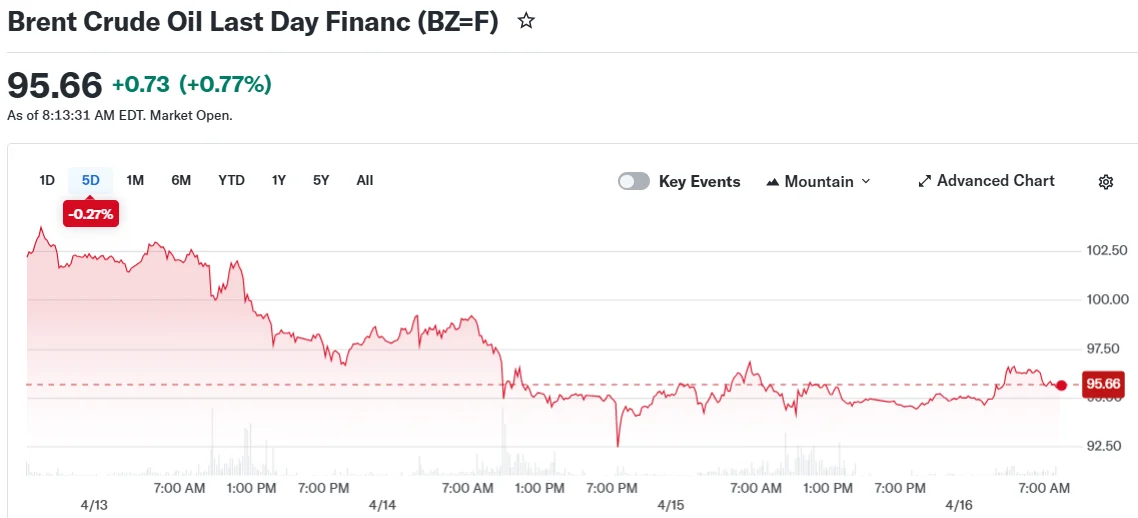
Oil prices have stabilized under the $100 per barrel threshold, though they remain significantly elevated compared to pre-conflict valuations. Crude petroleum surged toward $120 per barrel when hostilities erupted in late February, triggering widespread inflation anxieties globally.
Those inflationary pressures sparked increasing speculation that monetary authorities, including the Federal Reserve, might implement interest rate increases. Elevated interest rates typically diminish gold’s attractiveness since the metal generates no income.
However, as diplomatic initiatives have advanced, expectations for rate increases have moderated. Spot gold has appreciated 0.9% during the past seven trading days.
The U.S. dollar has also declined after functioning primarily as a safe-haven currency throughout much of March. Market participants had perceived the United States as largely protected from petroleum supply interruptions in the Strait of Hormuz, given its position as a substantial energy producer.
A declining dollar generally reduces gold’s cost for purchasers transacting in alternative currencies, potentially strengthening demand. The subsequent round of U.S.-Iran diplomatic discussions remains unscheduled as the April 21 ceasefire deadline draws nearer.
