




Key Takeaways
- March PCE inflation surged to 3.5%, marking the highest level since August 2023
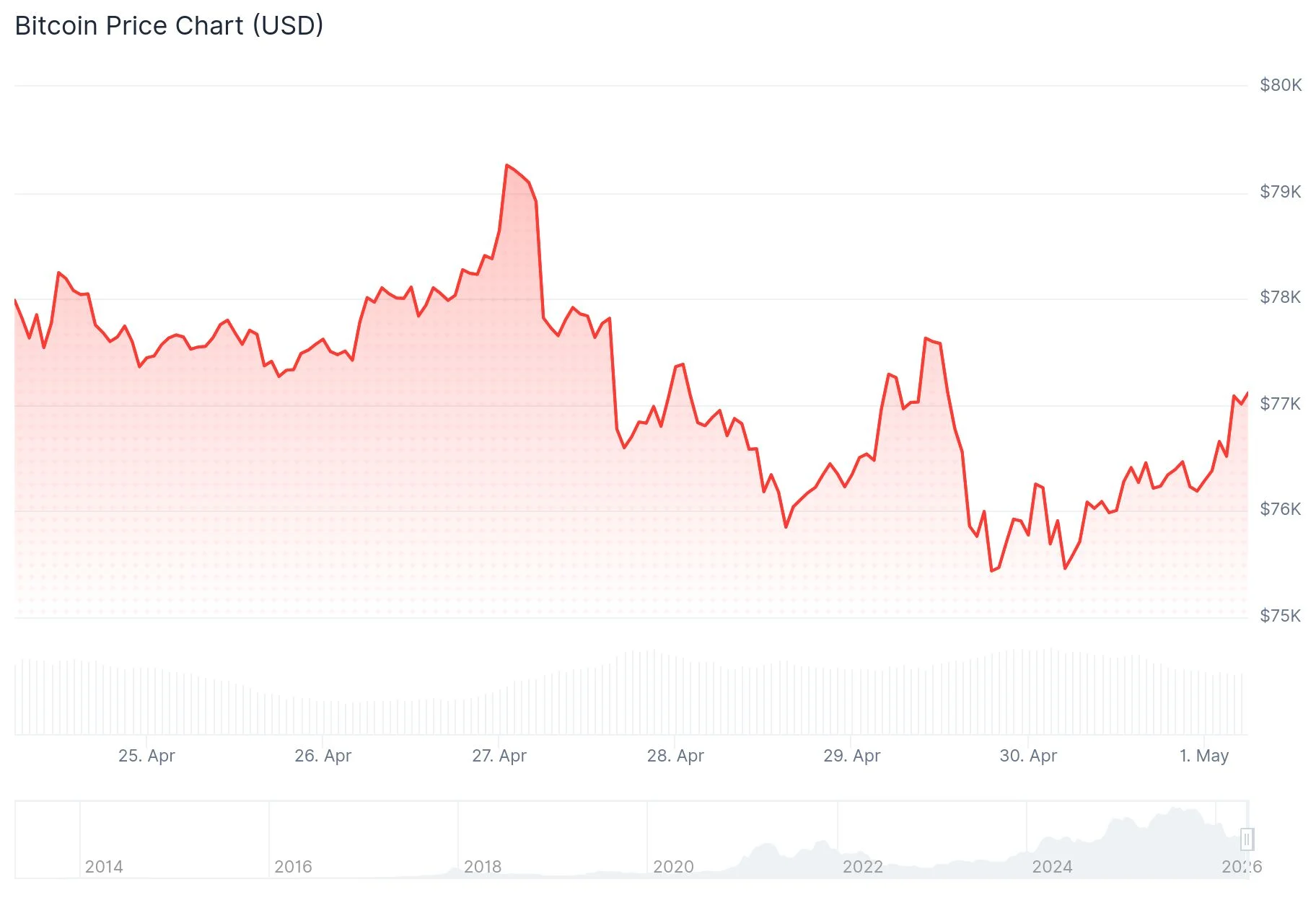
- Bitcoin fell to approximately $76,000 in response to inflation figures
- U.S.-listed Bitcoin ETFs experienced $490 million in combined outflows across three consecutive days
- Market prediction platform Polymarket indicates 58% probability of no Federal Reserve rate reductions in 2026
- Crypto analyst Ted Pillows identified potential rebound signals after BTC defended the $75,000 threshold
Fresh inflation numbers from the United States have weighed heavily on Bitcoin, as the Personal Consumption Expenditures index reached levels not seen in close to three years.
According to the Bureau of Economic Analysis, the PCE inflation metric for March registered a 3.5% increase on an annual basis and climbed 0.7% from the previous month. Meanwhile, the core PCE measure—which excludes volatile food and energy components—reached 3.2% year-over-year, representing the strongest reading since November 2023.
Following the inflation data disclosure, Bitcoin declined toward the $76,000 mark. Current market data from TradingView indicates BTC is exchanging hands at roughly $76,400 at press time.
During its most recent policy gathering, the Federal Reserve maintained its benchmark interest rate, citing uncertainties stemming from the current U.S.-Iran geopolitical tensions as a significant consideration. The elevated PCE figures reinforce expectations that the central bank will keep rates on hold for a third straight meeting.
Data from Polymarket currently reflects a 58% likelihood that the Fed will implement zero interest rate reductions throughout 2026, a notable increase from the 39% probability recorded just 48 hours prior. This dramatic adjustment in market sentiment is creating downward pressure on speculative assets like Bitcoin.
Crypto market observer Ted Pillows highlighted on X that BTC tested the $75,000 zone before experiencing upward momentum. He indicated that demand is emerging at that price point and suggested another brief upward move may be developing. Market participants are closely monitoring $75,000 as a critical support threshold.
Institutional Withdrawals Compound Downward Pressure
Spot Bitcoin exchange-traded funds trading in the United States registered collective net withdrawals totaling $490 million from Monday through Wednesday. This marked a reversal from the accumulation pattern observed during the preceding two-week period and suggests waning near-term institutional appetite.
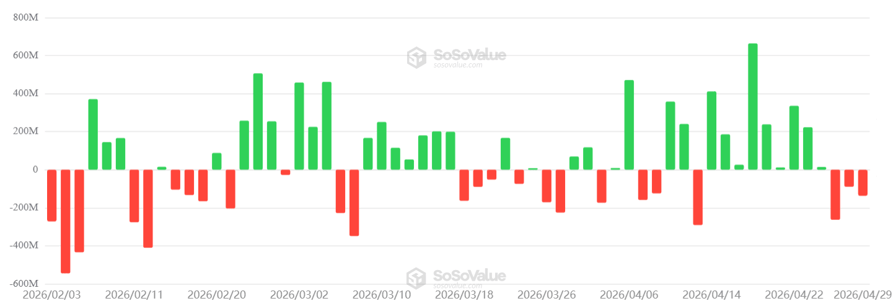
Notwithstanding the recent withdrawal activity, Bitcoin ETFs have attracted $3.3 billion in aggregate net inflows throughout March, indicating sustained strength in the broader trend.
Bitcoin has declined 14% since the beginning of the year, even as the S&P 500 achieved a new record high. Disappointing technology sector earnings contributed to market caution, with Meta declining 9% and Microsoft retreating 4% following their quarterly reports.
Crude Oil Rally Dampens Risk Appetite
Brent crude petroleum surged past the $120 per barrel threshold and recently touched $126, fueled by escalating U.S.-Iran confrontation. Elevated energy prices have driven five-year Treasury note yields to 4.02%, up considerably from 3.51% just two months earlier, prompting defensive positioning among market participants.
Strategy, under the leadership of Michael Saylor, acquired 56,235 BTC during April’s opening four weeks at an average purchase price of $75,537. Market observers are monitoring whether this accumulation rhythm continues.
First-quarter U.S. GDP expanded at a 2% annualized pace, marginally below the 2.3% consensus forecast from economists. President Trump additionally declined Iran’s most recent proposal to reopen the Strait of Hormuz shipping channel, sustaining heightened geopolitical uncertainty.
