



Key Takeaways
- ASTEROID represents a plush Shiba Inu toy that traveled aboard the Polaris Dawn space mission as a zero-gravity indicator
- Price appreciation exceeded 670,000% within a seven-day period, achieving peak valuation on April 21, 2026
- Current valuation stands at approximately $154.7 million with 22,799 verified token holders and $62.4 million in 24-hour trading activity
- Project offers zero utility features, lacks a development roadmap, and operates without formal governance mechanisms
- GoPlus security audit reveals contract creator maintains control to halt selling, create additional tokens, and modify transaction fees
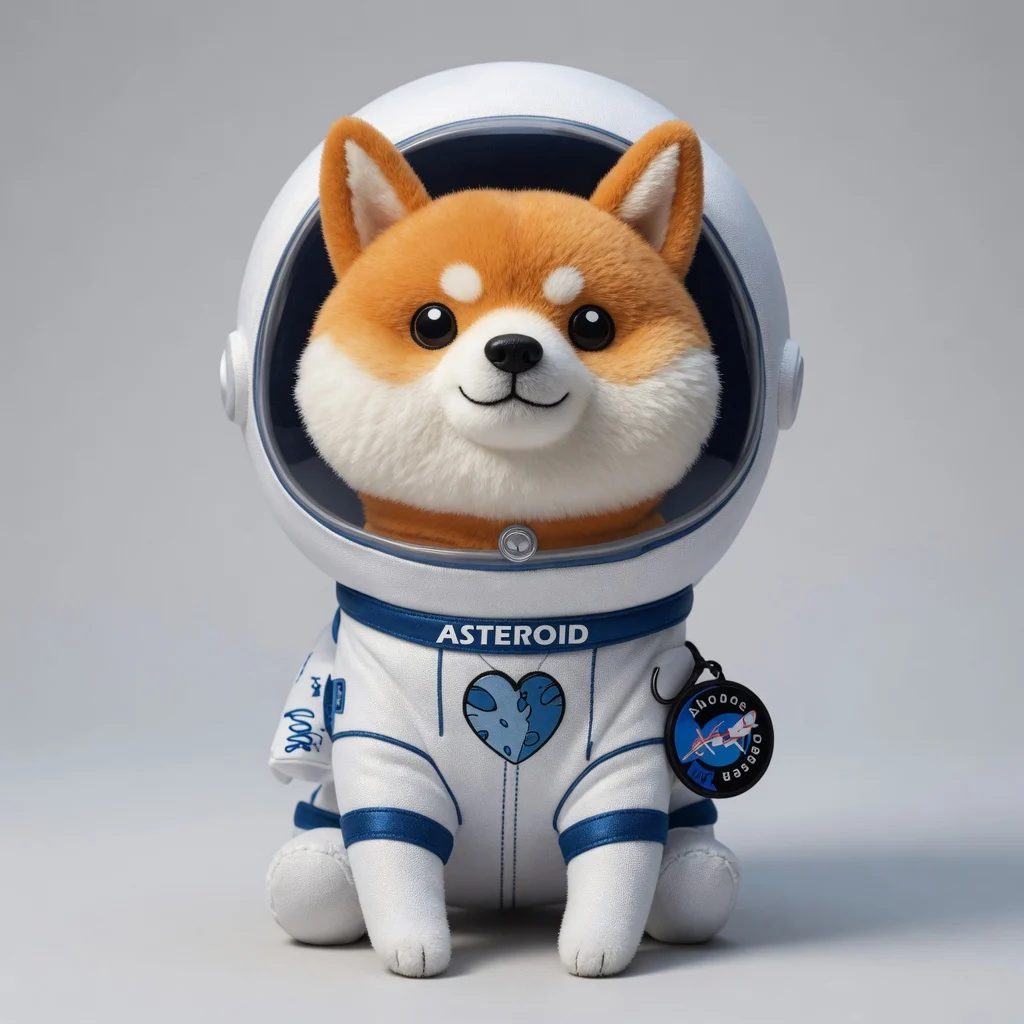
The Asteroid Shiba project originated from an authentic space exploration event. The token derives its identity from “Asteroid,” a Shiba Inu stuffed animal that served as a zero-gravity indicator during the Polaris Dawn mission. Young cancer survivor Liv Perrotto designed the plush toy, providing the cryptocurrency project with a compelling human interest angle rarely seen in meme token launches.
This origin story gained significant traction across social media platforms. Market participants drew connections between the project and Elon Musk’s SpaceX operations, triggering substantial price movement.
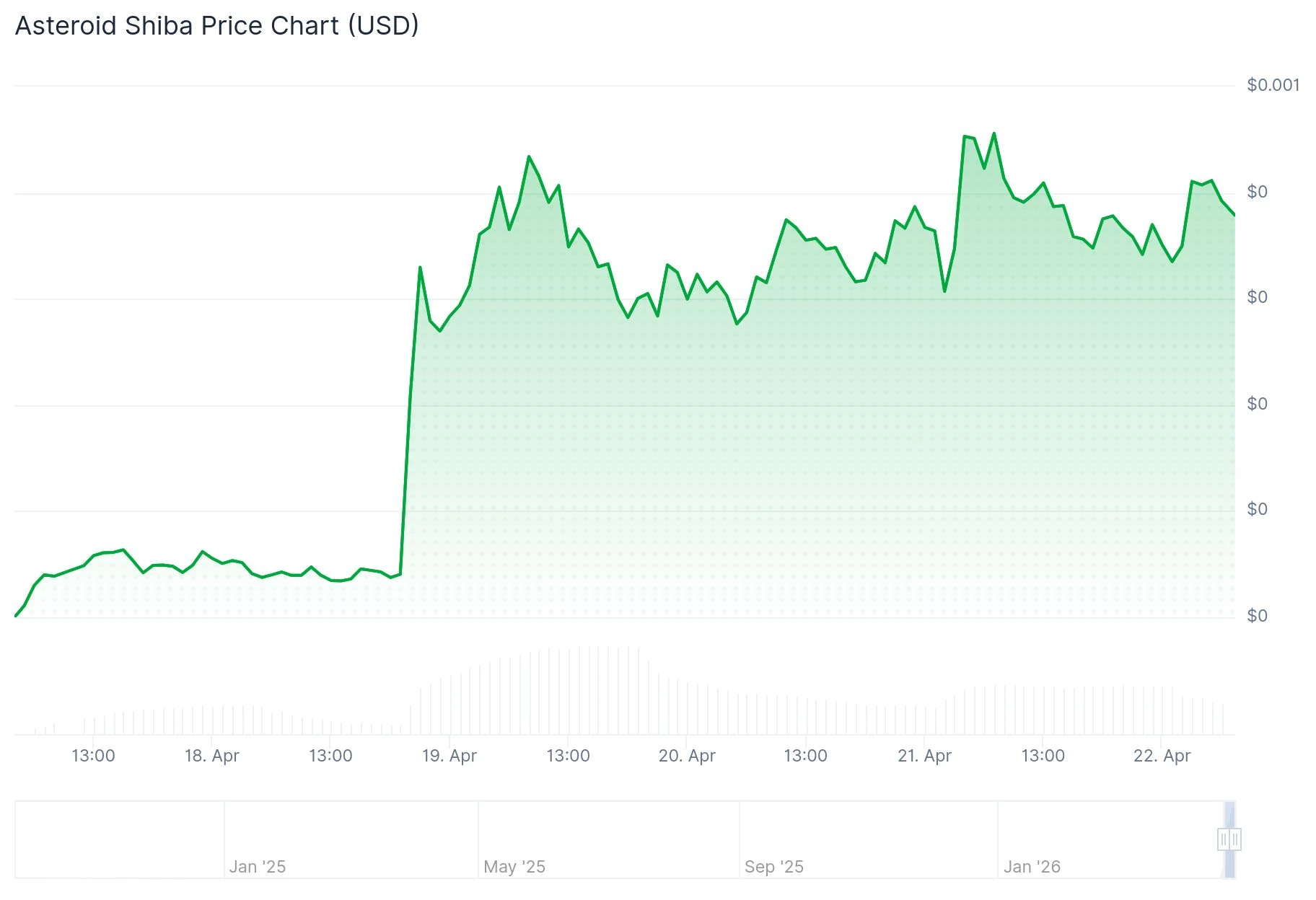
According to CoinGecko data, ASTEROID experienced price appreciation exceeding 670,000% across a seven-day trading period. The token reached its peak price point on April 21, 2026. Coverage from Yahoo Finance-affiliated sources identified Elon Musk’s acknowledgment of Asteroid as a SpaceX mascot—or market interpretation of his statements—as a primary catalyst behind the explosive price action.
Present market capitalization hovers near $154.7 million, with fully diluted valuation matching this figure. Twenty-four-hour trading volume registers at approximately $62.4 million. Etherscan blockchain data confirms around 22,799 wallet addresses hold the token, demonstrating substantial market engagement.
Lack of Fundamental Value Proposition
Despite impressive price performance, ASTEROID demonstrates minimal fundamental support. CoinGecko’s project assessment explicitly notes the absence of practical utility. No development roadmap exists, governance frameworks are nonexistent, and traditional use cases remain undefined.
Token purchasers acquire exposure to a story rather than a functional asset or service.
DEX Screener characterizes ASTEROID as a community-driven takeover, with ownership purportedly transferred to community members in September 2024. This structure means no identifiable public team exists, accountability mechanisms remain unclear, and limited transparency surrounds project decision-making processes.
Contract Security Represents Primary Concern
The most significant risk factor identified in available data involves smart contract architecture. CoinGecko displays a GoPlus security alert indicating the contract creator maintains authority to prevent sell transactions, adjust fee structures, generate additional tokens, and execute token transfers.
For a meme cryptocurrency driven exclusively by market sentiment, this degree of centralized contract control introduces risk dimensions extending beyond standard price volatility.
This finding does not definitively classify ASTEROID as fraudulent. However, it establishes the possibility that financial losses may originate from contract-level actions rather than purely market-driven price movements.
As of April 21, 2026, ASTEROID achieved its highest recorded price level, maintaining a market capitalization near $154.7 million with blockchain-verified holder count exceeding 22,799 addresses according to Etherscan records.
