



Key Highlights
- Official filings reveal SpaceX plans to invest $55B in Terafab’s initial phase in Austin, Texas
- Complete project costs may hit $119B across all phases—significantly higher than Morgan Stanley’s $34B–$45B projection
- The facility will manufacture semiconductors for autonomous vehicles, robotaxis, humanoid robotics, and orbital computing systems
- Intel’s 14A process technology will power the manufacturing operations, which Musk calls cutting-edge
- Initial financial responsibility will rest primarily with SpaceX, minimizing near-term impact on Tesla’s financial position
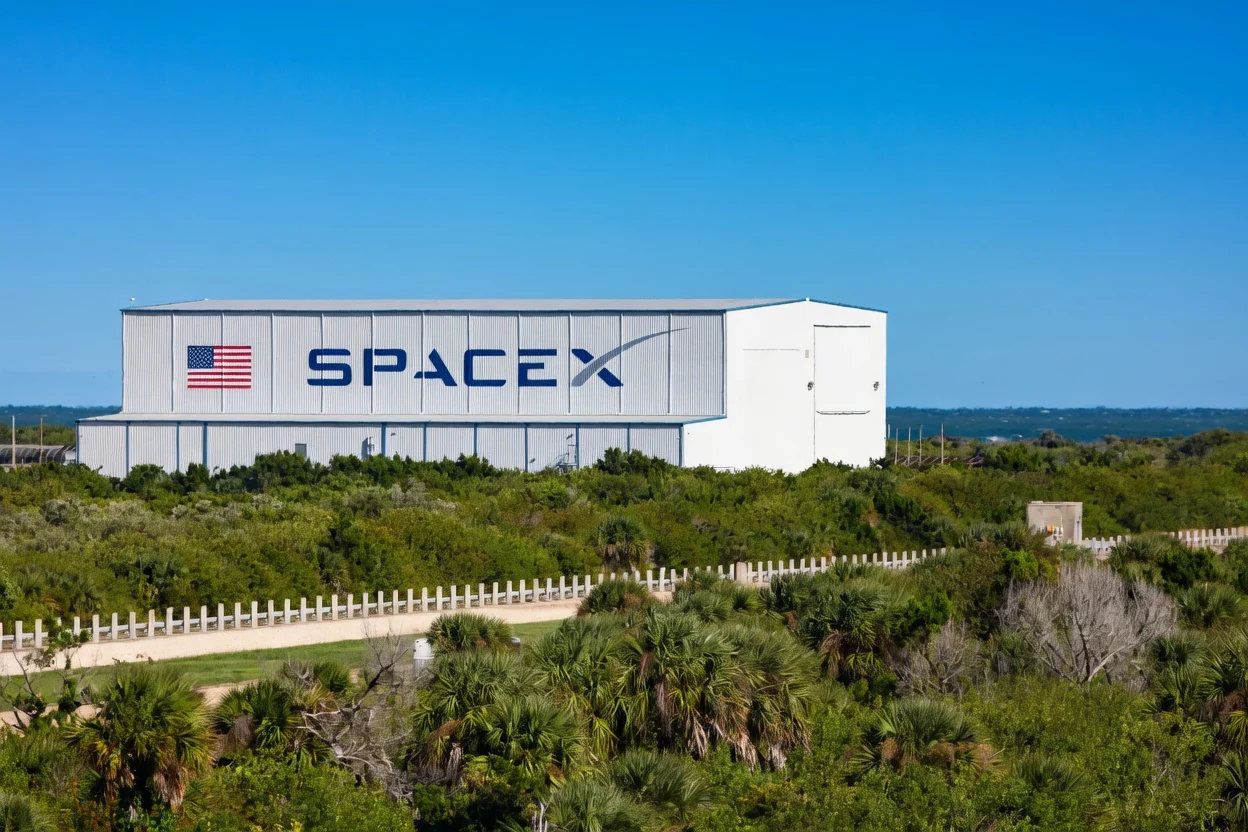
SpaceX has submitted formal governmental documentation outlining a $55 billion expenditure for phase one of Terafab, its semiconductor manufacturing complex planned for Austin, Texas. The complete multi-phase project carries an estimated price tag of $119 billion.
This substantial figure surpasses financial forecasts from industry analysts. Morgan Stanley’s earlier assessment placed the project’s cost between $34 billion and $45 billion. Bloomberg initially disclosed the revised figures, which have been verified through documentation available on a Texas county government portal.
Terafab represents a collaborative venture between SpaceX and Tesla. The initiative aims to establish sufficient internal semiconductor production capabilities to fulfill both organizations’ requirements for artificial intelligence, robotics platforms, and aerospace applications.
Elon Musk introduced the Terafab vision in March. His position maintains that current semiconductor manufacturers cannot expand production rapidly enough to satisfy demand from emerging AI technologies.
“Without the Terafab, we don’t see a path to having enough chips for AI given the rate at which the industry is growing,” Musk told investors recently.
Operations will commence with a compact advanced fabrication facility concentrated on chip design and validation. Subsequently, expansion plans call for progressive scaling into a substantially larger production operation.
Dual Chip Categories
The manufacturing complex is engineered to produce two distinct semiconductor types. First are energy-efficient processors intended for automotive applications, self-driving taxi services, and humanoid robotic systems. Second are high-performance computing chips engineered for space-deployed computational infrastructure.
Musk has discussed enabling massive computing infrastructure both terrestrially and in orbital environments, though specific implementation schedules remain undefined.
Intel Partnership Details
Musk confirmed last month that Terafab operations will utilize Intel’s 14A manufacturing technology. During [[LINK_START_0]]Tesla[[LINK_END_0]]’s latest quarterly earnings discussion, he characterized the process as cutting-edge.
“We plan to use Intel’s 14A process, which is state of the art and in fact not yet totally complete,” Musk said. He added that the technology would be “fairly mature” by the time Terafab becomes operational.
Intel’s participation was disclosed several weeks prior to Musk’s remarks. Musk expressed appreciation for Intel’s leadership, specifically mentioning CEO Lip-Bu Tan.
Industry observers have questioned whether external capital will be necessary, considering the magnitude and intricacy of constructing a semiconductor production facility at this scale.
During [[LINK_START_0]]Tesla[[LINK_END_0]]’s quarterly call, Musk indicated SpaceX would assume primary responsibility for initial capital expenditures. Any financial agreements between the companies require approval from both corporate boards and must navigate conflict resolution procedures.
“It’s going to have, unfortunately, a lot of complexity because we’ve got to make sure Tesla shareholders are served and SpaceX shareholders are served,” Musk said.
SpaceX recently completed the acquisition of Musk’s artificial intelligence venture xAI, preceding a scheduled public offering later this year. Market analysts have suggested the Terafab initiative might eventually facilitate a SpaceX-Tesla combination, although no formal consolidation plans have been disclosed.
