




Key Takeaways
- Bernstein confirms Bitcoin’s $60,000 level as the definitive cycle low, with BTC now trading near $80,000
- More than 60% of circulating Bitcoin supply remains unmoved for over 12 months, indicating robust hodler conviction
- Institutional capital flows through ETFs and Strategy’s ongoing Bitcoin purchases provide sustained demand
- Total stablecoin market capitalization exceeded $300 billion for the first time, demonstrating expanded real-world utility
- Tokenized real-world assets surged 110% annually, reaching $345 billion in value
Bitcoin is pushing toward $80,000 following a new report from Bernstein that identifies the recent $60,000 level as the definitive bottom of this market cycle. The research firm’s analysis suggests the current bull market will eclipse previous cycles in both magnitude and duration.
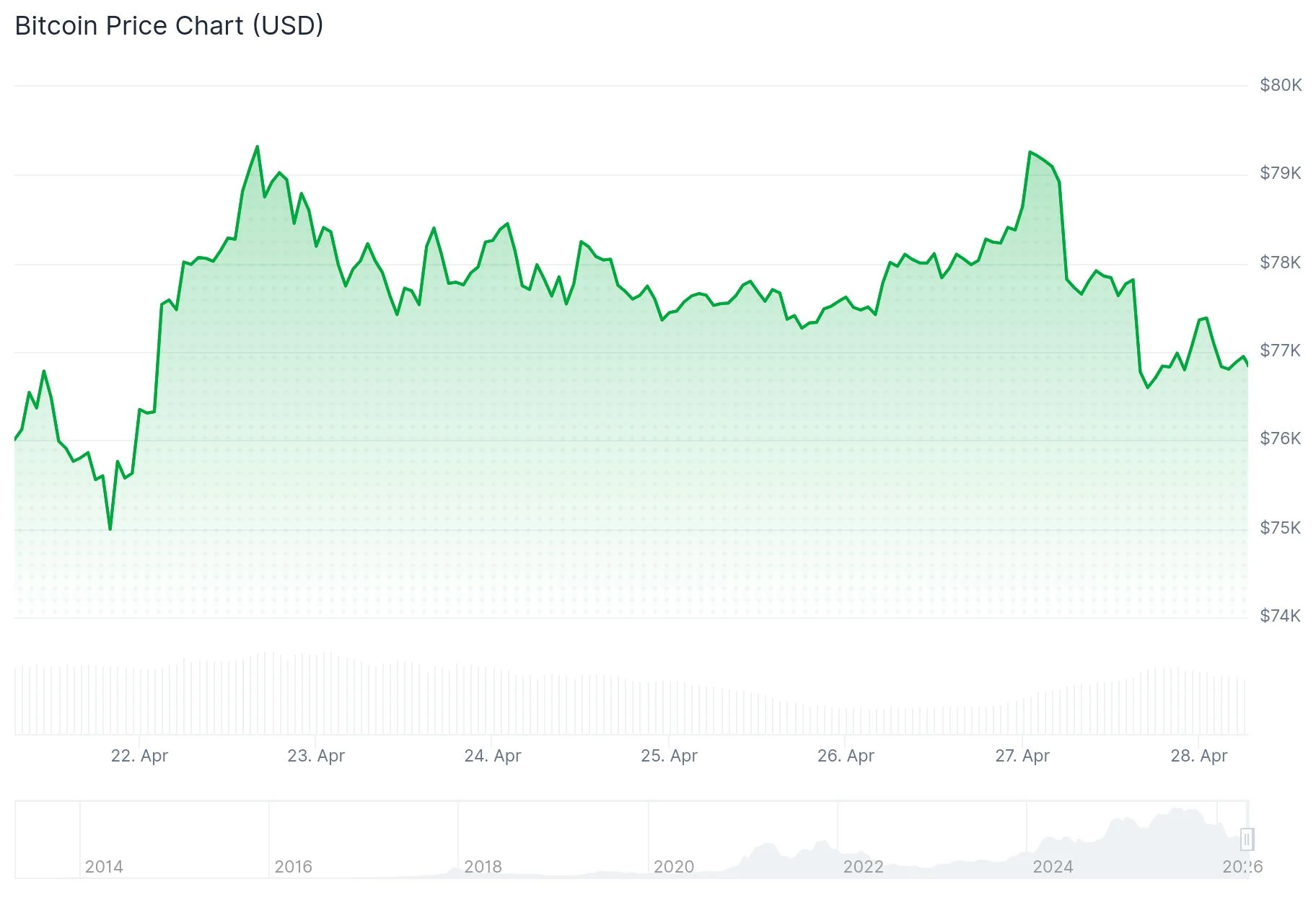
On April 27, Bernstein analysts under the leadership of Gautam Chhugani released their findings. The research team emphasized that Bitcoin’s current fundamental backdrop differs substantially from earlier recovery phases.
“The best days of crypto are ahead which will reflect in a higher and structurally longer crypto bull cycle,” Chhugani wrote in a note to clients.
Bernstein’s analysis identifies three primary catalysts propelling what the firm characterizes as “asymmetric upside” potential for digital assets. These include capital inflows to institutional Bitcoin ETFs, aggressive corporate accumulation led by Strategy, and expanding blockchain integration within conventional finance.
Over 60% of Bitcoin’s available supply has remained stationary for more than one year. This metric reveals a substantial cohort of committed long-term investors, which constrains available selling pressure and has historically correlated with price appreciation.
Corporate and Institutional Capital Flows Reshape Market Dynamics
Michael Saylor’s Strategy maintains a position of 818,334 BTC. The company’s STRC instrument attracts yield-seeking institutional investors through its high-income approach to Bitcoin allocation.
Morgan Stanley and Charles Schwab have both broadened Bitcoin accessibility to their client bases. Morgan Stanley expanded through its Bitcoin ETF offerings, while Schwab introduced a spot trading infrastructure, democratizing access for retail and institutional participants.
According to Bernstein, these persistent capital inflows establish a demand baseline absent from previous market cycles.
Stablecoin Adoption and Asset Tokenization Reach Milestone Levels
Worldwide stablecoin circulation surpassed $300 billion for the first time in history. Bernstein’s report highlights this milestone as evidence of genuine utility demand for digital dollar payments and international settlement systems, rather than mere speculative activity.
Tokenization of real-world assets—encompassing private credit instruments and US Treasury securities—expanded 110% year-over-year to reach $345 billion. This growth demonstrates institutional embrace of blockchain technology across conventional asset categories.
Platforms such as Hyperliquid are experiencing heightened engagement in tokenized representations of equities and commodities including crude oil.
Regarding potential vulnerabilities, Bernstein identified quantum computing as an extended-timeline security consideration for blockchain networks. Nevertheless, the firm maintains that sufficient time exists for the ecosystem to implement post-quantum cryptographic protections before this threat materializes.
Bitcoin continues its advance toward $80,000 as these structural market forces continue to unfold.
