



Key Takeaways
- Tron founder Justin Sun labeled WLFI’s latest governance proposal as an unprecedented “governance scam”
- More than 62 billion WLFI tokens face lockup periods extending to four years, with indefinite freezing for non-compliant holders
- Sun alleges his 4% ownership stake has been frozen, effectively barring him from participating in governance votes
- Moonrock Capital’s founder Simon Dedic accused the Trump family of executing a “rug pull” on early backers
- World Liberty Financial defends the measure as necessary for fostering long-term ecosystem alignment
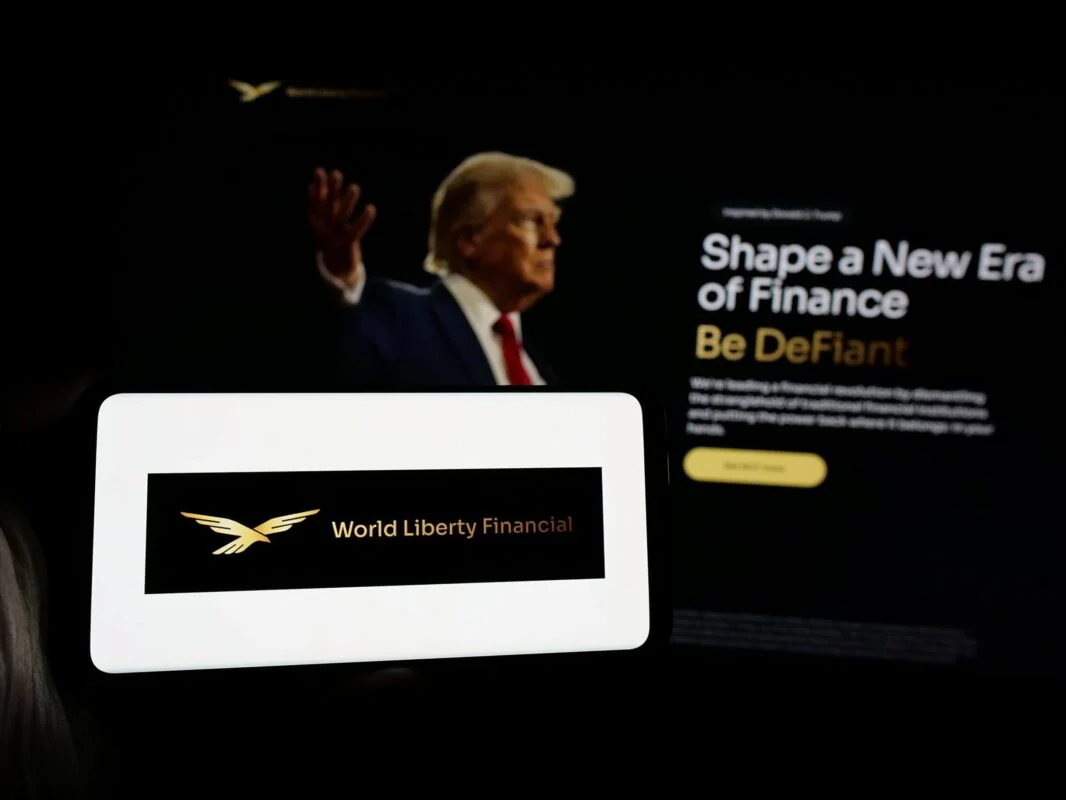
Donald Trump’s cryptocurrency initiative World Liberty Financial faces mounting controversy following the introduction of a governance measure that would trap early investors’ tokens for extended periods — potentially forever for those declining the updated conditions.
The contentious measure, published on WLFI’s governance platform this past Wednesday, targets over 62 billion WLFI tokens with restrictive new lockup requirements. Core team members, strategic advisers, and partnership stakeholders would endure a two-year freeze followed by a three-year gradual token release schedule. Early backers receive marginally reduced vesting periods but still confront years of restricted token access.
Token holders refusing to accept these revised conditions would see their holdings frozen without any defined timeline for release.
The framework also permits the permanent destruction of up to 4.5 billion tokens, while insiders accepting the terms face a mandatory 10% token burn.
The announcement sparked fierce condemnation from Justin Sun, Tron’s founder and a prominent WLFI investor. Sun characterized the strategy as “one of the most absurd governance scams I have ever seen” in a statement posted to X.
Sun reports owning approximately 4% of World Liberty, though his tokens remain currently inaccessible. He maintains this restriction has completely excluded him from the governance voting mechanism.
He further questioned the true power structure within the protocol. Sun pointed to unidentified wallet addresses — including a multi-signature wallet capable of vetoing votes and another account with user blacklisting authority — as the genuine decision-makers.
“This proposal is not governance,” Sun stated. “It is an exercise of power by the selected few.”
Rising Tide of Investor Opposition
Sun wasn’t the only voice expressing discontent. Simon Dedic, Moonrock Capital’s founder, declared that early participants had been “rugged” by the Trump family.
Dedic posted on X that the maneuver seemed designed to give the project “another shot at squeezing the same lemon,” with timing suspiciously aligned to Donald Trump’s remaining presidential tenure.
He additionally condemned what he described as “blatant misconduct” executed with minimal attempt at concealment.
Long-Simmering Tensions Come to a Head
The conflict between Sun and WLFI originated in September, when the project blacklisted a blockchain wallet associated with Sun containing approximately $107 million worth of governance tokens.
This represented a dramatic pivot from late 2024, when Sun committed $30 million to WLFI and accepted an advisory position.
Friction intensified after WLFI deposited 5 billion of its native tokens into Dolomite, a lending protocol co-created by one of its own advisers, subsequently borrowing approximately $75 million in stablecoins. The token price plummeted 12% to an all-time low within 24 hours.
Sun openly criticized the project for treating participants as “personal ATMs.” WLFI countered with warnings of potential litigation.
A WLFI representative informed CoinDesk the proposal “aims to optimally ensure long-term participation in our ecosystem and help ensure healthy market supply.”
The voting period on the controversial proposal launches imminently and will remain open for seven days. WLFI tokens currently trade near 8 cents, representing a decline exceeding 40% year-to-date and more than 75% below the peak price of 33 cents.
