




Key Takeaways
- First-quarter 2026 sales reached €4.07 billion, reflecting 5.6% organic growth versus analyst expectations of 7.1%.
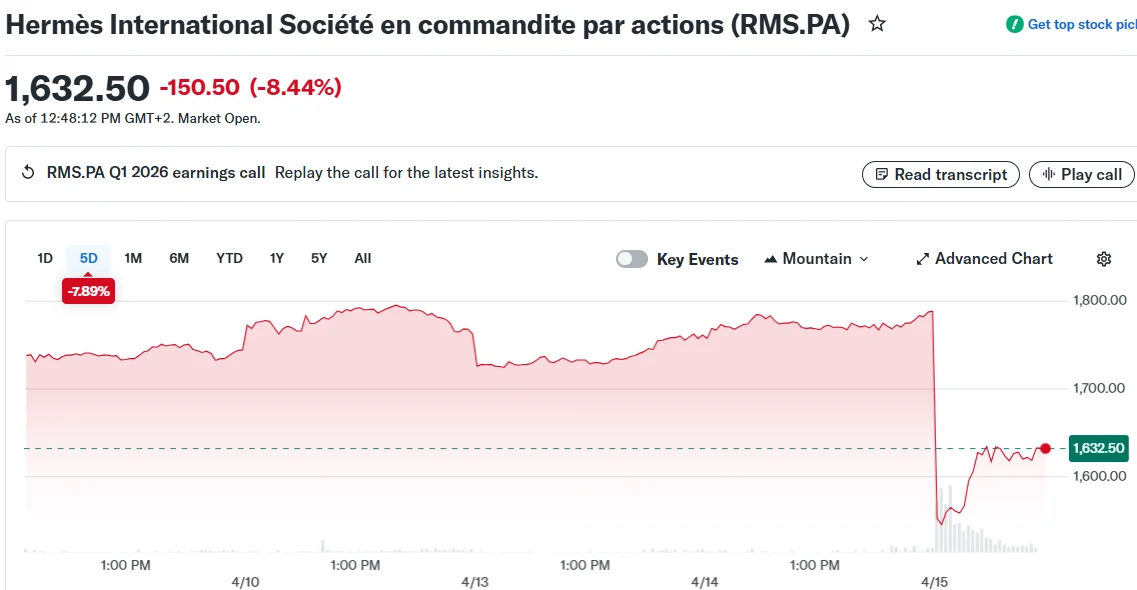
- Shares plummeted more than 13% during Paris trading, erasing over $20 billion in market capitalization.
- Regional turmoil in the Middle East shaved approximately 150 basis points from revenue expansion, with sales declining 13.4% year-over-year.
- Growth in Asia-Pacific (excluding Japan) decelerated dramatically to 2.2%, down from 8% in the previous quarter, sparking China demand worries.
- Strong performance in the Americas region delivered 17.2% growth, significantly exceeding market projections.
The French luxury powerhouse Hermès experienced a brutal trading session on Wednesday following the release of disappointing first-quarter figures. Investors responded harshly to weaker-than-anticipated revenue results, particularly concerning trends in the Middle East and Asia, pushing shares down over 13% in Paris — marking one of the steepest single-day declines in recent memory.
For the quarter ending March 2026, Hermès recorded sales of €4.07 billion, representing organic growth of 5.6%. While positive on the surface, this figure fell noticeably short of the 7.1% expansion Wall Street had anticipated. The result also represents a meaningful deceleration from the 9.8% growth rate achieved during the fourth quarter of 2025.
When measured at actual exchange rates, the performance looked even more challenging. Foreign exchange headwinds totaling €290 million pushed the reported figure into year-over-year negative territory. Market consensus had called for approximately €4.16 billion.
Geopolitical instability in Iran contributed significantly to the shortfall. According to Jefferies analysts, the ongoing Middle East conflict subtracted roughly 150 basis points from first-quarter revenue performance. Wholesale distribution through concession partners in the region and duty-free airport locations bore the brunt of the impact. The Middle East segment overall contracted 13.4% compared to the prior year.
Dramatic Asia-Pacific Deceleration Sparks Investor Alarm
While the Middle East situation grabbed headlines, the region generating the most anxiety among shareholders was Asia-Pacific outside of Japan.
This crucial market segment managed only 2.2% growth during the first quarter — substantially below the 5.7% consensus forecast and representing a dramatic slowdown from the 8% expansion recorded in the fourth quarter. Given Hermès’ significant exposure to Chinese luxury consumption, such a pronounced deceleration immediately raises red flags.
Jefferies analysts were direct in their assessment: the Asia-Pacific ex-Japan performance “will be a major point of debate” and represents a “clear source of concern for fundamental investors.” The critical question facing the market is whether this represents a temporary setback or signals a more enduring weakness in Chinese consumer appetite.
The stock’s pre-announcement weakness had already priced in two specific concerns, Jefferies noted — vulnerability to Middle East instability and deteriorating Chinese consumption trends. Wednesday’s release confirmed both anxieties were justified.
Robust Americas Performance Provides Relief
Amid the disappointment, one region delivered encouraging results. The Americas segment posted 17.2% growth, substantially outperforming analyst forecasts. This represents solid momentum in a market that has emerged as increasingly vital for luxury brand revenue.
Despite missing first-quarter expectations, Hermès maintained its medium-term outlook. Management stated the company has “moved into 2026 with confidence” notwithstanding an unpredictable economic and geopolitical environment.
The stock declined as much as 13.6% during early Paris trading hours before closing approximately 12.93% lower at €1,551.50. A single session wiped out more than $20 billion in shareholder value.
Hermès currently trades at a price-to-earnings multiple of 41.69x, consistent with its premium status within the luxury goods industry. The company maintains a GF Score of 96/100, while its financial strength earns a 9/10 rating.
Management noted that Middle East business trends have demonstrated improvement during the early weeks of the second quarter.
