



Contents
Key Takeaways
- XRP commands a market capitalization of approximately $83.4 billion compared to Chainlink’s $6.6 billion, offering substantially greater liquidity
- The XRP Ledger processes transactions within 3–5 seconds with fees of merely 0.00001 XRP, positioning it as a payments-focused solution
- Chainlink has established integrations with major financial institutions including Swift, DTCC, Euroclear, and tokenization initiatives connected to J.P. Morgan
- Circulating supply stands at 61 billion XRP tokens from a 100 billion ceiling; Chainlink has approximately 727 million tokens available from its 1 billion maximum
- While both cryptocurrencies target the tokenized finance sector, their technological approaches differ fundamentally
Anyone evaluating XRP alongside Chainlink needs to understand these are not comparable crypto assets. Rather, they represent fundamentally distinct financial infrastructure models, and selecting between them hinges primarily on investment timeline considerations.
XRP maintains a substantial size advantage. CoinGecko data indicates its market capitalization hovers around $83.4 billion, while Chainlink sits at approximately $6.6 billion. This magnitude differential carries real consequences. XRP enjoys broader exchange listings, commands greater retail investor interest, and typically gains momentum during large-cap altcoin market rotations.
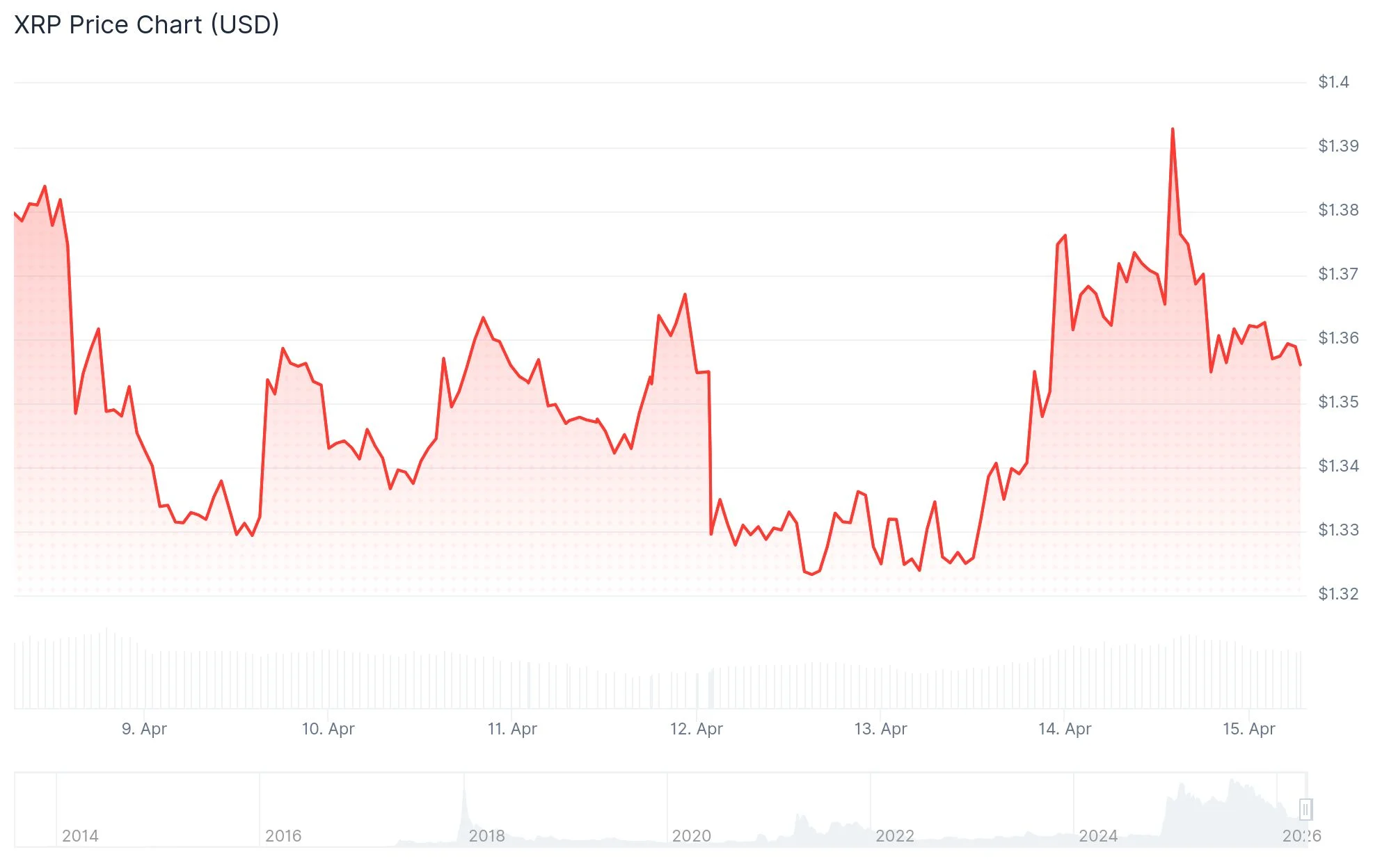
The narrative surrounding XRP offers straightforward comprehension. The XRP Ledger was engineered specifically for payment processing. Transaction finality occurs within three to five seconds, with standard fees of only 0.00001 XRP. This presents an uncomplicated, digestible message for those seeking efficient, economical value transfer mechanisms.
Ripple continues expanding XRP’s institutional narrative as well. The organization promotes the XRP Ledger as foundational infrastructure supporting tokenization and institutional decentralized finance, integrating compliance mechanisms, instant settlement capabilities, and programmable asset frameworks. Investors need not envision hypothetical applications—they simply must believe existing collaborations will expand.
Chainlink’s core value proposition resists quick summarization. It does not primarily function as a payment token. Instead, its purpose centers on oracle infrastructure, blockchain interoperability via its CCIP protocol, and tokenized asset operational workflows.
Chainlink’s Enterprise Integration Network
Despite this complexity, Chainlink has cultivated genuine institutional traction. The project has documented collaborations with Swift, DTCC, Euroclear, and programs associated with J.P. Morgan-connected tokenized finance ventures.
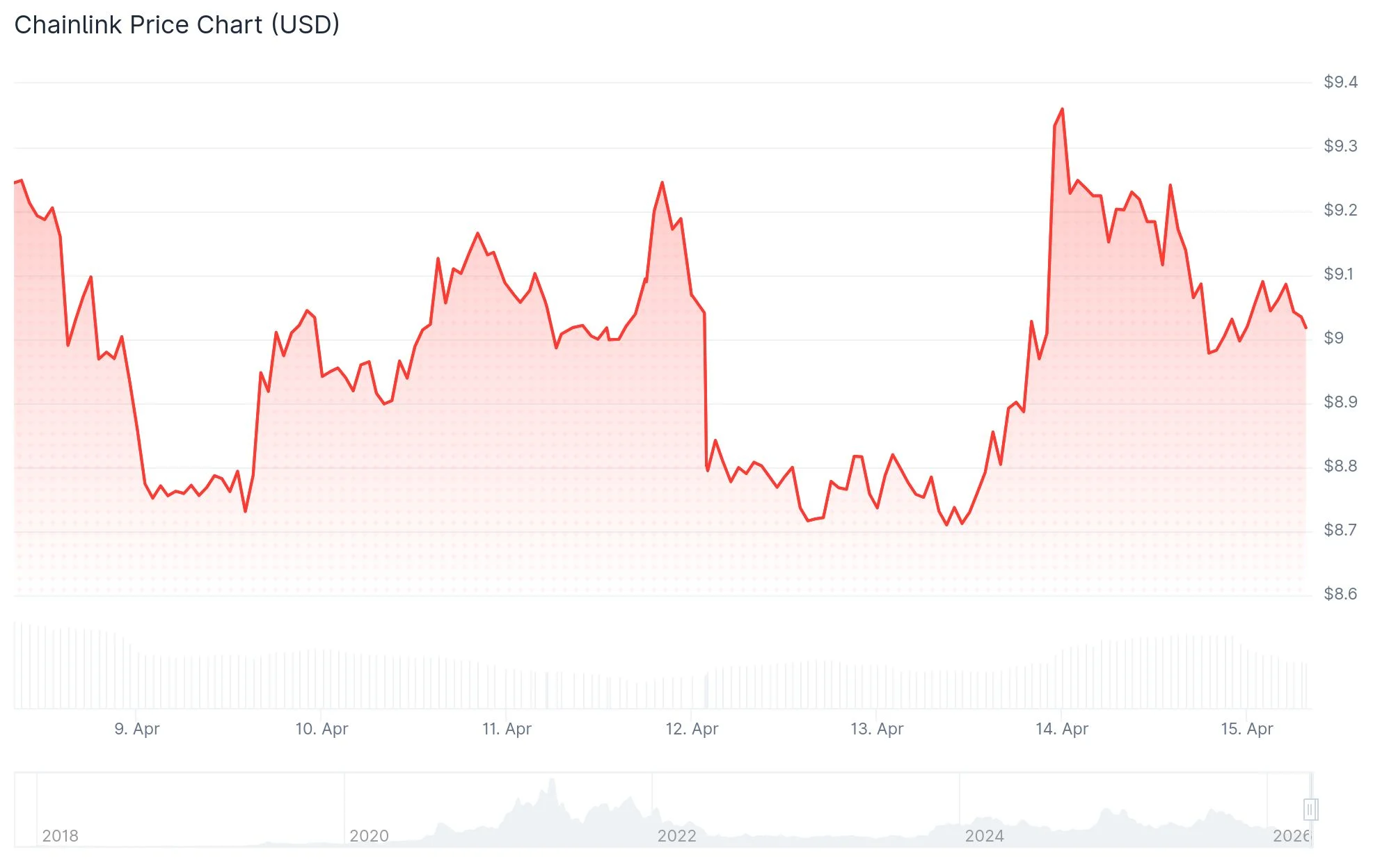
Chainlink positions itself as comprehensive infrastructure supporting the complete lifecycle of tokenized assets, encompassing data provision, compliance verification, and cross-blockchain transfers. This represents an expansive addressable market, though one that remains largely unrealized at present.
Token economics also diverge between these two projects. XRP features a fixed maximum supply of 100 billion tokens, with roughly 61 billion currently in circulation. This substantial non-circulating reserve creates perceived overhang concerns among certain investors. Chainlink caps at 1 billion total supply, with approximately 727 million tokens circulating—a structure many investors view as more favorable regarding dilution risk.
Matching Investment Horizons With Asset Characteristics
For those operating on shorter investment timelines, XRP maintains the stronger current positioning. It delivers superior liquidity, presents a more accessible narrative, and benefits from more apparent market catalysts.
Investors adopting longer-term perspectives may find Chainlink offers greater appreciation potential if tokenized finance expands to anticipated scale.
Chainlink might appear significantly undervalued retrospectively should it establish itself as the dominant data and interoperability infrastructure for tokenized assets. However, this scenario depends on developments that remain prospective.
XRP’s trajectory appears more clearly defined presently. Its payments-focused identity is well-established, institutional partnerships are operationally active, and its market prominence cannot be dismissed.
Concluding Analysis
Both cryptocurrencies possess legitimate investment rationales. XRP represents the more compelling near-term opportunity based on liquidity depth and narrative accessibility. Chainlink constitutes the higher-risk, longer-term infrastructure speculation. Your selection ultimately depends on whether you’re backing cryptocurrency’s current applications or its potential future evolution.
