




Key Takeaways
- Gold climbed 0.4% to approximately $4,509/oz on Monday following last week’s decline to $4,000/oz
- Technical analysts at OCBC point to critical resistance zones at $4,624, $4,670, and $4,850/oz
- Weekend missile strikes by Houthi forces on Israel intensified concerns about regional conflict expansion
- Iranian attacks on aluminum production facilities in Bahrain and UAE pushed aluminum prices up 5.4%
- Rising oil costs and dollar strength continue to weigh on gold, which has dropped 13% month-to-date
The precious metal gained ground during Asian trading hours Monday, advancing 0.4% to settle at $4,509.51 per ounce. Gold futures similarly climbed 0.4%, trading at $4,537.40 an ounce.
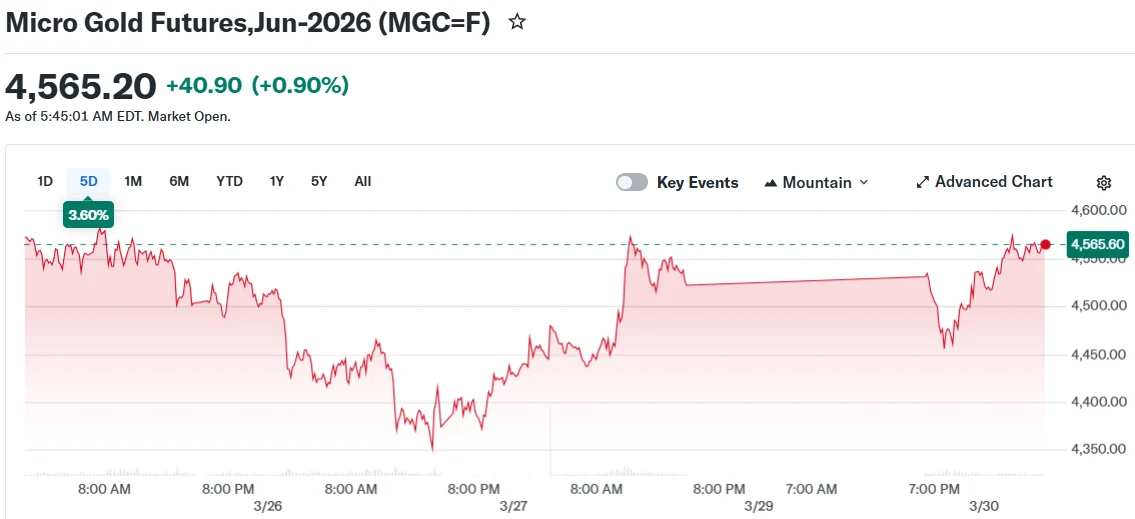
This uptick follows a volatile trading week during which spot gold plummeted to $4,000 an ounce before staging a recovery toward the $4,500 level by week’s end.
Analysts at ANZ noted that bargain hunters emerged following what they described as one of the most severe gold corrections in recent years. Significant liquidations from gold-backed ETFs contributed to a monthly decline exceeding 15%.
The yellow metal remains under pressure, down over 13% for the month. The strengthening U.S. dollar combined with surging crude oil prices continues to constrain any meaningful recovery attempt.
Brent crude rocketed past the $115 per barrel mark following Yemen-based Houthi militants’ entry into the conflict, with the group taking credit for weekend missile strikes targeting Israel.
Market strategists at OCBC characterized gold’s bounce from recent lows as predominantly technical in nature. While acknowledging the relative strength index has moved away from oversold conditions, they cautioned this indicator alone doesn’t guarantee a durable uptrend.
The analysts highlighted three crucial resistance thresholds for spot gold at $4,624, $4,670, and $4,850 per ounce. Inability to maintain prices above these benchmarks could signal continued weakness, according to their assessment.
Surging energy costs present an additional headwind. OCBC warned these elevated prices risk maintaining inflationary pressures, potentially driving Treasury yields upward and creating unfavorable conditions for gold investments.
Iranian Conflict Reaches Critical Juncture
The U.S.-Israel military campaign against Iran shifted into a new chapter over the weekend. The Iran-aligned Houthi movement, operating from Yemen, launched attacks on Israeli territory, sparking concerns about regional conflict expansion and possible disruptions to critical Red Sea maritime routes.
Tehran announced its readiness to counter a potential ground offensive by American forces, amid intelligence suggesting Washington is deploying substantial troop numbers to the region.
President Trump indicated to media that diplomatic discussions with Iran were progressing favorably and suggested an agreement might be achievable soon. While providing no specific timeframe, he simultaneously issued warnings of additional military action against Iranian targets.
The administration had previously postponed a deadline for strikes on Iran’s energy sector until early April.
Aluminum Supply Crisis Triggered by Iranian Attacks
Iranian forces targeted aluminum manufacturing installations in Bahrain and the United Arab Emirates during weekend operations. London Metal Exchange three-month aluminum futures surged 5.4% to $3,461 per metric ton, marking a monthly gain exceeding 10%.
Aluminium Bahrain acknowledged its operations came under attack and reported it was evaluating the extent of infrastructure damage.
Emirates Global Aluminium disclosed that its Al Taweelah facility near Abu Dhabi suffered substantial damage from Iranian drone and missile bombardments.
ANZ market analysts issued alerts that approximately 4 to 5 million metric tons of aluminum exports from the Gulf region face disruption, with limited options for substitute supply sources.
Silver declined 0.9% to $69.09 per ounce, while platinum advanced 1.8% to $1,898.73 an ounce in Monday’s session.
