



Key Takeaways
- Gold reached $4,475 per ounce Friday morning before retreating to the $4,408–$4,417 range
- President Trump postponed his Iran energy infrastructure strike deadline to April 6, citing productive discussions
- Iranian officials publicly rejected claims that diplomatic negotiations with Washington are underway
- The precious metal has declined over 15% since Iran-Israel hostilities erupted approximately one month ago
- Turkey’s central bank liquidated and exchanged roughly 60 tons of gold valued at more than $8 billion within a two-week period
The precious metal experienced a substantial rally during Asian market hours Friday, advancing approximately 2% before surrendering a portion of those gains as the trading day progressed. By mid-morning in London, spot gold was registering gains of roughly 0.9%, trading at $4,417 per ounce. Gold futures contracts similarly advanced, climbing about 0.8% to reach $4,442.
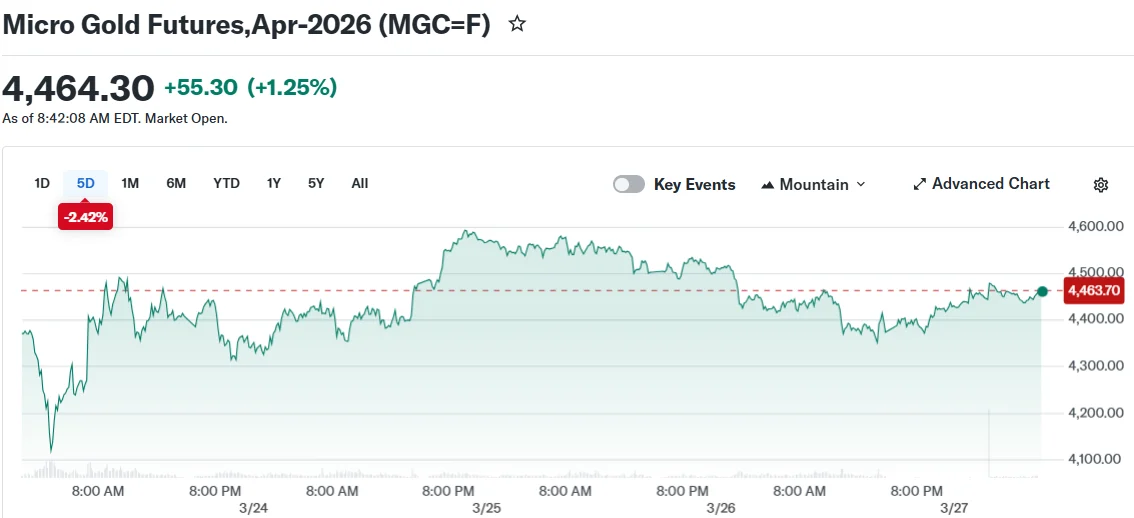
Notwithstanding Friday’s positive movement, gold remained positioned for a weekly decline of approximately 1.7%.
The fluctuations followed President Donald Trump’s decision to postpone his ultimatum regarding Iran’s reopening of the Strait of Hormuz. Trump had initially warned of strikes against Iranian energy infrastructure if the strategic waterway remained blocked. After moving the deadline to Friday, he announced Thursday another extension through April 6.
In a Truth Social post, Trump stated that Iran had requested the extension. He characterized ongoing discussions between the nations as progressing “very well” and dismissed contradictory media coverage as “erroneous.”
Meanwhile, Iranian government representatives publicly contradicted these claims, denying any diplomatic engagement with Washington is currently taking place.
Understanding Gold’s Decline Amid Regional Conflict
Gold has experienced a decline exceeding 15% since Iranian-Israeli military confrontations commenced nearly four weeks ago. This represents a significant downturn for an asset traditionally regarded as a refuge during periods of geopolitical instability.
The primary factor is crude oil. The near-blockade of the Strait of Hormuz has driven petroleum prices substantially upward. Approximately 20% of global oil supply passes through this critical shipping channel. Elevated oil prices intensify inflation concerns, prompting investors to anticipate that central banks will maintain elevated interest rates for extended periods. Gold, which generates no income yield, typically underperforms during environments characterized by high borrowing costs.
Additionally, gold achieved record valuations near its January peaks, and market analysts suggest those elevated levels may have triggered profit-taking among investors.
The US dollar has simultaneously strengthened. The US Dollar Index registered modest gains Friday, hovering around 99.99. A robust dollar increases gold’s cost for international buyers using alternative currencies, potentially dampening demand.
Central Bank Liquidation Intensifies Downward Pressure
Turkey’s central bank liquidated and exchanged approximately 60 tons of gold during a two-week span. This transaction represents more than $8 billion in bullion value.
Central bank accumulation had served as a primary catalyst for gold’s appreciation throughout the preceding two years. Selling activity from a significant central bank introduces additional downward momentum to the marketplace.
Silver remained relatively unchanged Friday at $68.11 per ounce. Both platinum and palladium registered modest gains.
Iran and Israel maintained their exchange of missile attacks Friday. Tehran additionally launched strikes targeting multiple Gulf region nations Friday morning.
