



Key Takeaways
- Bank of America analysts suggest the Federal Reserve may increase interest rates if ongoing Iran conflict pushes crude oil beyond the $80 threshold
- Probability of a rate increase by year-end has climbed to 25%, a dramatic shift from virtually zero percent just five trading days earlier
- Federal Reserve Chairman Powell indicated monetary easing won’t occur without demonstrated inflation improvement
- Bitcoin faces difficulty maintaining the $70,000 support level amid mounting market headwinds
- Chris Waller, traditionally a dovish Fed Governor, voted to maintain current rates citing elevated inflation concerns
Financial markets are experiencing a dramatic recalibration of Federal Reserve policy expectations. Less than a week ago, investors were confidently anticipating interest rate reductions. Today, the prospect of monetary tightening has emerged as a legitimate scenario for the first time in multiple years.
This dramatic reversal stems from escalating U.S.-Iran tensions that erupted on February 28, driving crude oil prices upward and reigniting inflation anxieties. Analysts at Bank of America have identified three critical variables that could trigger Fed rate increases: continued strength in employment data, an extended tenure for Jerome Powell as Federal Reserve chair beyond current expectations, and persistent oil price elevation resulting from Middle East hostilities.
According to the bank’s analysis, the probability of policy tightening increases significantly should crude oil maintain levels above $80 per barrel. Recent weeks have seen oil trading consistently near this critical threshold.
Powell’s Remarks Signal Policy Caution
During this week’s Federal Open Market Committee press briefing, Chairman Jerome Powell made clear that rate reductions remain off the table absent substantial inflation deceleration. While he avoided explicitly forecasting rate increases, Powell acknowledged such action doesn’t represent the consensus view among policymakers.
Powell further revealed his willingness to remain in his current role until Kevin Warsh, his anticipated replacement, completes Senate confirmation proceedings. This timeline remains uncertain. Should Powell still occupy the chairman’s position when the June FOMC meeting convenes, and if Iranian conflict continues pressuring oil markets upward, arguments for tightening policy could gain considerable momentum.
Merely five days prior, market instruments reflected zero expectation of rate hikes. By Friday’s close, CME Group’s FedWatch tool indicated approximately 25% probability of an increase by December. This represents an extraordinary shift across such a compressed timeframe.
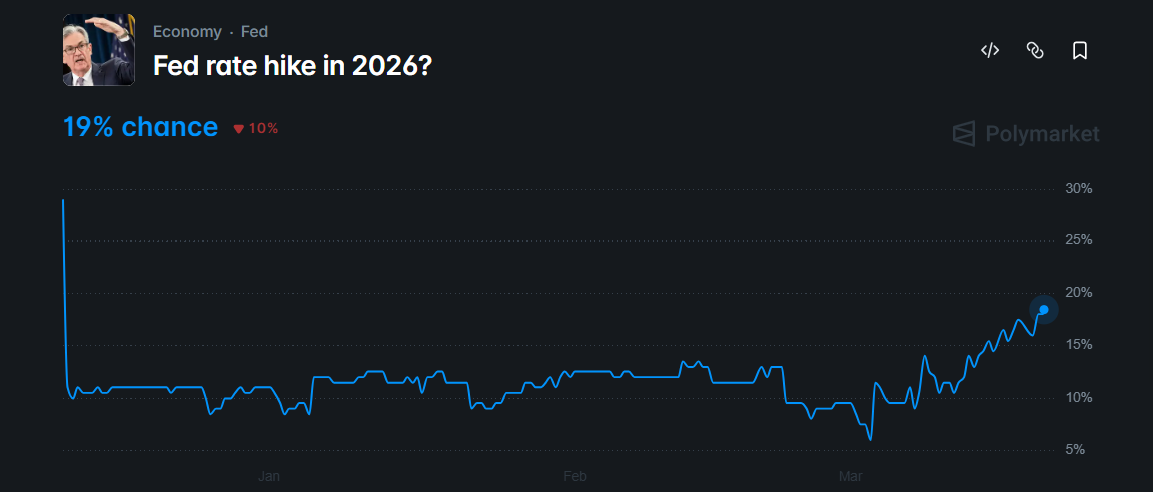
Data from Polymarket reveals a 35% likelihood the Fed implements zero rate cuts throughout the current year. Meanwhile, the probability of a complete rate hike cycle has expanded to 19%, doubling from the 8% reading when hostilities initially commenced.
Cryptocurrency Market Response
Bitcoin is experiencing significant downward pressure. The leading cryptocurrency has battled to preserve the $70,000 price level as inflation concerns intensify and rate cut expectations evaporate. The aggregate cryptocurrency market capitalization declined from an intraday peak of $2.4 trillion to $2.37 trillion within a single trading session.
Digital asset markets experienced a temporary bounce before resuming their downward trajectory alongside equity markets. Two-year Treasury yields surged to 3.89%, creating the widest spread above the Fed’s benchmark rate observed in three years. This movement suggests fixed income markets are anticipating more restrictive monetary conditions.
Polymarket betting odds indicate just a 42% probability of achieving a U.S.-Iran ceasefire agreement, suggesting market participants expect continued conflict.
Fed Governor Chris Waller, who had previously supported rate cuts following disappointing February employment figures, reversed his position this week. Waller cited mounting inflation risks connected to the Iran situation as justification for his vote supporting rate stability. He emphasized the prudence of adopting a wait-and-see approach before committing to any policy easing measures.
