




Key Takeaways
- Bitcoin declined 3.4% to approximately $68,000 on Saturday following a mid-week peak at $74,000
- February saw the U.S. economy shed 92,000 jobs, with unemployment climbing to 4.4%
- The greenback registered its largest weekly surge in twelve months, weighing on digital assets
- Large holders liquidated approximately 66% of their recent BTC purchases while smaller investors continued accumulating
- Bitcoin ETFs registered $348.9 million in withdrawals — the highest single-day exodus in three weeks
Bitcoin’s weekly trajectory began optimistically but concluded with significant headwinds. After reaching $74,000 on Thursday, the leading cryptocurrency reversed course, sliding back to approximately $68,000 by Saturday’s opening — representing a 3.4% decline over a 24-hour period.
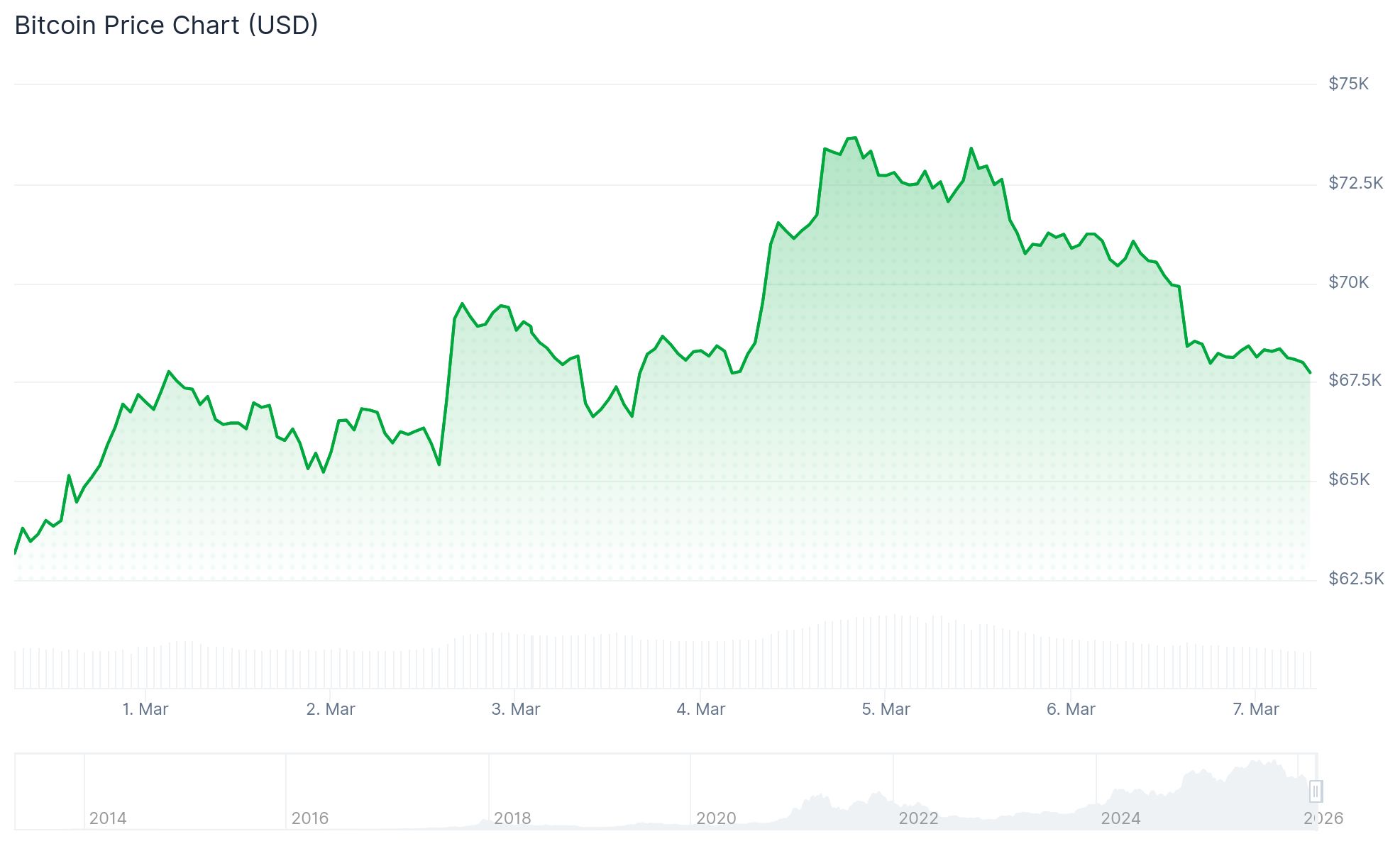
The downturn followed disappointing employment figures from the Bureau of Labor Statistics, revealing the U.S. economy eliminated 92,000 positions in February. This starkly contrasted with economist projections of a 50,000 job increase. Simultaneously, the unemployment rate climbed from 4.3% to 4.4%.
Equity markets absorbed similar punishment. The Dow Jones Industrial Average plummeted over 900 points during Friday’s initial trading session. The technology-focused Nasdaq index declined 1.7%.
The broader cryptocurrency ecosystem experienced parallel losses. Ether decreased 4.4% to $1,974. Solana shed 4% to reach $84.31. Dogecoin declined 2.9% to $0.09. XRP slipped 2.2% to $1.37.
Despite Friday’s retracement, the majority of leading digital assets maintained weekly gains. Bitcoin appreciated 3.6% across the seven-day period. Ether increased 2.6%. BNB climbed 2.1%.
Large Holder Liquidations and ETF Capital Flight
Analytics from Santiment revealed that large holders — addresses controlling between 10 and 10,000 BTC — accumulated positions during the February 23 through March 3 window when Bitcoin fluctuated between $62,900 and $69,600. Following Bitcoin’s ascent beyond $70,000 to reach $74,000, these same addresses liquidated approximately 66% of their accumulated holdings.
Concurrently, smaller participants — those controlling less than 0.01 BTC — continued purchasing. Santiment highlighted this divergence as typically indicating additional downside remains probable.
Spot Bitcoin exchange-traded funds experienced $348.9 million in net withdrawals on Friday, representing the most substantial single-day outflow since February 12.
Market analyst Michael van de Poppe commented: “If Bitcoin doesn’t find support in this $67–68K region, then we’re likely going to retest the lows.”
Broader Economic Pressures
The U.S. dollar experienced its most significant weekly appreciation in twelve months. Escalating energy costs — Brent crude reached $90 per barrel, climbing over 20% within a week — combined with persistent Middle Eastern tensions amplified inflation concerns, diminishing expectations for imminent Federal Reserve interest rate reductions.
Glassnode analytics indicated 43% of Bitcoin’s entire supply currently trades underwater. This generates resistance pressure during rallies as holders attempt to exit at breakeven levels.
A potential positive signal emerged: net stablecoin deposits surged 415% to $1.7 billion during the week, suggesting capital accumulation awaiting deployment.
Economist Timothy Peterson observed that Bitcoin’s present valuation has historically represented cyclical bottoms, citing a 99.5% statistical probability that BTC maintains levels above $60,000.
The Crypto Fear & Greed Index registered a score of 12 on Saturday, positioning sentiment firmly within “Extreme Fear” parameters.
