




TLDR
- Nexi’s shares tumbled more than 20% to an all-time low following Q4 results that missed revenue and EBITDA estimates.
- Forward-looking 2026 guidance suggests analysts may need to lower earnings forecasts.
- Top-line growth is projected to stay relatively stagnant in 2026, mirroring 2025’s modest 2.1% increase.
- Management anticipates generating approximately €2.4 billion in surplus cash flow from 2026 through 2028, with plans to distribute more than €1.1 billion to investors.
- The company’s three-year roadmap aims to achieve mid-single-digit revenue expansion by 2028.
Italy’s leading payments processor Nexi experienced a devastating trading session on Thursday. Shares plummeted over 20% to unprecedented lows following the release of fourth-quarter figures that underwhelmed expectations and a three-year strategic blueprint that industry watchers believe signals impending profit estimate reductions.
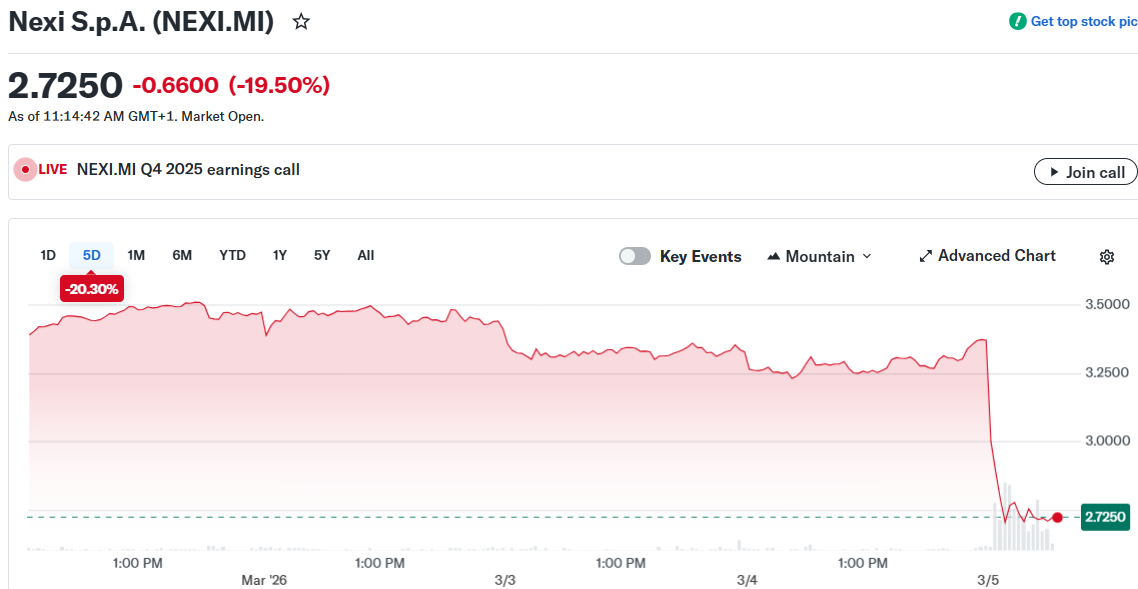
The market reaction was immediate and brutal, although several Wall Street observers suggest the selloff may have been disproportionate to the actual news.
Fourth-quarter revenues remained unchanged at €942.5 million, falling approximately 1% short of analyst projections. Meanwhile, EBITDA decreased to €508.6 million, missing estimates by roughly 2%. Operating expenses climbed year-over-year to €433.9 million.
The disappointing figures stem primarily from continued headwinds related to banking sector merchant portfolio merger-and-acquisition activity and contract renegotiations. Management stated that these challenges reached their zenith during Q4 2025, though they anticipate the negative effects will persist throughout 2026 before gradually subsiding.
During a Milan investor presentation, CEO Paolo Bertoluzzo spoke frankly: “You don’t have to believe we can go to the moon.” He acknowledged that pricing concessions were granted to certain banking partners to maintain contract relationships, and the company continues to feel the impact of agreements lost several years ago.
2026 Looks Flat
Looking ahead to 2026, Nexi anticipates revenue performance will mirror 2025 levels, when organic growth reached just 2.1%. EBITDA is projected to remain essentially flat as the organization continues allocating resources toward strategic priorities.
Morgan Stanley equity analyst Adam Wood characterized the outlook as one that “implies consensus downgrades” across both 2026 estimates and the medium-term horizon. Meanwhile, Jefferies described the quarterly performance as “broadly in-line” while highlighting that the 2026 projections “may feel more ambitious than at first glance.”
Jefferies research team also emphasized their interest in better understanding Nexi’s approach to “ignite growth without risking further contract losses.”
The competitive landscape provides important context. Emerging technologies are reshaping the payments sector, enabling nimble competitors to offer more attractive pricing than established players. Traditional operators like Nexi, which expanded primarily through acquisitions of banks’ payment operations, face heightened vulnerability to these market dynamics.
Three-Year Plan and Cash Returns
Nexi’s updated medium-term strategy emphasizes targeting mid-market enterprises to preserve competitive positioning, with annual revenue growth expected to accelerate to mid-single-digit percentages by 2028. Operating margin improvement is also anticipated by the conclusion of the planning period.
Management projects approximately €2.4 billion in free cash flow generation across the 2026–2028 timeframe, including roughly €750 million in the current year after accounting for strategic investments and increased tax obligations.
The company has announced a proposed dividend of €0.30 per share, with intentions to increase the distribution by a minimum of 5% each year throughout the next three years. Cumulative shareholder returns are forecast to surpass €1.1 billion through 2028.
Bertoluzzo positioned the capital allocation strategy as a mechanism to demonstrate confidence in the underlying business fundamentals during what management characterizes as a “transition year.”
Notwithstanding the sharp decline in valuation, certain analysts highlighted that the 2025 earnings shortfall was relatively minor and that the medium-term projections weren’t substantially different from previous consensus estimates.
According to Nexi’s assessment, Q4 2025 represented the most severe impact from contract renegotiations, with diminishing headwinds anticipated going forward.
