




TLDR
- BTC plunged to approximately $63,000 following U.S.-Israel military operations in Iran, then rebounded toward $67,000
- Unconfirmed reports about Iran’s Supreme Leader briefly drove BTC past $68,000
- Oil prices jumped as much as 13%, adding pressure to risk-sensitive assets like Bitcoin
- Critical U.S. economic releases this week, particularly Friday’s employment data, may influence Bitcoin’s trajectory
- Technical analysis suggests a bear pennant formation, indicating possible decline to $52,000 levels
The leading cryptocurrency experienced a significant decline throughout the weekend following coordinated military operations by the United States and Israel against Iranian targets, sparking widespread selling across global financial markets.
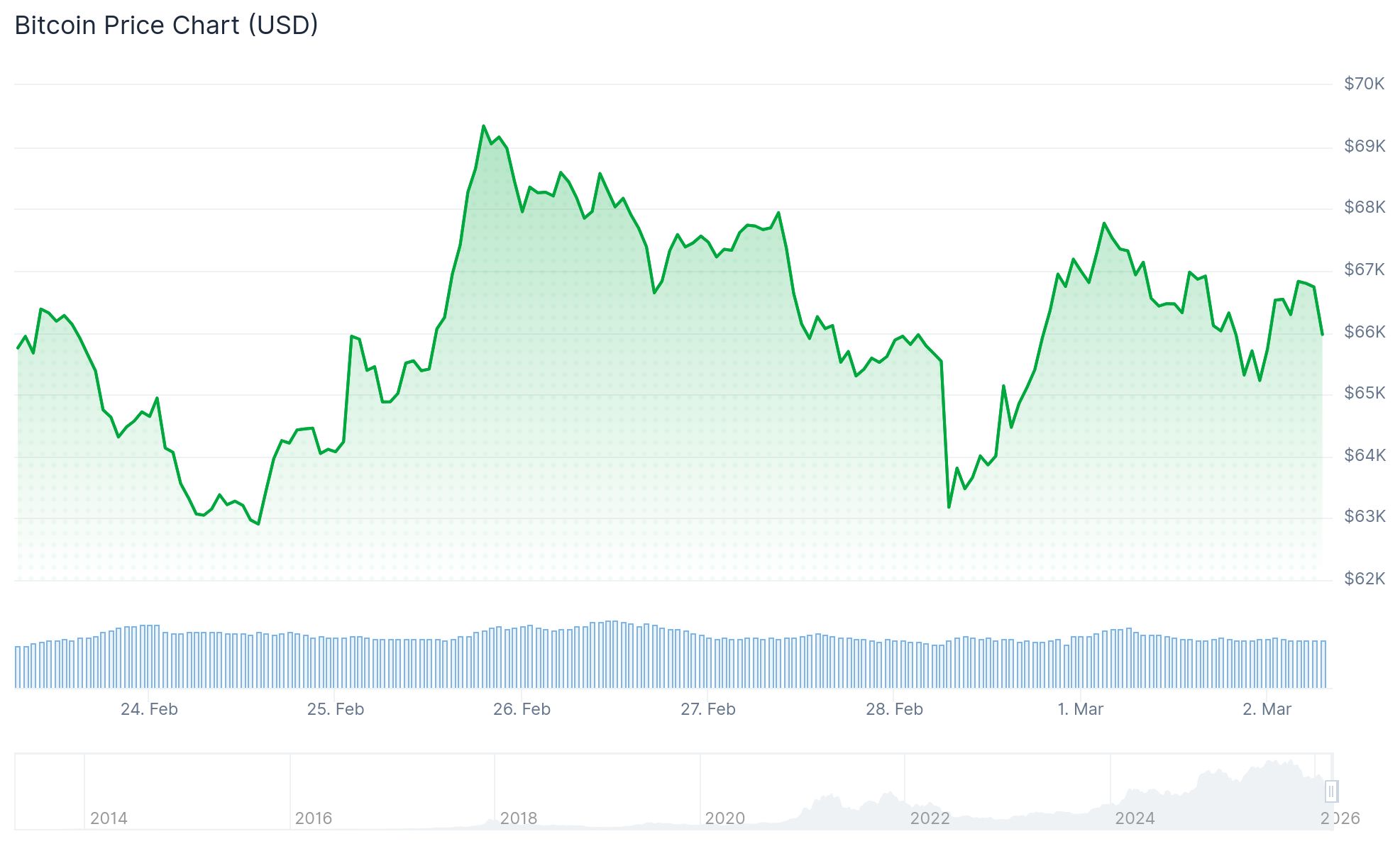
BTC plummeted to approximately $63,255 on Saturday, representing a decline of roughly 6.5%, before staging a recovery that brought it back above the $67,000 threshold by Monday.
During early Monday trading sessions, BTC hovered around $66,197, reflecting a daily decrease of approximately 2.1%.
The military campaign reportedly included operations that targeted Iranian Supreme Leader Ayatollah Ali Khamenei — unverified claims that momentarily propelled Bitcoin past $68,000 before momentum dissipated.
Tehran retaliated with successive rounds of missile attacks aimed at American and Israeli military facilities. President Trump indicated the military operations would persist for as long as deemed necessary.
Ethereum experienced approximately a 10% pullback following the military strikes, hovering near $1,950 on Sunday.
Energy Markets and Defensive Assets Rally
Crude oil markets responded dramatically to the escalating tensions. Brent crude surged by as much as 13% while West Texas Intermediate climbed nearly 10% during Sunday evening trading.
Gold appreciated roughly 2%, touching multi-week peaks as market participants rotated into traditional safe-haven instruments.
Sean Farrell, Fundstrat’s head of digital assets, noted that geopolitical-driven selloffs often present buying opportunities, though he highlighted crude oil as the critical risk factor to monitor. He cautioned that any interference with shipping routes or energy supply chains could further suppress Bitcoin’s valuation.
U.S. equity futures declined during Asian market hours, signaling expectations for a softer opening on Wall Street.
Important U.S. Economic Releases and Technical Outlook
Market participants are closely monitoring a dense U.S. economic calendar. Monday brings the ISM Manufacturing index, with ADP employment figures and ISM Services data scheduled for Wednesday.
The focal point arrives Friday with the Nonfarm Payrolls release, which regularly influences Treasury yields and dollar strength — factors that can significantly affect Bitcoin’s valuation.
From a technical perspective, BTC appears to be developing what market analysts identify as a bear pennant structure following its retreat from the $73,000–$74,000 territory. This formation indicates the digital asset may consolidate within a $63,000 to $69,000 corridor near-term.
A breach below this range could direct price action toward the $51,800–$52,000 support area, based on technical forecasting models.
Bitcoin has declined 23% year-to-date and recorded five consecutive months of negative returns. The cryptocurrency reached its all-time peak of $126,000 in October.
Several Wall Street strategists are now modeling scenarios where BTC descends toward $50,000 before any meaningful recovery materializes in the year’s latter half.
As of Monday’s trading, BTC was exchanging hands near $65,961.
