




TLDR
- Brent crude surged more than 4% toward $106 per barrel following Trump’s dismissal of Iran’s diplomatic proposal
- President Trump declared Iran’s response “TOTALLY UNACCEPTABLE,” ensuring the Strait of Hormuz remains shut
- Tehran proposed moving enriched uranium abroad but declined to disassemble its nuclear infrastructure
- Saudi Aramco’s chief executive warns global markets are hemorrhaging 100 million barrels weekly
- An upcoming meeting between Trump and Chinese President Xi Jinping may address the Iranian crisis
Crude oil markets experienced a significant surge Monday following President Donald Trump’s rejection of Iran’s diplomatic response to American peace terms, driving Brent crude toward the $106 per barrel threshold.
The U.S. president took to social media to denounce Tehran’s counter-proposal as “TOTALLY UNACCEPTABLE,” effectively extinguishing optimism that negotiations were nearing resolution. The conflict between the two nations has now stretched into its tenth week.
Brent crude futures spiked by as much as 4.6% during trading sessions, approaching $106 per barrel before moderating slightly. Meanwhile, West Texas Intermediate hovered around the $98 mark.
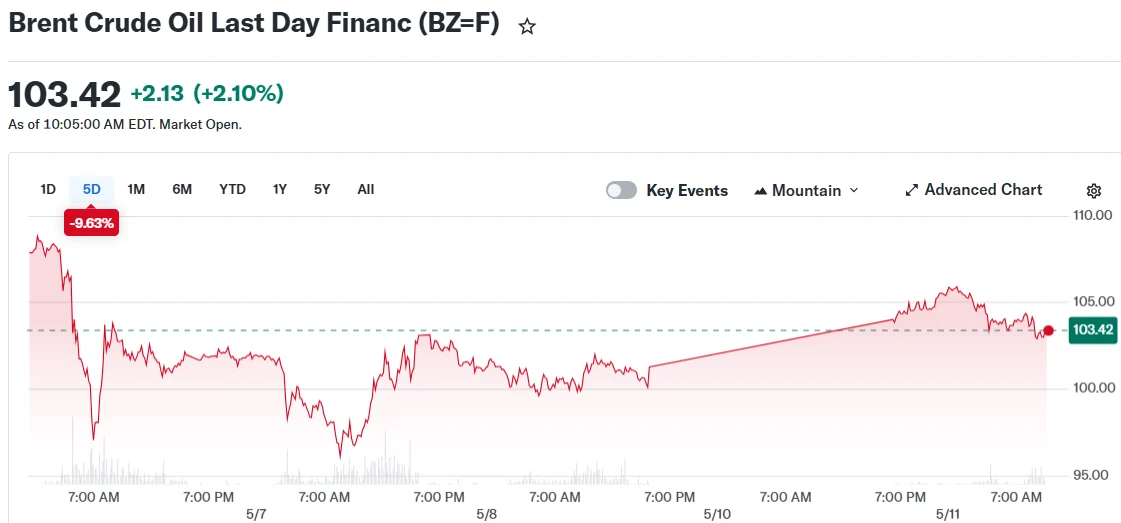
The rally comes after both benchmark contracts tumbled over 6% during the previous week, when indications emerged suggesting Washington and Tehran were progressing toward a provisional arrangement to restore Gulf shipping operations.
According to reports, the initial American proposal demanded Iran cease uranium enrichment activities for two decades, eliminate existing enriched uranium reserves, and tear down critical nuclear infrastructure. In return, Tehran would receive sanctions relief and cessation of military operations.
Iran’s counter-offer, delivered through Pakistani intermediaries, called for immediate sanctions removal, withdrawal of U.S. naval forces from the Strait of Hormuz vicinity, and acknowledgment of Iran’s sovereignty to maintain certain nuclear programs.
The Wall Street Journal indicated that Iran proposed diluting portions of its highly enriched uranium while relocating remaining stockpiles to a neutral third party. Iranian officials subsequently contested elements of this reporting.
The Cost of a Closed Strait
The Strait of Hormuz serves as a conduit for approximately one-fifth of global petroleum supplies. The waterway has remained effectively blocked throughout the hostilities, severing crude oil, natural gas, and refined fuel deliveries to international customers.
Amin Nasser, chief executive of Saudi Aramco, disclosed that the oil market is experiencing losses of 100 million barrels on a weekly basis. He cautioned that should disruptions persist into June, market stabilization may not occur until the following calendar year.
A Goldman Sachs polling initiative revealed that most survey participants anticipate continued impediments to strait transit beyond late June.
A drone attack Sunday ignited a brief fire aboard a commercial vessel operating near Qatari waters. Both the UAE and Kuwait reported successfully intercepting hostile unmanned aircraft, underscoring the persistent dangers facing regional shipping operations.
Emily Ashford of Standard Chartered said the situation remains a “stalemate,” with more barrels being lost every day.
Trump-Xi Talks Could Shift the Outlook
President Trump is slated to convene with Chinese President Xi Jinping in the coming days. American officials indicate Trump intends to confront Xi regarding China’s relationship with Iran, encompassing financial support Beijing furnishes to Tehran and possible weapons transfers.
ING analysts said there is a “glimmer of hope” that the Trump-Xi meeting could push Iran closer to a deal, given China’s economic influence over Tehran.
Israeli Prime Minister Benjamin Netanyahu stated during his CBS 60 Minutes appearance Sunday that hostilities with Iran remain ongoing and that additional measures are required to eliminate Iran’s nuclear capabilities.
Recent trade statistics revealed China’s crude oil imports for April declined 20% year-over-year, marking the weakest import level since July 2022.
