
TLDR
Major U.S. equity indexes declined sharply as heightened geopolitical risks in the Middle East prompted investors to exit riskier positions.
Crude oil rallied dramatically, with Brent temporarily surging past $82 a barrel before pulling back during midday trading.
All three major indexes fell as fears of renewed inflation and potential supply chain disruptions weighed on sentiment.
Defense contractors and energy producers rallied while airlines and technology shares faced significant selling pressure.
Market participants are closely monitoring inflation developments and the next employment report for clearer guidance.
Equity markets across the United States tumbled as escalating conflict in the Middle East drove investors toward safer assets while energy commodities rallied.
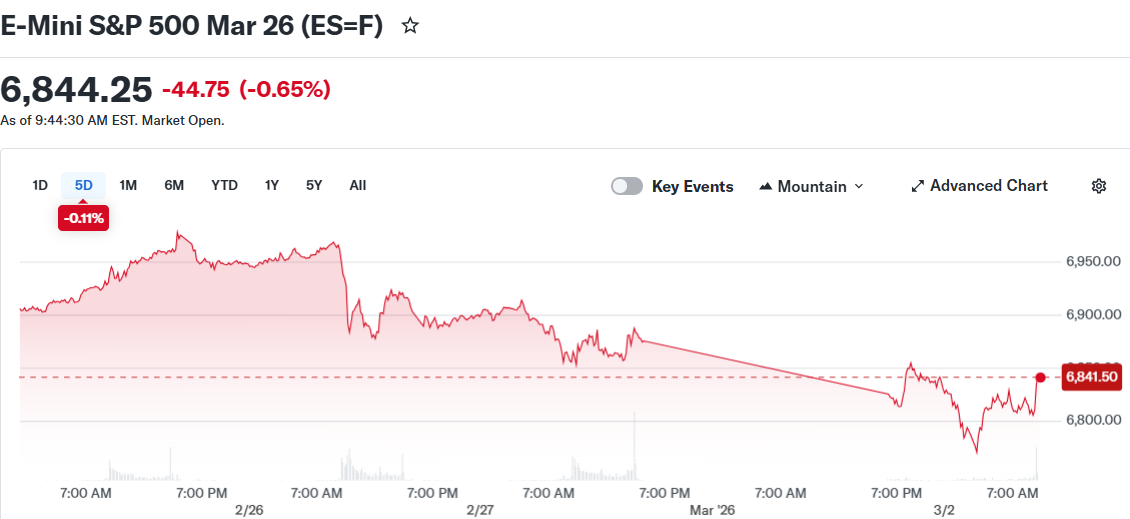
The Dow Jones Industrial Average dropped over 500 points during morning hours. Both the S&P 500 and Nasdaq Composite lost approximately 1% as market uncertainty intensified.
The sharp downturn came after military operations involving the United States, Israel, and Iran. Retaliatory strikes and warnings about critical energy assets heightened investor anxiety.
Oil prices jumped dramatically as concerns about potential disruptions mounted. Brent crude spiked as high as 13%, crossing $82 before settling under $80 per barrel.
West Texas Intermediate saw similar upward pressure. The benchmark traded around $73 a barrel, marking an approximately 8% gain.
Energy Markets and Inflation Risks
The Strait of Hormuz became a central point of concern for commodity traders. Potential shipping interruptions through this critical passage heightened worries about prolonged supply tightness.
Approximately 20% of the world’s oil passes through this strategic waterway. Reduced vessel movement has amplified fears of constrained availability in energy markets.
Rising crude costs typically fuel inflation worries. Market participants are evaluating whether persistent energy price gains might influence Federal Reserve policy decisions.
U.S. Treasury yields advanced throughout trading hours. Expectations for imminent rate reductions diminished as inflation risks resurfaced.
Gold prices advanced as capital flowed into classic defensive assets. The greenback also appreciated versus other major global currencies.
Sector Performance and Trading Activity
Energy sector equities benefited from the oil price surge. ExxonMobil posted gains alongside defense contractors such as Lockheed Martin, which attracted investor interest.
Travel industry stocks experienced declines. Major carriers like Delta Air Lines dropped as expectations for higher fuel expenses grew.
Tech sector shares broadly retreated. Artificial intelligence and software companies faced continued volatility after recent turbulence.
Fixed income securities declined as yields expanded, mirroring concerns about inflation tied to elevated energy markets. Portfolio rebalancing occurred across multiple asset categories.
The forthcoming employment data release has emerged as a critical market catalyst. Analysts anticipate a deceleration in job creation from the prior reading.
International markets continue reacting to Middle Eastern developments. Crude price fluctuations and inflationary pressures remain primary drivers of investor behavior.