Contents
Key Takeaways
- Deutsche Bank lifted Micron’s price target to $500 while Needham increased theirs to $450 — both maintaining Buy recommendations
- First quarter fiscal 2026 revenue reached $13.6 billion, representing a 57% increase from the previous year, accompanied by $3.9 billion in record free cash flow
- The company’s AI memory production capacity is completely sold out for 2026, with industry experts calling the shortage “unprecedented”
- Industry forecasts show DRAM pricing climbing 62% and NAND rising 40% during Q1 2026
- Memory supply shortages are projected to persist for a minimum of 12–18 months, as new manufacturing capacity won’t come online before mid-2027
Micron Technology has received Buy recommendations from three prominent Wall Street investment firms within the past seven days, with analyst price targets now spanning from $450 to $500, driven by constrained memory availability and explosive demand from artificial intelligence applications.
Needham’s N. Quinn Bolton updated his price objective on February 17, moving it from $380 to $450. One day earlier, Morgan Stanley analyst Joseph Moore maintained his $450 target while reaffirming a Buy stance. Deutsche Bank made the most aggressive move, raising its forecast from $300 to $500 on February 10, citing expectations that supply limitations could persist through 2027 and potentially into 2028.
Exceptional Performance Across All Divisions
Micron’s first quarter fiscal 2026 financial results provided substantial support for analyst optimism. The company reported $13.6 billion in revenue, marking a 21% sequential increase and 57% growth compared to the same period last year — achieving its third consecutive record-breaking quarter.
Gross profit margin expanded to 56.8%, representing an 11-percentage-point improvement over the previous quarter. The company generated $3.9 billion in free cash flow, establishing a new company record.
All business segments achieved record-high revenue figures: Cloud Memory reached $5.3 billion, Core Data Center hit $2.4 billion, Mobile and Client generated $4.3 billion, and Automotive and Embedded delivered $1.7 billion.
Manish Bhatia, Micron’s EVP of Operations, characterized the current memory chip shortage as “unprecedented” during January remarks. The company has confirmed that its entire AI memory production capacity is fully allocated through 2026.
The Forces Behind Rising Memory Prices
Artificial intelligence servers demand high-bandwidth memory (HBM) to process enormous data volumes efficiently. Manufacturing HBM consumes approximately three times the wafer production capacity compared to conventional memory products, which means every HBM unit produced reduces available supply for other memory categories and drives broader price increases.
UBS analysts project contract DRAM pricing will surge 62% in the first quarter of 2026 compared to the preceding quarter. NAND flash prices are anticipated to increase approximately 40%. TrendForce estimates the global memory market will reach $551.6 billion in 2026, expanding to $842.7 billion by 2027.
Production Expansion Timeline Extends Far Into Future
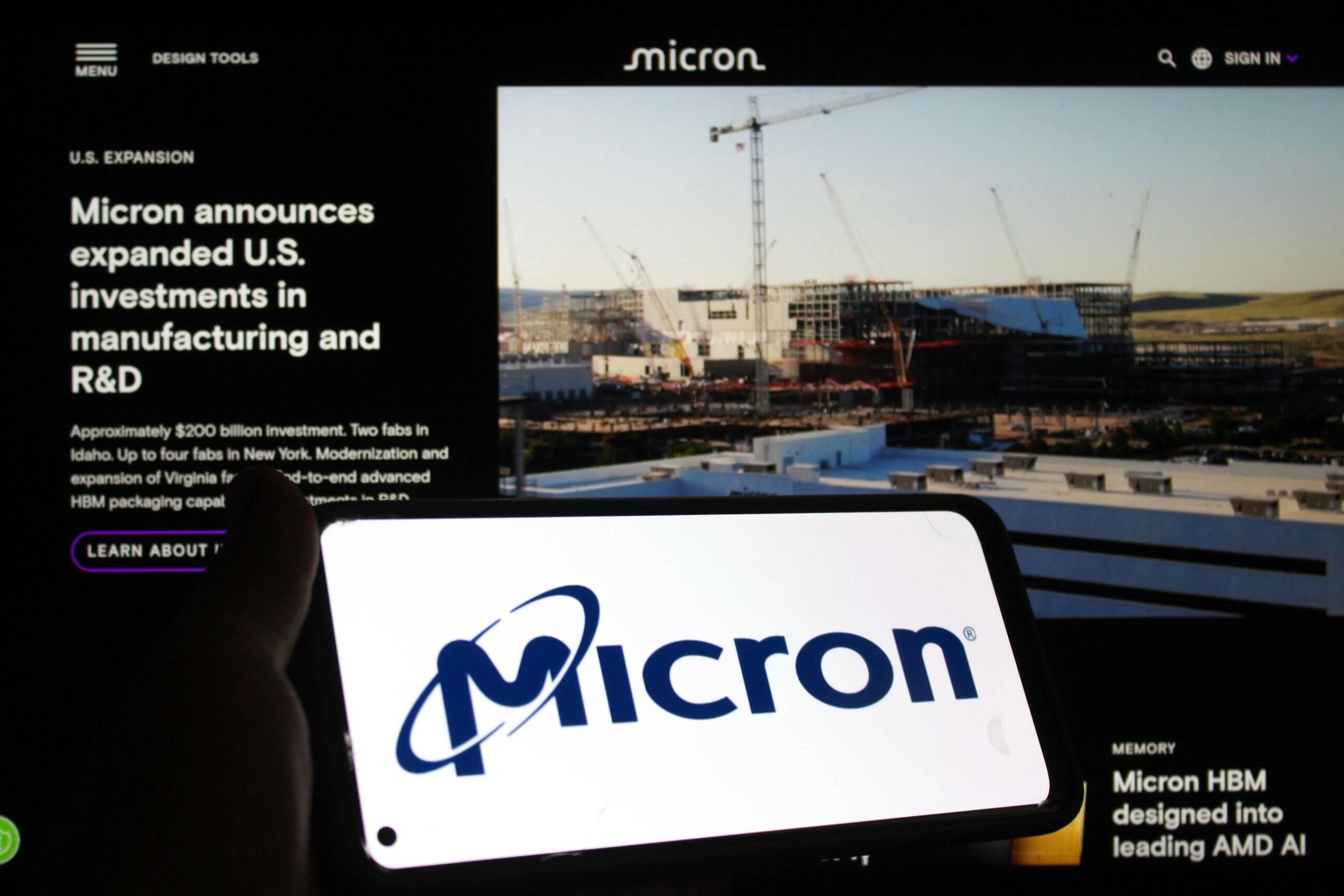
Micron has pledged approximately $200 billion toward expanding its domestic manufacturing infrastructure, but semiconductor fabrication facility construction progresses gradually. The company’s $50 billion Idaho expansion project won’t commence wafer production until the middle of 2027. A separate $100 billion New York manufacturing complex is scheduled to begin operations in 2030.
SK Hynix plans to achieve volume production at its Yongin manufacturing cluster during late 2027. Samsung is simultaneously increasing capital expenditures from already elevated levels.
This timeline ensures supply constraints will remain firmly in effect for at least the next 12 to 18 months across all three major memory manufacturers.
Micron’s second quarter earnings report, scheduled for release next month, is projected to demonstrate revenue more than doubling compared to last year, with earnings expected to increase more than fivefold during the same year-over-year comparison.