



Key Takeaways
- Bitcoin plummeted from approximately $90,000 to nearly $60,000 in early 2026 while equities remained resilient — that divergence is now ending.
- U.S. Treasury yields have surged since the Iran conflict erupted on February 28, pushing major stock index futures to their lowest levels since September.
- The benchmark 10-year Treasury rate climbed to 4.41%, marking its peak since August 1 — a jump of 48 basis points since hostilities began.
- Both cryptocurrency and equity fear gauges have plunged into “extreme fear” zones during the closing week of March.
- More than half of retail investors — 52% — now express pessimism about the coming six months, the most negative sentiment recorded since May 2025.
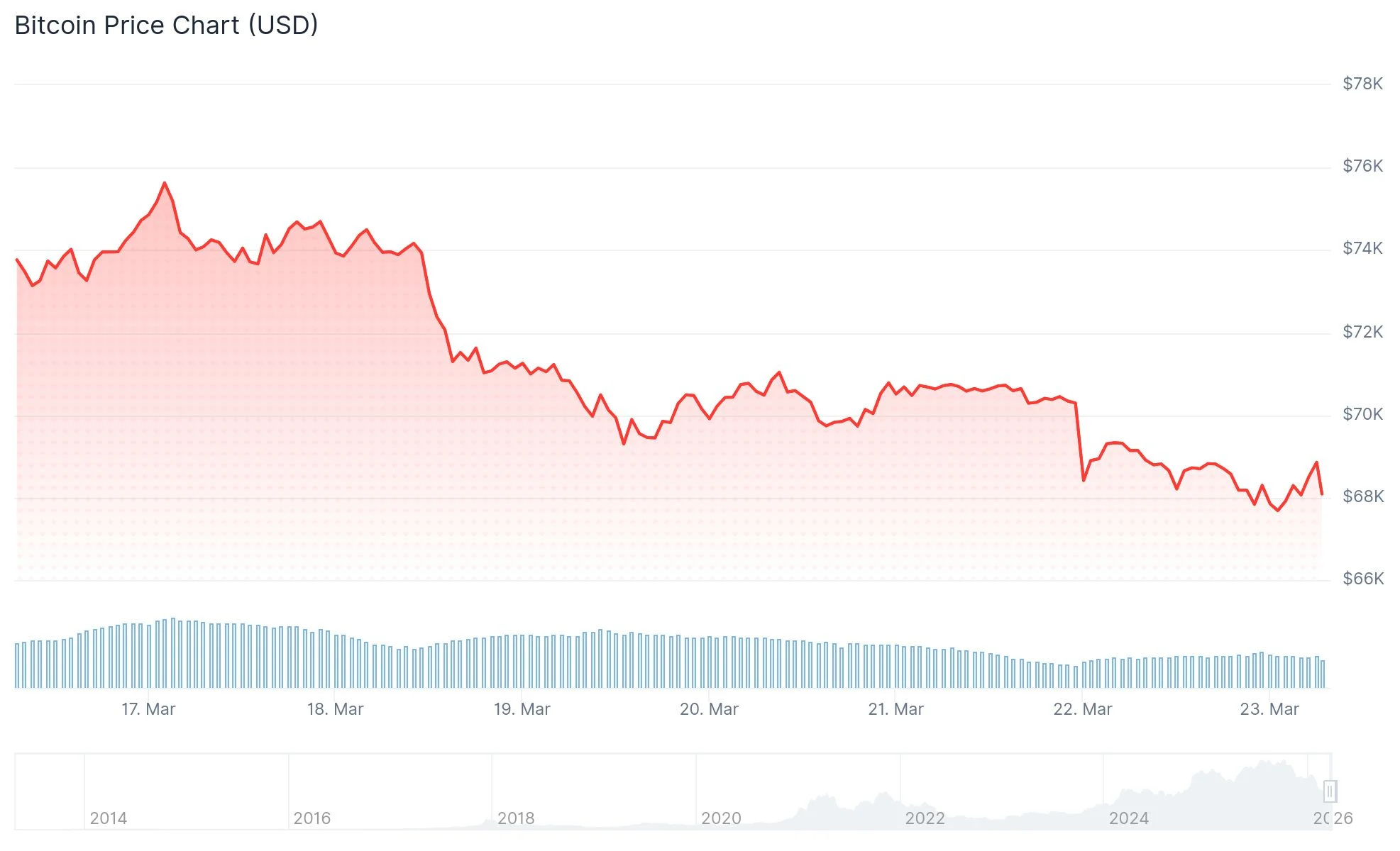
The cryptocurrency market witnessed a brutal selloff at the beginning of 2026, with Bitcoin tumbling from roughly $90,000 to approach $60,000 within a mere five-week span. During this period, American equity markets remained surprisingly unfazed, hovering close to all-time highs.
That divergence is rapidly disappearing — though not through a positive convergence.
Following the outbreak of conflict with Iran on February 28, mounting concerns about persistent inflation and diminishing prospects for Federal Reserve interest rate reductions have driven U.S. government bond yields sharply higher. This surge has started dragging equity valuations downward, finally mirroring the weakness that bitcoin telegraphed weeks in advance.
The rate on the benchmark 10-year U.S. Treasury note surged to 4.41% at the opening of Monday’s session, representing its most elevated reading since the first day of August. This marks an increase of 48 basis points from the conflict’s commencement. Meanwhile, the two-year Treasury rate has vaulted 57 basis points upward to reach 3.94%.
Rising bond yields carry significant implications because they elevate borrowing expenses throughout the financial system — affecting everything from home mortgages to business financing. This dynamic typically dampens investor appetite for riskier assets in equity markets.
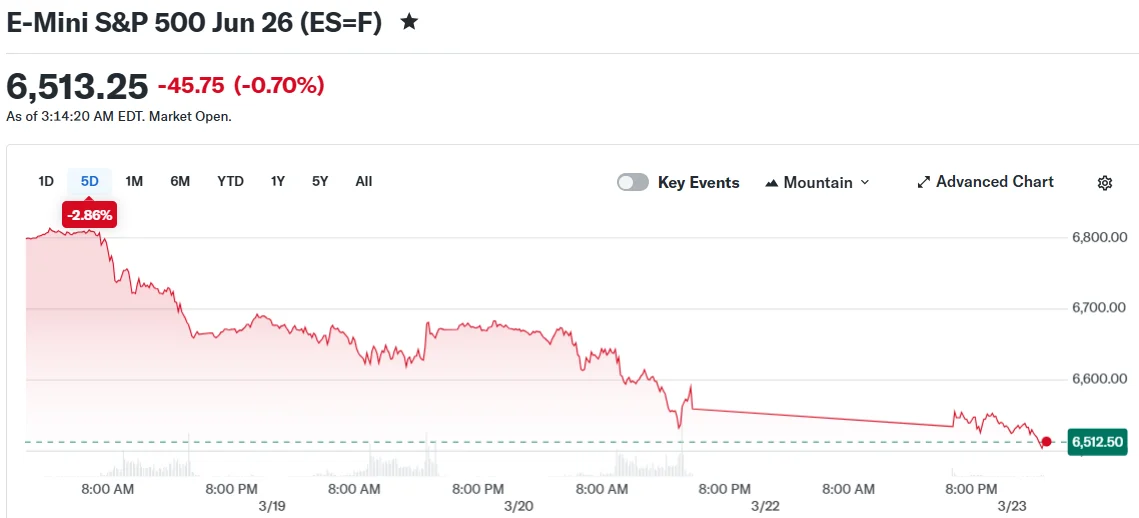
Nasdaq futures tumbled to 23,890 points during early Monday trading, establishing the weakest level recorded since September 11. S&P 500 e-mini futures likewise retreated to 6,505 points, also marking the lowest reading since September.
Bitcoin Serves as an Early Warning System
Market observers have consistently monitored bitcoin as a forward-looking barometer for overall risk sentiment. Its sharp decline during early 2026 may have offered a glimpse of the turbulence now afflicting traditional markets.
In a recent market assessment, Bloomberg Senior Commodity Strategist Mike McGlone characterized bitcoin as positioned “at the top of the risk-assets iceberg,” suggesting that its price deterioration might represent the initial phase of a more extensive market correction — especially if commodity market volatility migrates into equity sectors.
Bitcoin has exhibited relative stability during recent weeks, oscillating within a $65,000 to $75,000 range. Monday morning found the digital asset trading around $68,790. However, derivatives market indicators reveal profound anxiety, with an unprecedented skew toward put options — instruments typically employed to protect against additional price declines.
Anxiety Permeates Both Asset Classes
Sentiment indicators demonstrate that apprehension has become pervasive. The Crypto Fear & Greed Index has retreated into “extreme fear” territory. A comparable measurement for traditional stocks has similarly declined precipitously.
Blockchain analytics platform Alphractal characterizes the simultaneous fear gripping both markets as an uncommon development, urging investors to maintain defensive positioning.
Recent polling conducted by the American Association of Individual Investors reveals that 52% of everyday investors maintain a pessimistic projection for the forthcoming six months. This represents the most negative reading captured since May 2025.
President Donald Trump’s 48-hour deadline concerning the Strait of Hormuz continues its countdown, intensifying market anxiety.
Market analyst Tony Severino highlights a recurring historical phenomenon where bitcoin’s correlation coefficient with the S&P 500 descends to -0.5 before experiencing a sharp reversal upward — a configuration he maintains frequently precedes significant equity market disruptions. That correlation measure has now shifted back into positive territory.
“Typically there’s an initial rebound to amplify the eventual pain,” Severino observed.
Financial markets are currently assigning a marginal probability that the Federal Reserve might implement interest rate increases instead of the anticipated cuts.
