




TLDR
- Strategy executive chairman Michael Saylor dismisses quantum computing concerns, stating the threat won’t materialize for at least 10 years
- Saylor labels quantum computing worries as “FUD,” drawing parallels to previous unsuccessful Bitcoin attacks
- Vitalik Buterin of Ethereum expresses greater concern, suggesting cryptographic vulnerabilities could emerge by 2028
- BTC price slides beneath $65,000 mark as markets react to Trump administration tariff announcements
- Strategy reaches milestone 100th Bitcoin acquisition, accumulating 717,722 BTC valued at approximately $54.56 billion
Michael Saylor, who serves as executive chairman at Strategy, has publicly stated that quantum computing presents no immediate danger to Bitcoin. During an appearance on Natalie Brunell’s Coin Stories podcast, he emphasized that cybersecurity experts universally agree any legitimate quantum computing threat remains at least ten years in the future.
Saylor dismissed the quantum computing discussion as fear, uncertainty, and doubt. He drew comparisons to previous Bitcoin controversies such as the block size debates, regulatory crackdowns on Chinese mining operations, and environmental energy concerns—all of which failed to undermine the network.
He explained that should a quantum computing breakthrough occur, the entire digital ecosystem would be equally vulnerable. Financial institutions, internet backbone systems, artificial intelligence platforms, and cryptocurrency networks would all require simultaneous security upgrades.
“You’ll see it coming. We’ll all see it coming,” Saylor explained. He emphasized that Bitcoin’s architecture is designed for evolution, with nodes, hardware components, and wallet software all capable of implementing necessary updates.
Saylor expressed confidence that the cryptocurrency sector would likely identify and address any quantum computing threat before other industries, citing the robust security protocols already in place to safeguard digital assets.
Not Everyone Agrees
Ethereum co-creator Vitalik Buterin holds a contrasting perspective. He has referenced projections indicating approximately a 20% probability that quantum computers powerful enough to break existing cryptographic standards could emerge before 2030.
Buterin cautioned that elliptic curve cryptography, the security foundation for both Ethereum and Bitcoin, might become vulnerable before the 2028 United States presidential election. He advocated for transitioning to quantum-resistant cryptographic systems within the next four years.
The Ethereum Foundation has taken proactive measures. The organization integrated post-quantum security preparedness into its 2026 development roadmap and established a specialized Post-Quantum team this past January.
CryptoQuant’s CEO Ki Young Ju has similarly expressed concerns that quantum computing technology could potentially compromise millions of Bitcoin. He argued that the magnitude of this risk warrants immediate conversation, regardless of its timeline.
On-chain analytics expert Willy Woo suggested that quantum computing risks could diminish Bitcoin’s comparative advantage over gold and recommended that financial markets begin factoring in the potential arrival of “Q Day.”
Bitcoin Price Falls on Tariff Fears
Bitcoin’s price declined below the $65,000 threshold, experiencing nearly a 5% decrease within 24 hours, marking its lowest valuation since early February. This downturn followed President Trump’s announcement of additional tariff policies, which drove the market’s fear and greed index into extreme fear levels.
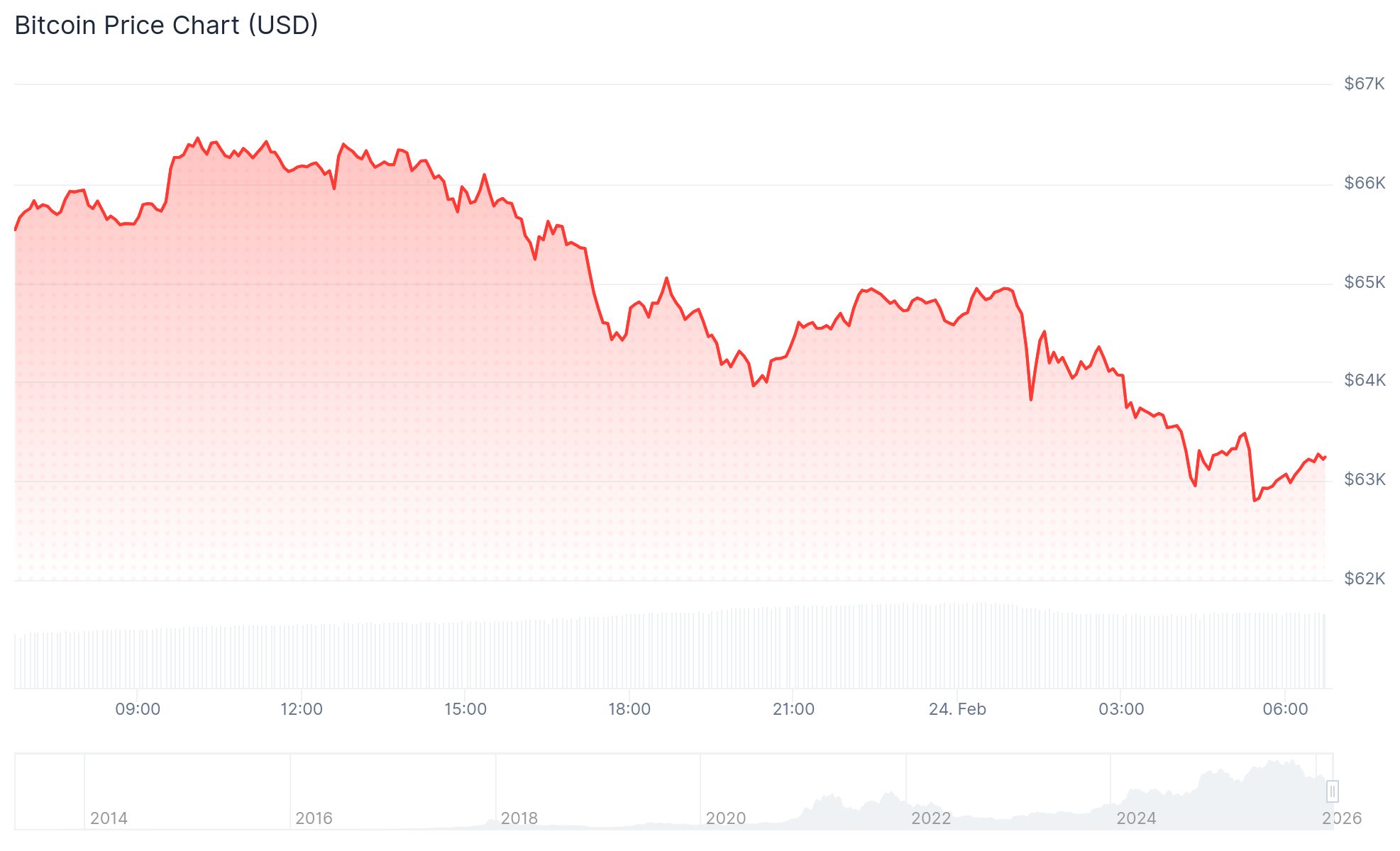
Saylor attributed Bitcoin’s price limitations to a separate challenge: restricted access to traditional banking credit. He noted that most Bitcoin holders cannot leverage their assets as collateral through regulated financial institutions, unlike stock market investors.
He suggested that rehypothecation practices in cryptocurrency lending platforms might create additional selling pressure, while the migration of derivatives trading to regulated exchanges has contributed to reducing extreme volatility.
Strategy concluded its 100th Bitcoin acquisition last week, purchasing 592 BTC for approximately $39.8 million. The corporation now maintains a position of 717,722 BTC, obtained for roughly $54.56 billion at an average acquisition cost of $67,286 per coin.
