




Key Takeaways
- Major US indices declined Thursday following escalating Middle East conflict that drove energy prices higher
- Brent crude surged to $119 per barrel after reciprocal strikes on energy infrastructure by Israel and Iran
- Bitcoin slipped under the $70,000 threshold amid broader market weakness and Federal Reserve rate concerns
- Federal Reserve officials indicated potential zero rate cuts through 2026, with traders considering rate increase scenarios
- Micron and Alibaba experienced share price declines following earnings that sparked concerns about AI investment returns
Equity markets experienced significant pressure Thursday following military strikes between Israel and Iran targeting critical energy facilities in the Persian Gulf region, triggering a sharp spike in oil prices and intensifying concerns about persistent inflation.
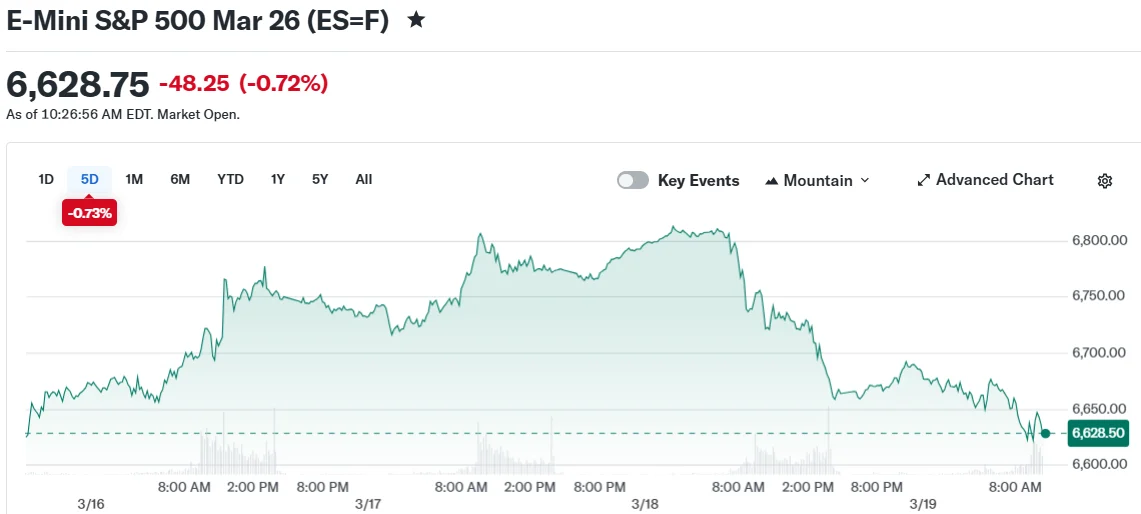
The Dow Jones Industrial Average opened with losses exceeding 300 points, representing approximately 0.7% decline. The S&P 500 decreased 0.9% while the Nasdaq Composite shed 1.3% during early trading, though both indices recovered partially as the session progressed.
Brent crude futures skyrocketed by as much as 10%, reaching $119 per barrel at peak levels before stabilizing near $112. West Texas Intermediate crude posted more modest gains to approximately $96 per barrel, creating an unusually wide differential between the two key oil benchmarks.
The hostilities involved Israeli strikes on Iran’s South Pars gas field complex. Tehran retaliated with counterattacks targeting energy facilities in Qatar and Saudi Arabia. Market observers characterized these developments as representing an escalation in the ongoing regional conflict.
David Rosenberg from Rosenberg Research cautioned that the damage to critical energy infrastructure suggests oil prices will struggle to return to pre-conflict levels quickly, even following eventual conflict resolution.
Federal Reserve Policy and Market Expectations
The Federal Reserve maintained current interest rates at its most recent policy meeting while indicating just one potential reduction this year. Chair Jerome Powell’s commentary was interpreted as hawkish by market participants, who now anticipate zero rate cuts extending through 2026. Some traders are even contemplating the possibility of a near-term rate increase.
The central bank simultaneously increased its inflation projections, compounding worries that surging energy prices could exacerbate inflationary pressures.
Weekly unemployment claims registered at 205,000, declining from the previous week’s figure, providing a rare bright spot during an otherwise challenging trading session.
Bitcoin descended below the $70,000 level Thursday. The cryptocurrency’s decline mirrored the broader market weakness and reflected concerns surrounding the Federal Reserve’s interest rate trajectory. XRP similarly posted losses.
Individual Company Developments
Micron shares tumbled during premarket activity despite delivering robust earnings results. Market participants concentrated on the semiconductor company’s substantial AI infrastructure spending plans, expressing skepticism about the timeline for return on these capital commitments.
Alibaba equity declined following disclosure of a 67% quarterly profit collapse. The disappointing performance underscored mounting pressure on the e-commerce giant to demonstrate tangible returns from its artificial intelligence investments.
Asian equity markets retreated overnight following news of the Middle East escalation. Short-duration US Treasury yields climbed as fixed-income selling intensified.
The Philadelphia Fed Manufacturing Index report was scheduled for release later Thursday, with market participants monitoring for additional indicators of economic weakness.
By mid-morning trading in New York, the Dow Jones was lower by 283 points, the S&P 500 had declined 0.5%, and the Nasdaq showed losses of 0.6%.
