Key Takeaways
- Nvidia’s fiscal Q4 revenue reached $68 billion, surpassing projections, while Q1 outlook stands at $78 billion
- The chip giant generated $6 billion from “physical AI” applications in fiscal 2026, including robotics and autonomous vehicles
- Tesla relies on Nvidia’s computing infrastructure for Optimus humanoid robots and self-driving taxi development
- If Tesla achieves 1 million Optimus units annually at approximately $25,000 each, it could generate $25 billion yearly
- Over the last year, Tesla shares climbed 44% while Nvidia gained 49%
Shares of Tesla $TSLA slipped modestly in Thursday’s premarket session, declining 0.5%, despite impressive fiscal fourth-quarter earnings from Nvidia $NVDA that exceeded analyst projections.
The semiconductor powerhouse delivered quarterly revenue of $68 billion, marking substantial growth from $39 billion in the year-ago period. This performance topped analyst consensus of $66 billion and exceeded Nvidia’s internal forecast range of $63.7 billion to $66.3 billion.
For the current quarter, Nvidia projected $78 billion in revenue, significantly above Wall Street’s $73 billion estimate. However, the chipmaker’s stock gained only approximately 1% in early trading.
The crucial question: What’s the connection to Tesla?
Tesla counts itself among Nvidia’s key customers, leveraging the company’s advanced computing systems to build “physical AI” applications — artificial intelligence deployed in tangible environments through robotics and autonomous driving technology.
During the earnings call, Nvidia CFO Colette Kress disclosed that physical AI generated $6 billion in revenue during fiscal 2026, which concluded in January. She explicitly referenced Tesla alongside Alphabet’s Waymo as autonomous taxi developers utilizing Nvidia’s infrastructure.
Kress emphasized that developing robotics and robo-taxi systems demands substantially greater computational resources compared to conventional AI chatbots. This positions Nvidia favorably as the sector expands.
CEO Jensen Huang characterized AI-powered robotics as a “wonderful opportunity” for the company. The partnership between these technology leaders grows more symbiotic — Nvidia requires real-world AI implementations to expand, while Tesla depends on Nvidia’s processing capabilities to realize its vision.
The Optimus Opportunity
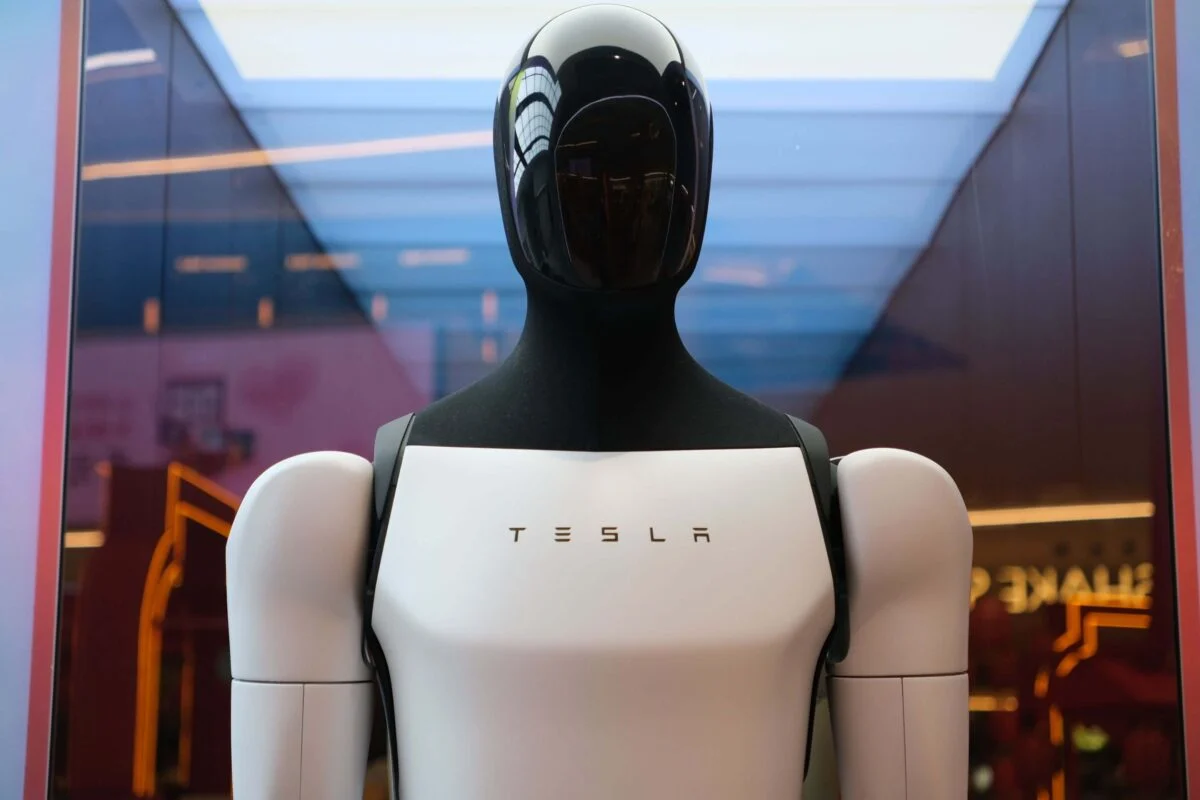
Tesla CEO Elon Musk has characterized the robotics market as a multi-trillion-dollar frontier. The automaker’s humanoid robot platform, Optimus, is slated for initial commercial availability in 2026, with ambitious plans to eventually manufacture one million units annually.
With an anticipated price around $25,000 per robot, achieving that production milestone would inject approximately $25 billion in annual revenue. To put this in perspective, Tesla’s total 2025 revenue came in at $94.83 billion.
This potential revenue channel represents a distinct growth catalyst — one that operates independently from vehicle sales while expanding the company’s overall business footprint.
Challenges Remain
Musk cautioned investors last month that initial robot manufacturing would progress at an “agonisingly slow” pace before achieving scale. Manufacturing complexities and supply chain hurdles pose legitimate concerns.
Additionally, Tesla faces intensifying competition in robotics development. Chinese manufacturers are making substantial investments in this arena, and if rivals dominate the budget-friendly market segment, Tesla’s profit margins could face downward pressure.
Tesla’s 44% gain over the trailing twelve months may already incorporate considerable optimism regarding Optimus and autonomous taxi prospects, according to some market analysts.
Nvidia shares have appreciated 49% during the identical timeframe.
Heading into Thursday’s session, both equities were trading near their 12-month peaks, with investors closely monitoring how physical AI adoption evolves throughout 2026.