



Key Takeaways
- Gold reached a Friday high of $4,475 per ounce before retreating to the $4,408–$4,417 range
- President Trump pushed back his Iran energy facility strike deadline to April 6, claiming discussions are progressing positively
- Iranian officials publicly refuted claims that any diplomatic negotiations with Washington are underway
- The precious metal has dropped over 15% since hostilities between Iran and Israel commenced roughly a month ago
- Turkey’s central bank liquidated and exchanged approximately 60 tons of gold valued at more than $8 billion within a two-week period
The precious metal experienced a sharp uptick during Asian market hours Friday, surging approximately 2% before relinquishing a portion of those advances as the trading day progressed. By mid-morning in London, spot gold was changing hands at $4,417 per ounce, up roughly 0.9%. Futures contracts for gold similarly advanced, climbing about 0.8% to reach $4,442.
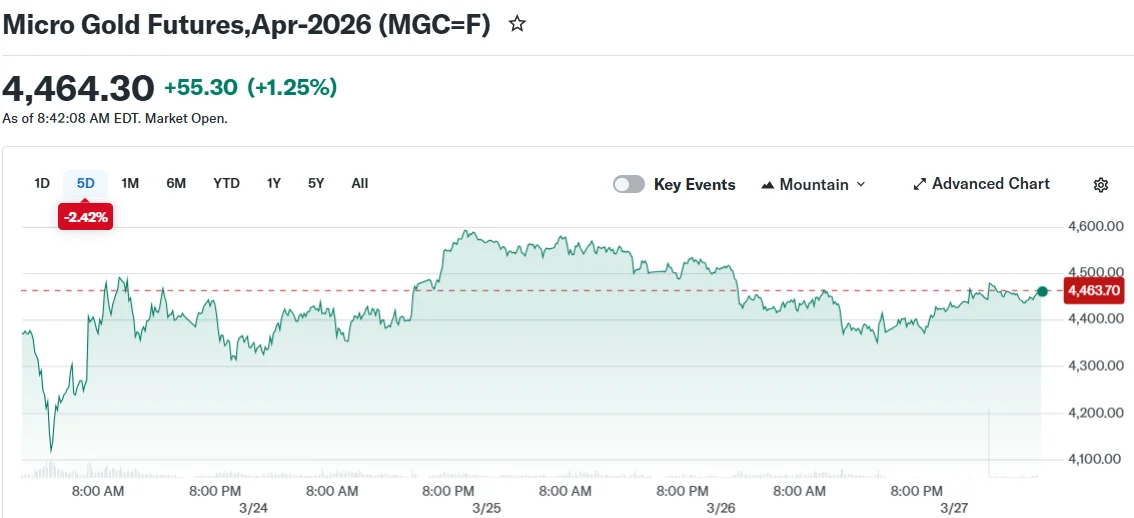
Notwithstanding Friday’s positive movement, the yellow metal remained on course for a weekly decline of approximately 1.7%.
The price action followed President Donald Trump’s decision to delay his ultimatum regarding Iran’s reopening of the Strait of Hormuz. Trump had initially warned of military strikes against Iranian energy infrastructure if the strategic waterway remained blocked. After moving the deadline to Friday, he announced Thursday that it would be postponed once more until April 6.
In a Truth Social post, Trump indicated the postponement came following a request from Iran. He characterized the ongoing dialogue between the nations as progressing “very well” and dismissed contradictory media coverage as “erroneous.”
Tehran’s administration publicly rejected assertions that any diplomatic engagement with the United States is currently in progress.
Understanding Gold’s Decline Amid Conflict
Gold has experienced a decline exceeding 15% since the outbreak of the Iran-Israel conflict approximately one month ago. This represents a substantial decrease for an asset traditionally regarded as a refuge during periods of geopolitical turmoil.
The primary catalyst is crude oil. The near-total blockage of the Strait of Hormuz has driven petroleum prices substantially higher. Approximately 20% of global oil supplies transit through this critical shipping channel. Elevated oil prices intensify inflationary concerns, prompting investors to anticipate that central banks will maintain elevated interest rates for extended periods. Gold, which generates no income, typically underperforms in environments characterized by high borrowing costs.
Additionally, gold reached record territory near its January peaks, and market observers suggest those elevated levels may have triggered widespread profit-taking among investors.
The greenback has also strengthened. Friday saw the US Dollar Index registering a modest increase at approximately 99.99. Dollar strength makes gold more costly for international buyers using alternative currencies, potentially dampening global demand.
Central Bank Liquidation Compounds Downward Pressure
Turkey’s monetary authority liquidated and swapped roughly 60 tons of gold during a two-week span. This represents bullion valued at over $8 billion.
Central bank accumulation had been among the primary factors powering gold’s ascent throughout the previous two years. Disposition activity from a significant central bank introduces additional downward momentum to the marketplace.
Silver remained largely unchanged Friday, trading at $68.11 per ounce. Both platinum and palladium registered modest gains.
Iran and Israel maintained their exchange of missile strikes Friday. Tehran also launched attacks against multiple Gulf state targets Friday morning.
