



TLDR
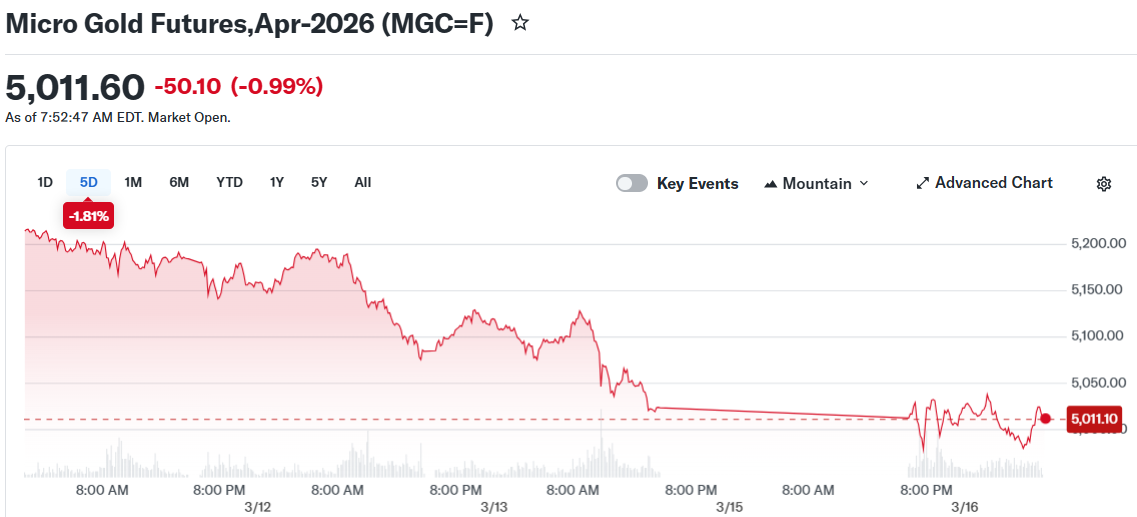
- The precious metal slipped beneath $5,000 per ounce, marking its third consecutive week of decline
- Crude oil surging past $100 per barrel is amplifying concerns about renewed inflationary pressure
- Military confrontation between the US-Israel alliance and Iran continues into week three
- Market consensus expects the Federal Reserve to maintain current interest rate levels
- Year-to-date gains for gold remain above 15% despite current pullback
A US military operation targeted Iran’s Kharg Island oil facility during the previous weekend. The assault—combined with Iranian counter-strikes targeting Israeli positions and Gulf region energy assets—propelled crude prices beyond the $100 threshold.
The yellow metal declined 0.6% to approximately $4,987 per ounce during early European trading hours Monday. This marks the first time the asset has traded below the psychologically significant $5,000 level in recent sessions.
The military confrontation has now stretched into its third week. A senior Trump administration official indicated hostilities might continue for another four to six weeks, though diplomatic communications from both nations suggest negotiations remain possible.
Iranian forces targeted commercial shipping routes adjacent to the Strait of Hormuz during the weekend. This critical maritime passage handles approximately 20% of global petroleum and LNG transport, with vessel traffic now severely restricted.
Oil prices oscillated around the $100 mark throughout Monday trading. Elevated energy expenses are reigniting inflation anxieties and diminishing prospects for near-term Federal Reserve rate reductions.
Elevated interest rates diminish gold’s appeal to investors. Since the metal generates no yield, higher borrowing costs typically drive capital toward interest-bearing investments.
Why Gold Is Under Pressure
Market participants now assign near-zero probability to a rate reduction at the upcoming Fed policy meeting. This expectation represents a primary headwind for bullion prices currently.
Economic data released Friday revealed US consumer expenditure barely expanded during January. Consumer confidence metrics have simultaneously retreated to three-month lows amid mounting anxiety over fuel costs.
Gold maintains year-to-date appreciation exceeding 15% through 2026. However, bullish momentum has dissipated as investors await clarity on the military situation and potential Federal Reserve policy pivots.
Silver decreased 2.2% to $78.79 per ounce. Palladium held steady. Platinum registered modest gains. The Bloomberg Dollar Index retreated 0.2% following the previous week’s 1%+ advance.
UBS Global Wealth Management released commentary Monday characterizing gold primarily as protection against systemic economic threats rather than immediate geopolitical conflicts. The institution noted the metal safeguards portfolios against currency depreciation, expanding fiscal deficits, and economic contraction—all potential consequences of extended military engagement.
What the Charts Are Saying
Technical indicators suggest additional near-term downside pressure. The precious metal breached support at $5,035 Monday with market technicians monitoring $4,953 as the subsequent critical floor.
The MACD momentum indicator sits below neutral territory with bearish trajectory. Stochastic readings similarly reinforce a negative short-term outlook.
A technical rebound toward $5,200 could materialize if this week’s central bank announcements contain unexpectedly accommodative language, according to chart-based projections. For sustained bullish continuation, prices must reclaim $5,412 to confirm resumption of the dominant uptrend.
The Federal Reserve’s policy decision arrives this week alongside rate determinations from monetary authorities in Europe, Britain, Japan, Switzerland, Australia, Canada, China, Brazil, and Russia.
