



TLDR
- Federal Reserve maintained interest rates at 3.50%–3.75% during its March 18, 2026 meeting with an 11-1 vote
- Bitcoin declined approximately 4% to roughly $71,600 after the announcement
- Both the Nasdaq and S&P 500 experienced 0.55% declines during trading
- Central bank increased its 2026 inflation projection from 2.4% to 2.7% due to Middle East tensions
- CME data indicates zero probability of a rate reduction at April’s upcoming meeting
On Wednesday, March 18, 2026, the Federal Reserve opted to maintain its benchmark interest rate at the current range of 3.50%–3.75%. Market observers had broadly anticipated this outcome.
The decision passed with an 11-1 vote count. Stephen Miran cast the single dissenting vote, advocating for a 25 basis point reduction.
The central bank pointed to uncertainty stemming from the U.S.-Iran military conflict as a primary consideration in maintaining the status quo. Crude oil prices have surged to approximately $100 per barrel, marking a significant increase from below $60 earlier this year.
“The implications of events in the Middle East for the US economy are uncertain in the near term,” Federal Reserve Chair Jerome Powell stated. “Higher energy prices will push up overall inflation, but it is too soon to know the scope and duration of the potential effects.”
Powell noted that economic activity has maintained solid expansion. Consumer spending demonstrates continued strength and business investment keeps growing. However, the housing sector shows weakness while labor market conditions indicate softening.
The Federal Reserve revised its 2026 inflation projection upward to 2.7%, compared to the previous forecast of 2.4%. The central bank anticipates inflation will moderate to 2.2% by 2027.
Markets React to Fed Decision and Iran War
[[LINK_START_1]]Bitcoin[[LINK_END_1]] experienced significant declines leading up to the policy announcement. Following the decision, the cryptocurrency traded at $71,600—representing a nearly 4% decrease for the day. This downturn followed rising crude oil prices and inflation data that missed expectations earlier in the session.The Nasdaq and S&P 500 both registered 0.55% losses. Meanwhile, the 10-year Treasury yield climbed slightly to 4.21%.
Lower interest rates generally benefit risk-oriented assets like Bitcoin and equities by making bonds less attractive to investors. Conversely, higher rates tend to redirect capital toward safer financial instruments.
The Federal Reserve’s dot plot projection continues to indicate just one 25-basis-point reduction anticipated for 2026, followed by an additional cut in 2027. This forecast remains unchanged from previous guidance.
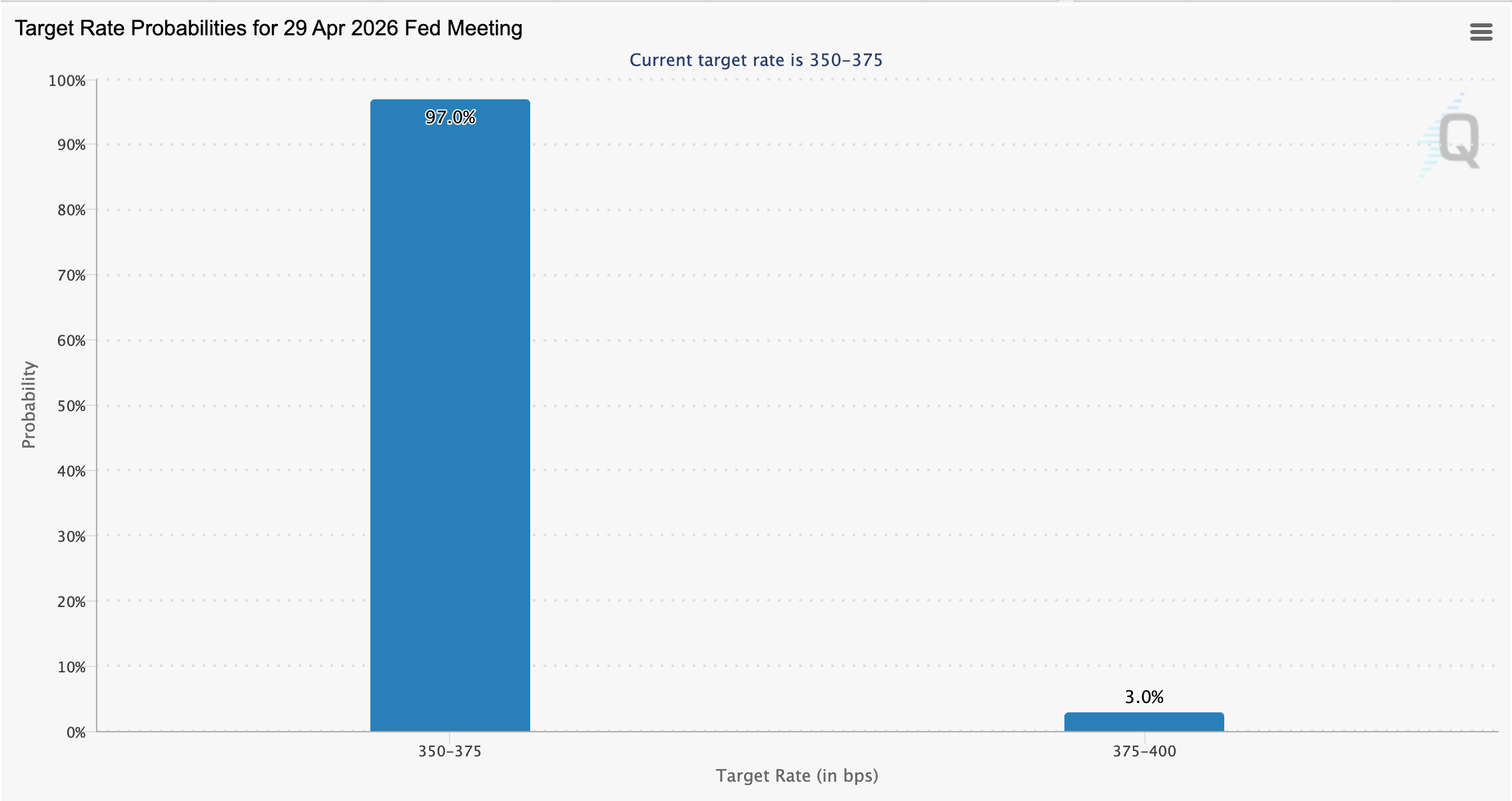
Data from CME Group reveals that 97% of market participants expect no rate adjustment at the April 2026 Federal Open Market Committee meeting. A minimal 3% anticipate a 25-basis-point increase, which would elevate the rate range to 3.75%–4.00%.
What Analysts Are Watching
Arthur Hayes, co-founder of BitMEX, indicated he’s waiting for Federal Reserve rate reductions before acquiring additional Bitcoin. He also speculated that the Iran conflict might push the central bank toward loosening monetary policy to support military expenditure financing.
Lyn Alden, a prominent macroeconomist, suggested the Fed has transitioned into a “gradual print” phase, characterized by steady money creation that incrementally inflates asset prices over extended periods.
The Federal Reserve’s dual mandate—maintaining price stability while maximizing employment—faces mounting challenges. Inflation persists above the 2% target while employment indicators suggest deceleration.
Powell emphasized that both the magnitude and timeframe of economic consequences from the Middle East conflict remain uncertain. The Federal Reserve will continue assessing economic conditions before implementing any additional policy adjustments.
