




Key Takeaways
- February employment figures revealed a loss of 92,000 jobs, dramatically missing economist predictions of 55,000–60,000 new positions
- The jobless rate climbed to 4.4%, surpassing the anticipated 4.3% level
- Major index futures including the Dow, S&P 500, and Nasdaq plunged during Friday’s pre-market session
- Crude oil prices jumped more than 6% as WTI crude climbed above $86 per barrel amid concerns over Persian Gulf disruptions
- The Dow Jones Industrial Average has declined over 2% this week and entered negative territory for 2026
Investors faced a turbulent Friday morning as equity futures plummeted following a pair of market-moving developments: disappointing employment figures and escalating crude oil costs linked to Middle Eastern instability.
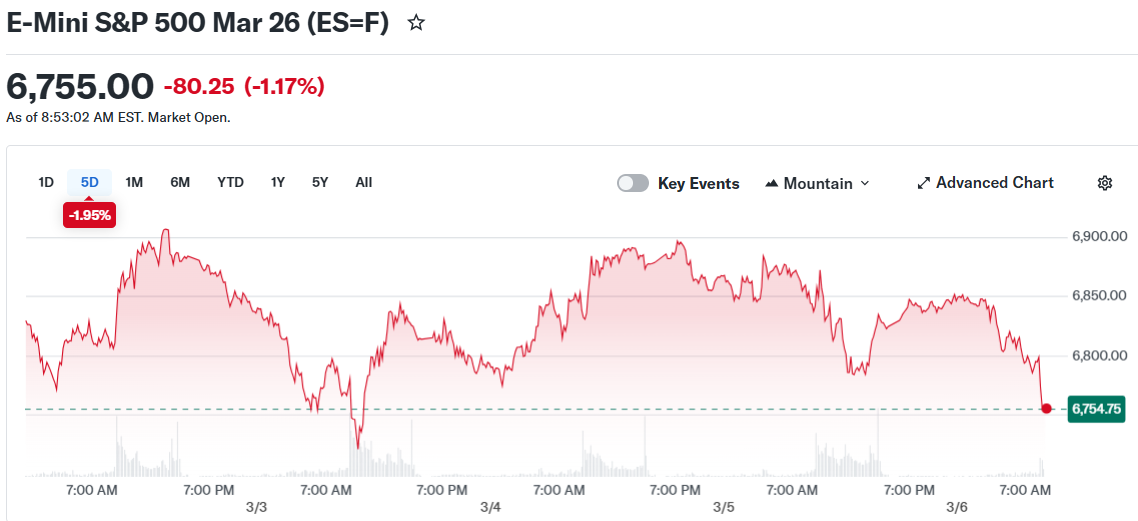
The latest employment statistics for February revealed that the American economy eliminated 92,000 nonfarm payroll positions. Market observers had anticipated job growth ranging from 55,000 to 60,000 positions.
The nation’s unemployment rate increased to 4.4%, marginally exceeding projections of 4.3%. The Bureau of Labor Statistics published these figures early Friday.
Futures tied to the Dow Jones Industrial Average declined approximately 0.7% to 0.8% in the wake of the employment report. Contracts linked to the S&P 500 tumbled roughly 0.8%, while Nasdaq 100 futures retreated about 1%.
All three major benchmark indexes were trending downward prior to the jobs announcement but accelerated their losses following the publication.
Treasury yields declined in response to the disappointing data. The 2-year note yield retreated to approximately 3.57%, while the benchmark 10-year note fell to 4.13%. Declining yields typically indicate market participants are anticipating greater probability of monetary policy easing.
Crude Prices Rally on Persian Gulf Production Concerns
Oil prices experienced a significant rally on Friday. West Texas Intermediate contracts advanced more than 6%, breaking through the $86 per barrel threshold. Brent crude contracts gained nearly 5%, trading north of $89.
Qatar’s energy minister issued a stark warning that conflicts involving Iran might compel Gulf producers to suspend operations within mere days. He additionally suggested prices could spike to $150 per barrel should circumstances deteriorate.
Shipping activity through the Strait of Hormuz has ground to a virtual halt, intensifying global supply anxieties. Both WTI and Brent crude are positioned for their largest weekly gains in four years.
Retail gasoline prices across the United States have climbed to their highest levels since 2024. In response to the price surge, the Trump administration granted India a temporary exemption to acquire Russian crude oil.
Employment Weakness and Federal Reserve Policy Implications
Disappointing employment data generally intensifies expectations for the Federal Reserve to implement interest rate reductions. Nevertheless, market analysts suggest the probability still favors no policy adjustments during the year’s first six months.
The statistics will receive heightened scrutiny before upcoming Federal Reserve policy meetings. Any adjustments to interest rates will depend on overall economic performance indicators.
The Dow Jones Industrial Average has shed more than 2% during the current week and has slipped into negative territory for 2026. The S&P 500 is similarly positioned for weekly losses.
The Nasdaq Composite index may conclude the week with modest gains, diverging from the broader market trend.
As of Friday morning trading, the 30-year Treasury bond yield registered 4.74%, reflecting evolving rate expectations following the employment disappointment.
